
KORAI 4, 2026
Photographic Essay
A Visual Interpretation of the “Site of Historical Memory 1941–1944”
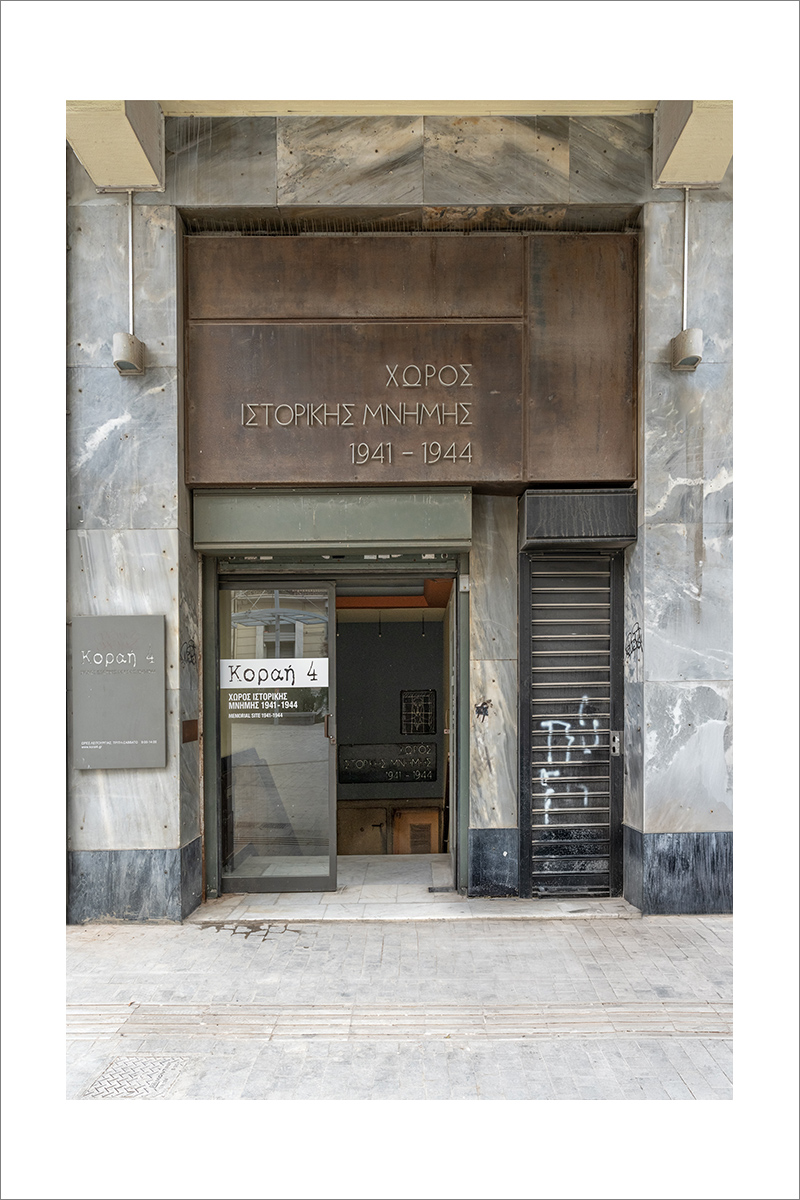
In the heart of Athens, at 4 Korai Street, stands a building that bears two parallel histories:
the architecture of the modern era and the dark memory of the Occupation.
Erected between 1934 and 1938 to designs by the architects Emmanouil Kriezis
and Anastasios Metaxas, the building replaced the Rossels residence (1894),
marking the city’s transition into an era of modernization and institutional self-confidence.
In 1938, the National Insurance Company moved into the new, state-of-the-art building.
High-quality materials, an elevator, and central heating — technological innovations
for 1930s Athens — projected an image of urban progress.
Yet the architecture itself already bore the imprint of the approaching war:
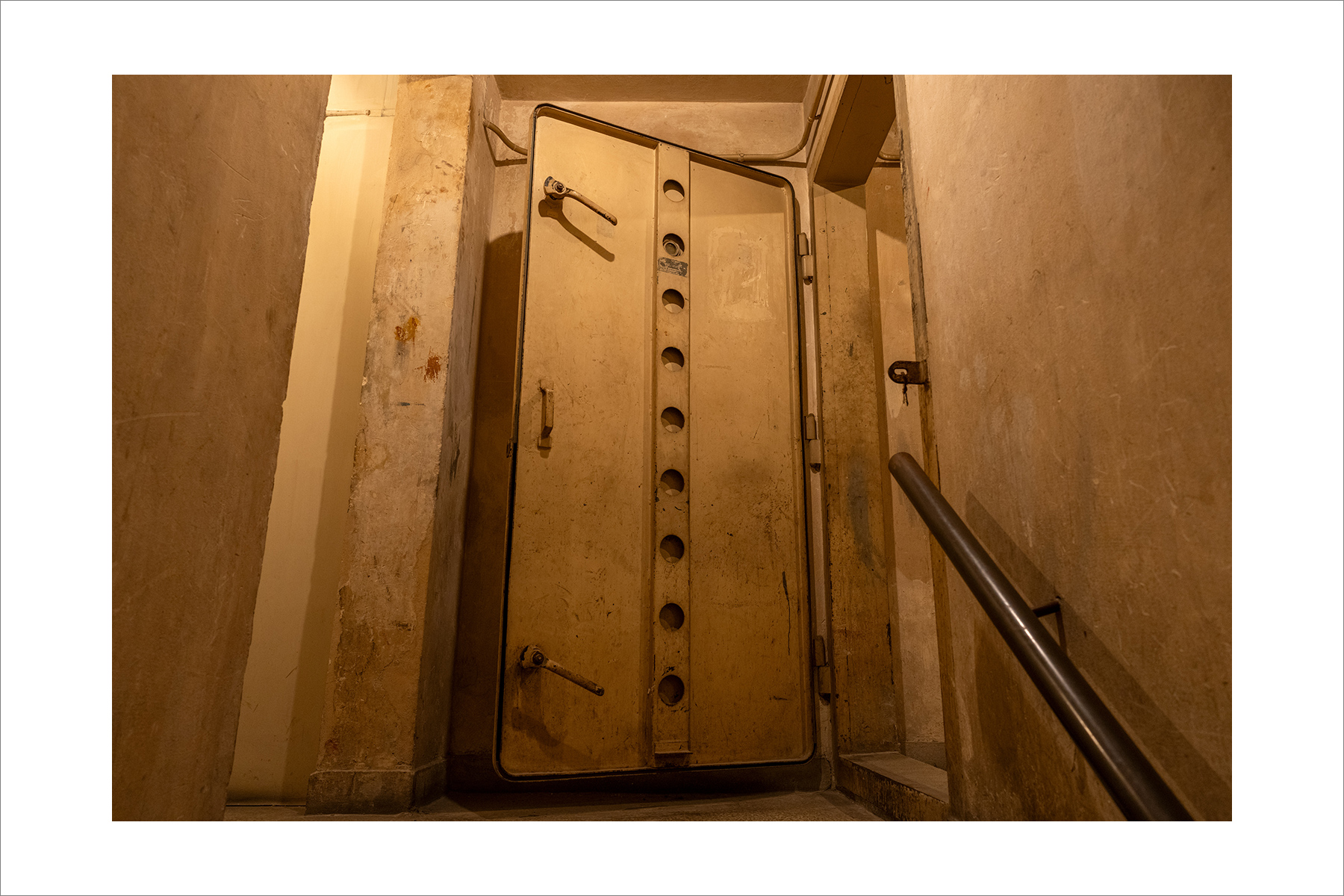
according to legislation of the period, every new apartment block or public building
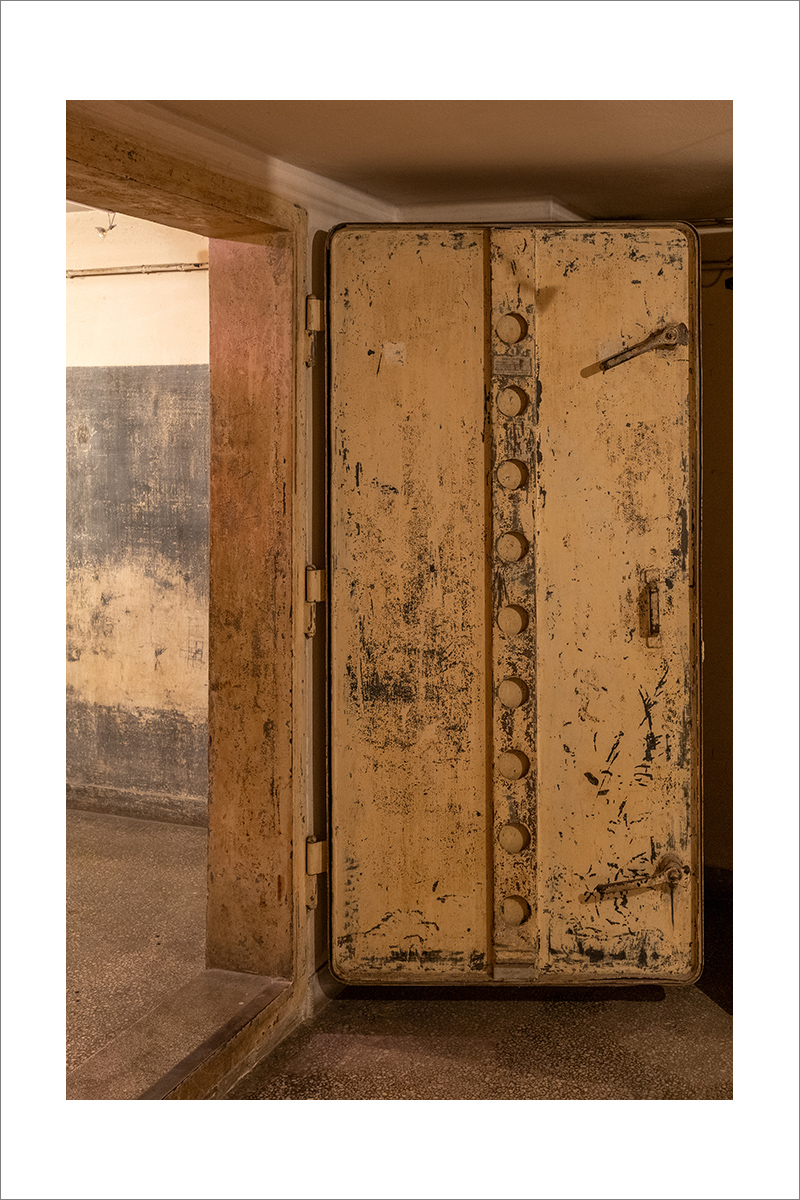
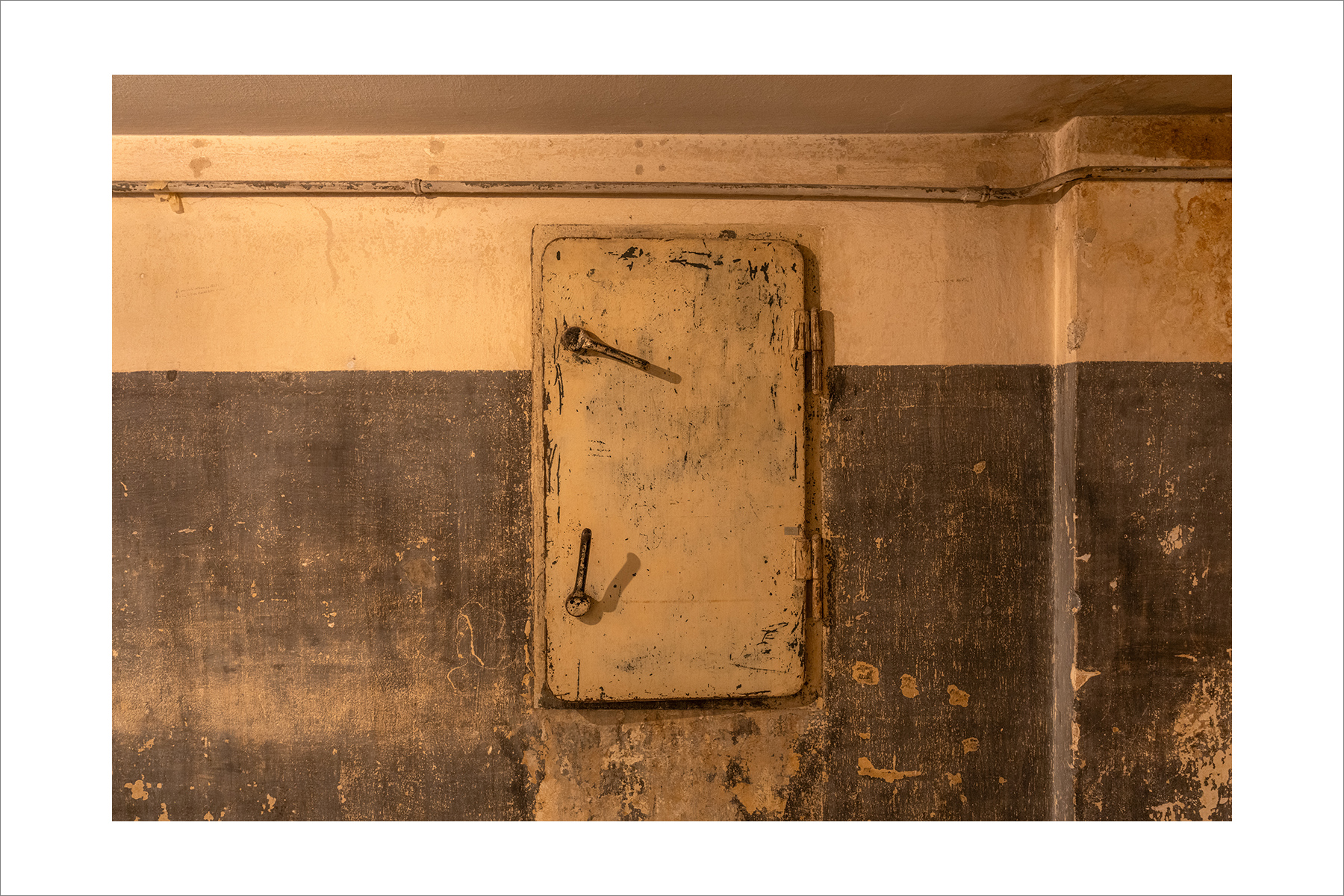
was required to include an air-raid shelter.
This provision was not merely technical; it was a political acknowledgment
of an inevitable danger, as Europe was sinking into the turmoil of the Second World War,
with aerial bombardment posing the greatest threat.
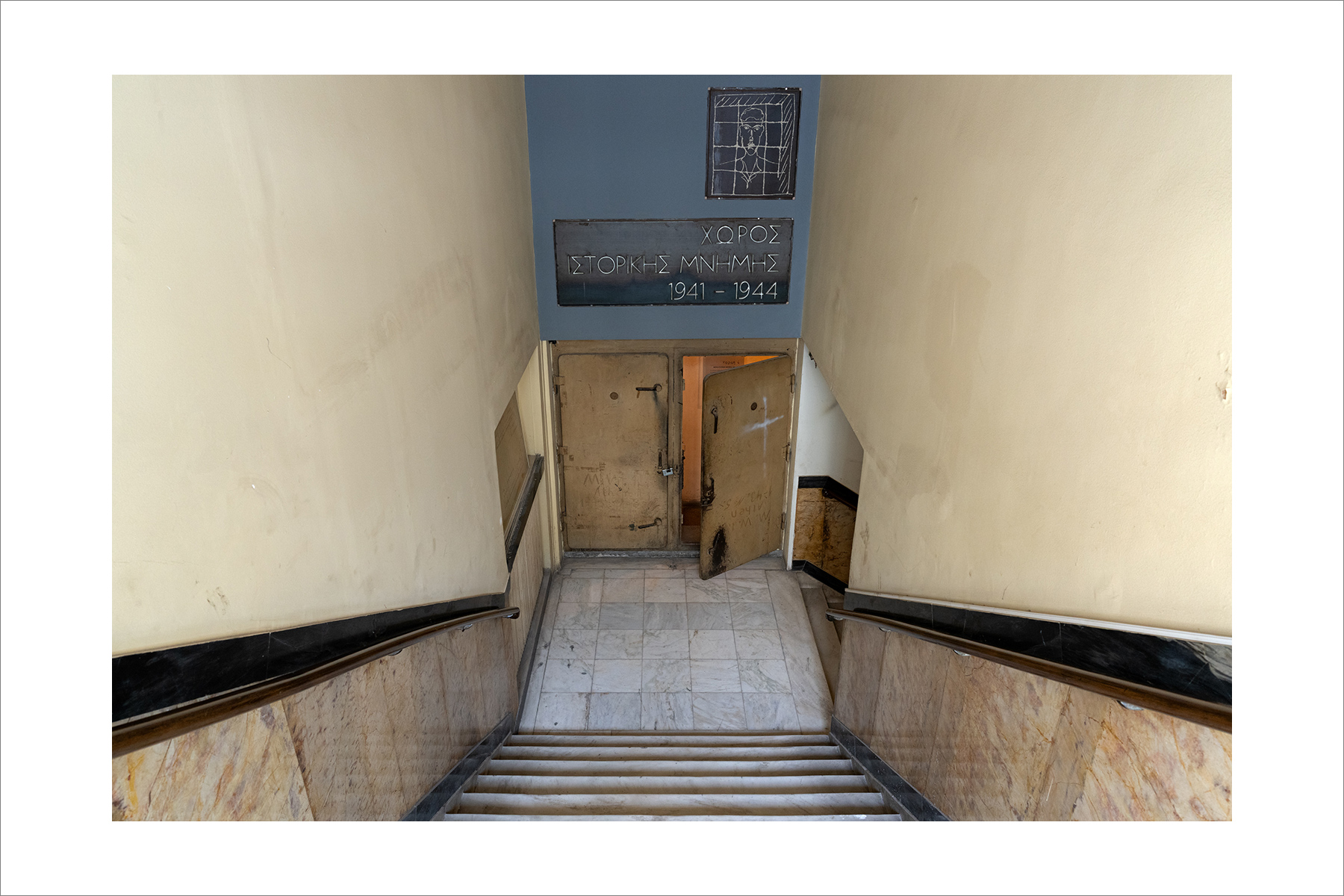
On May 6, 1941, just days after German troops entered Athens, the building was
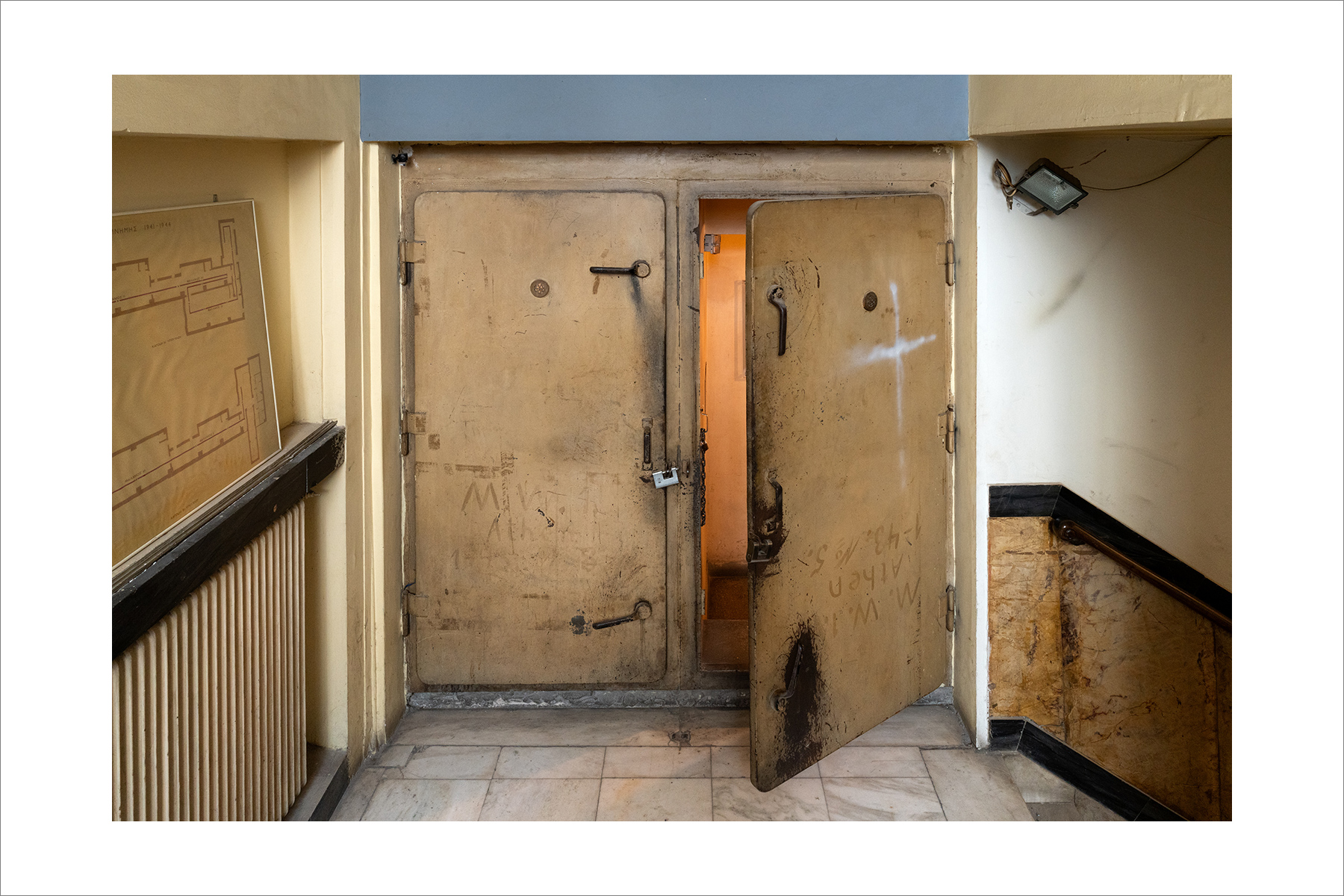
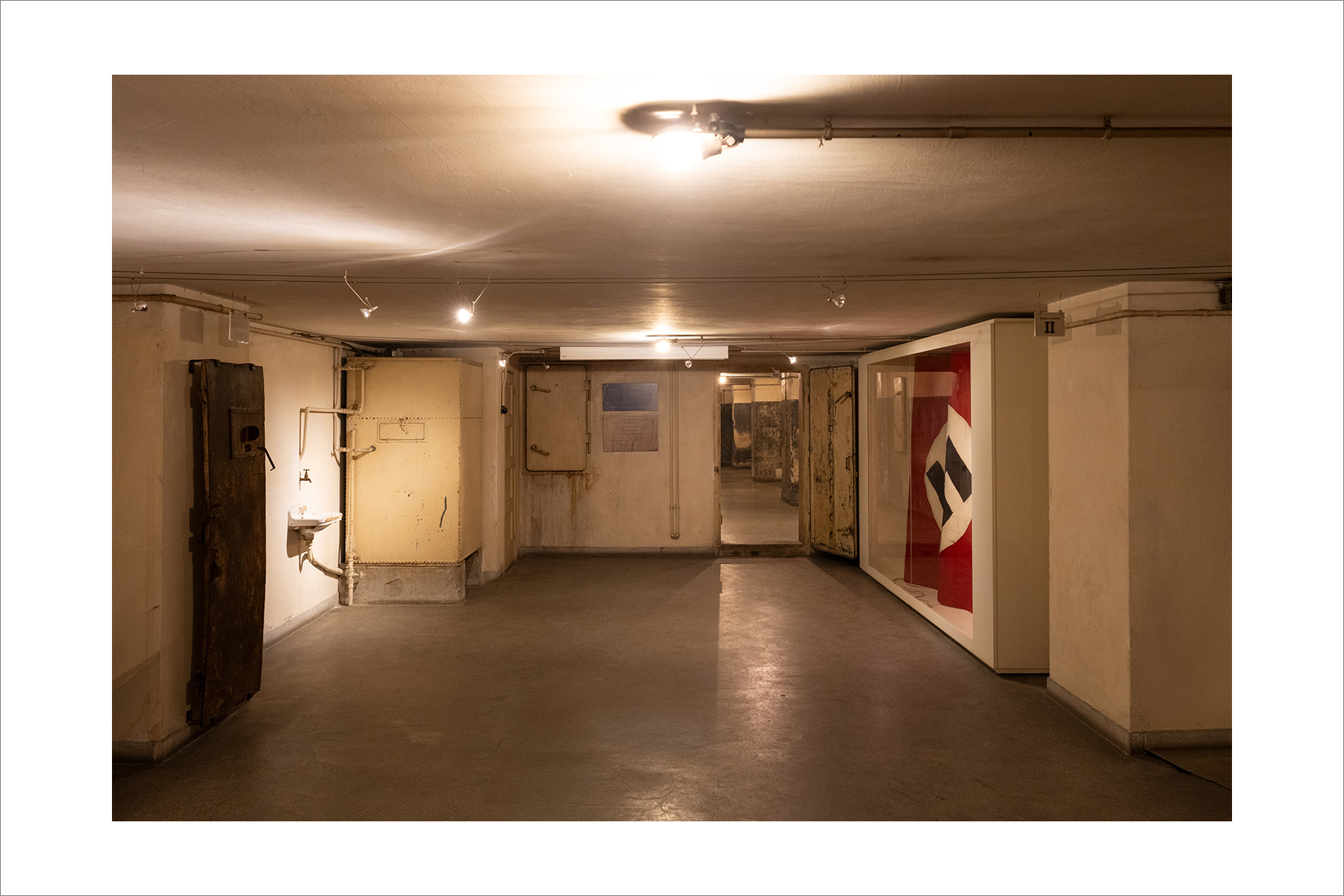
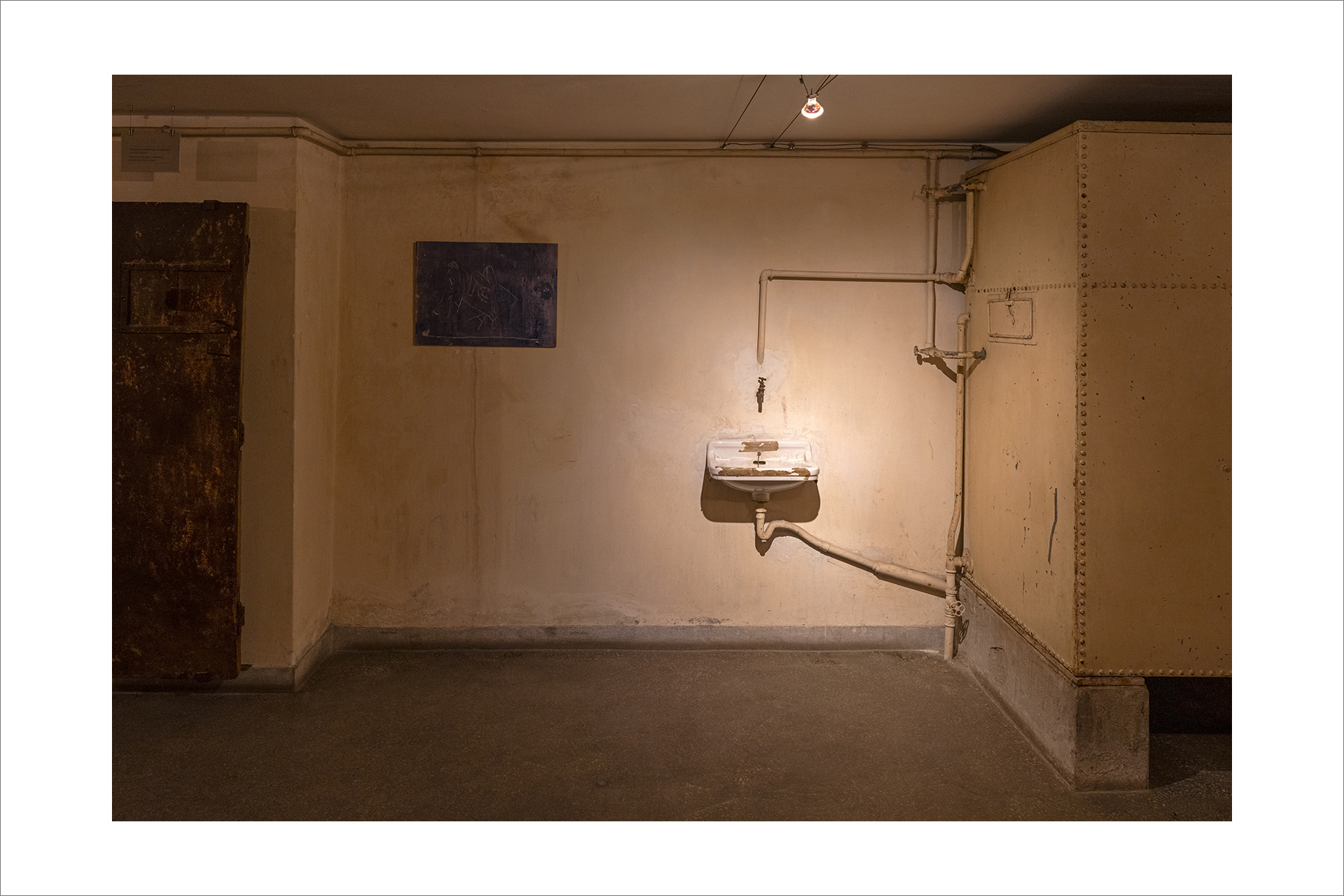
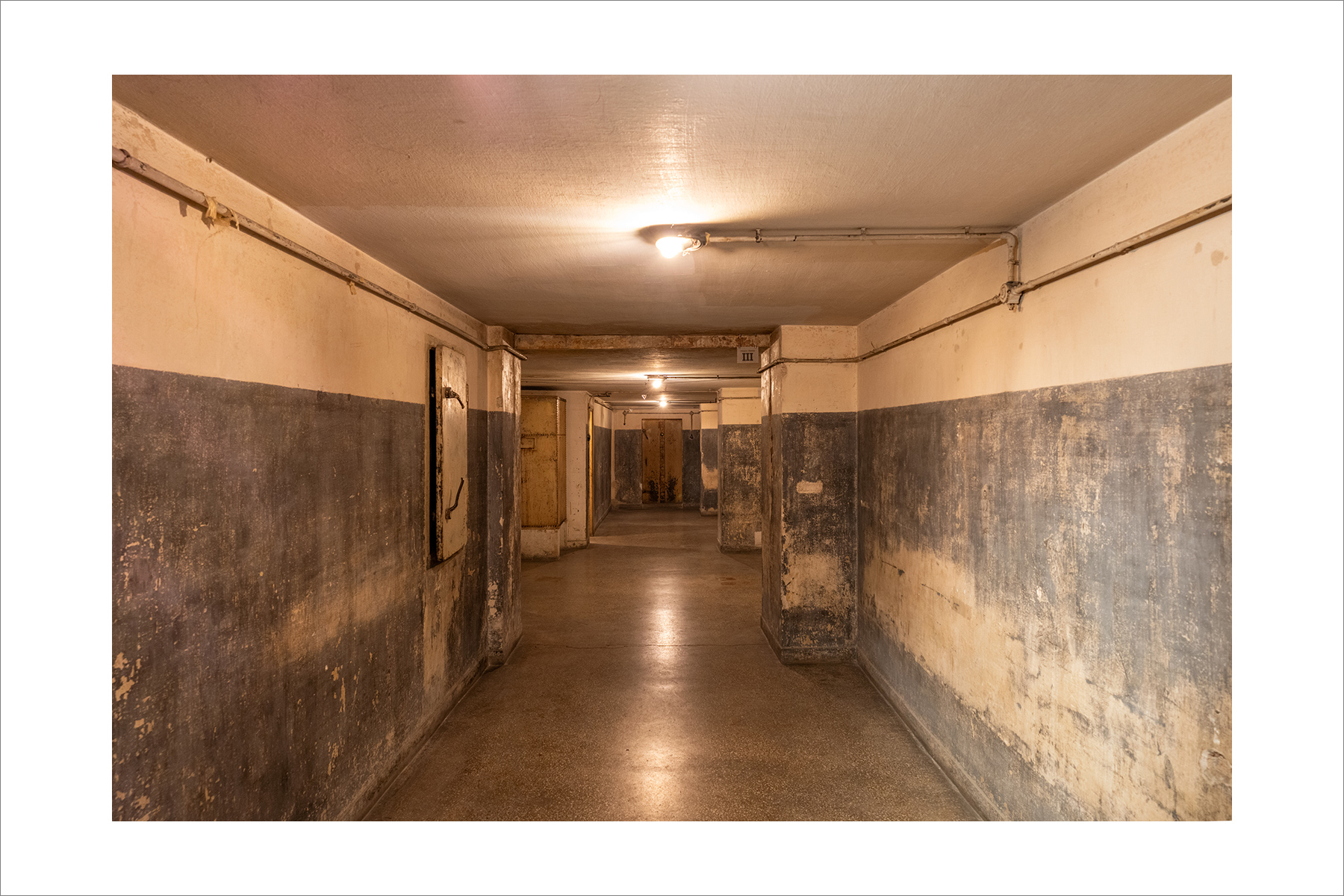
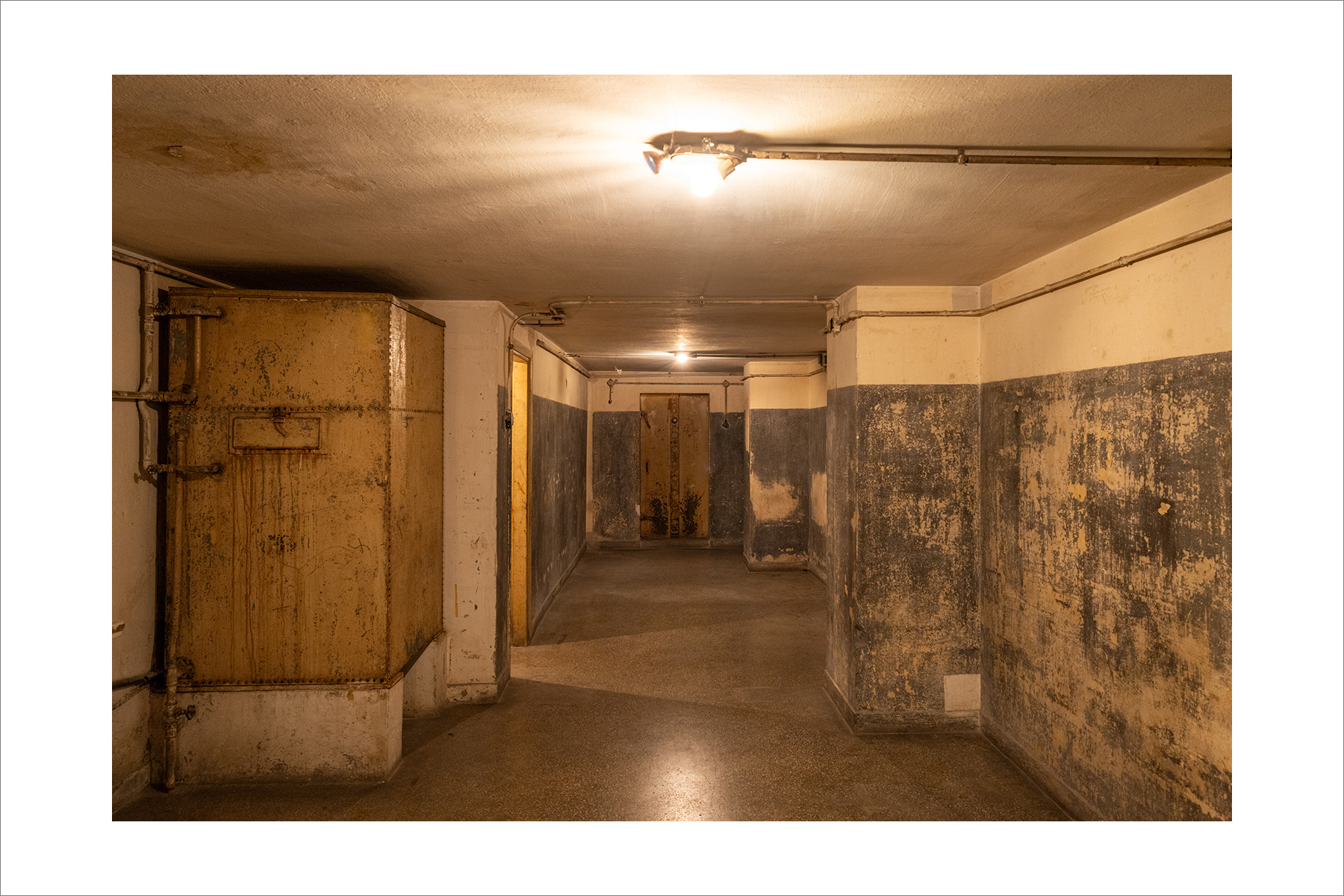
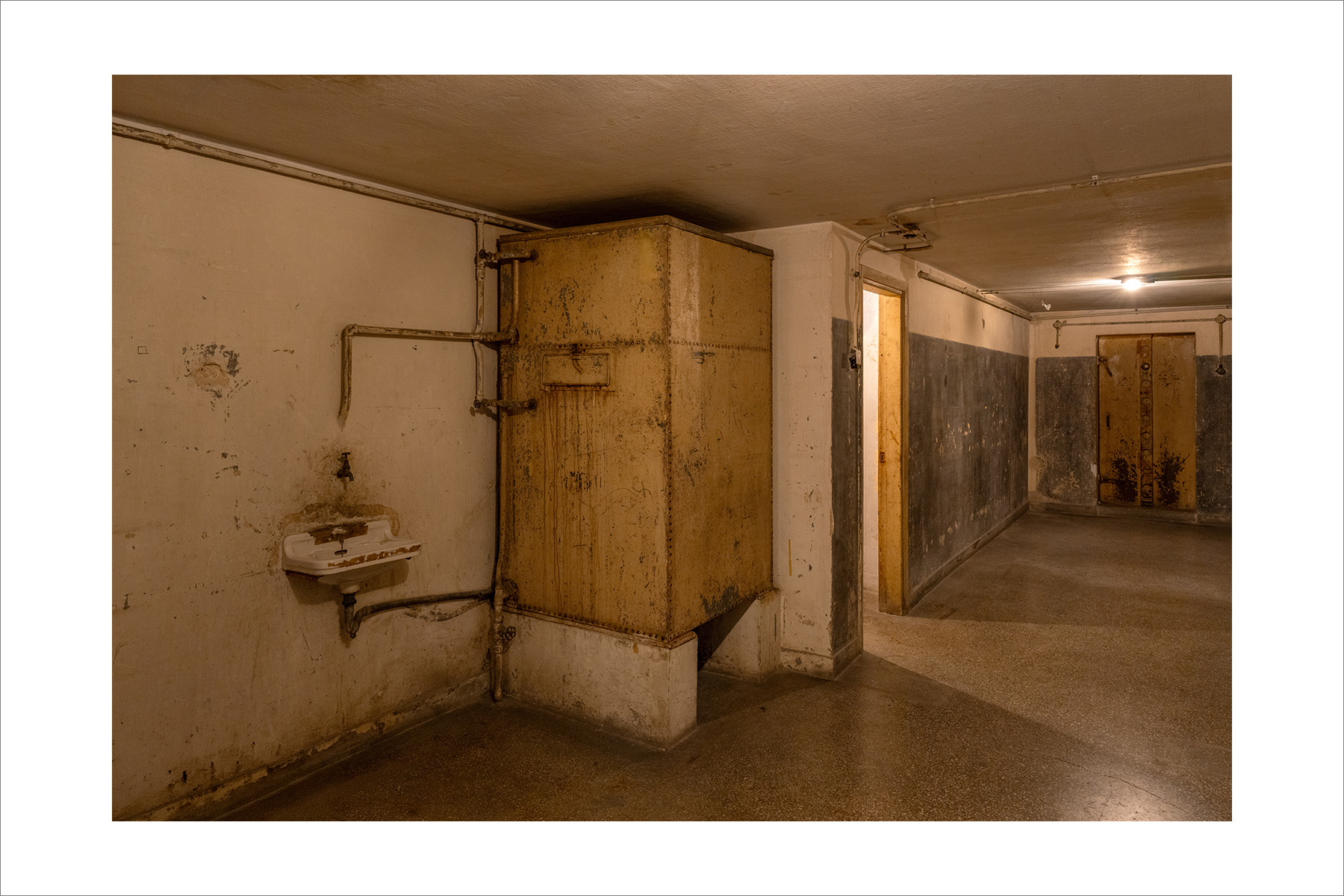
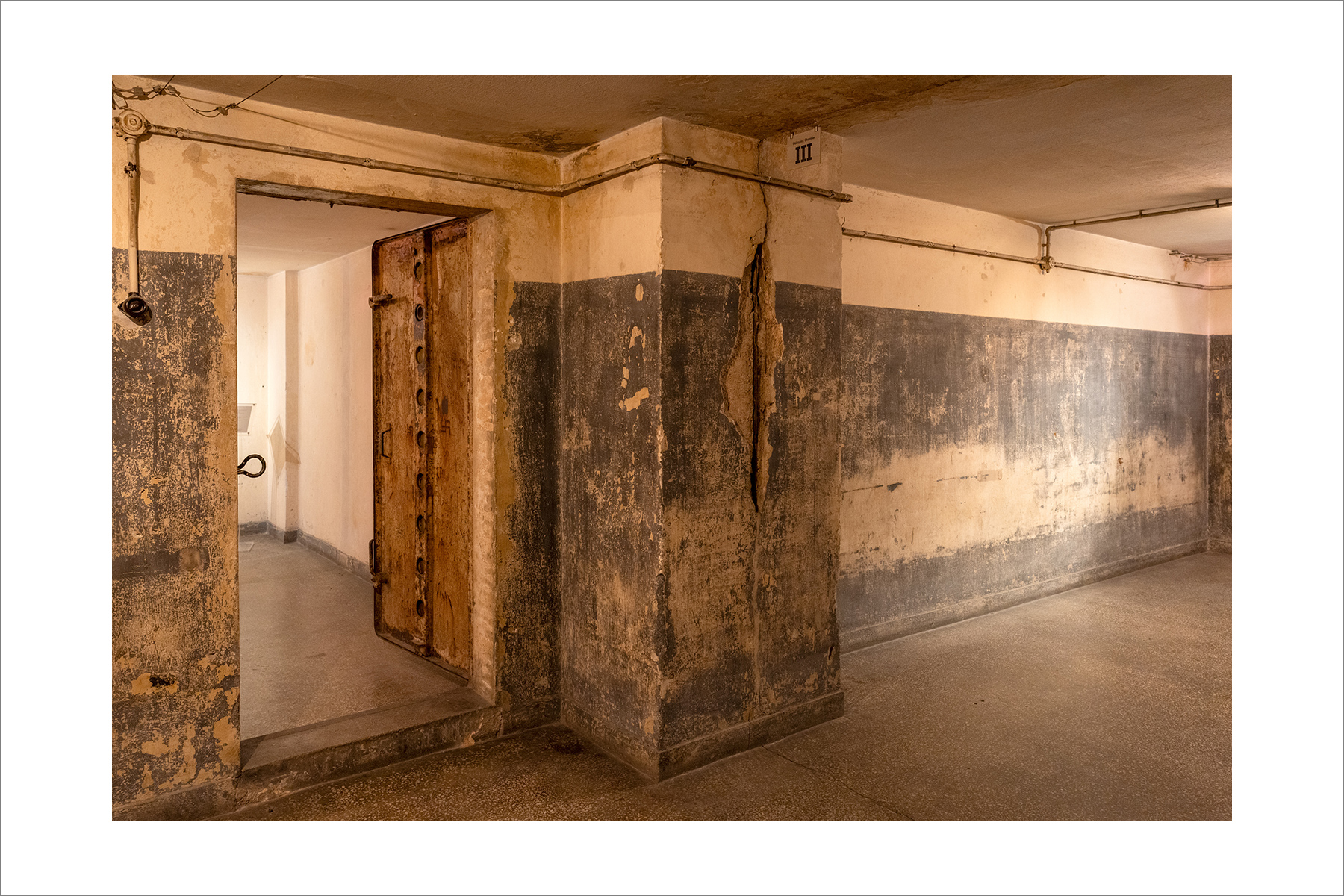
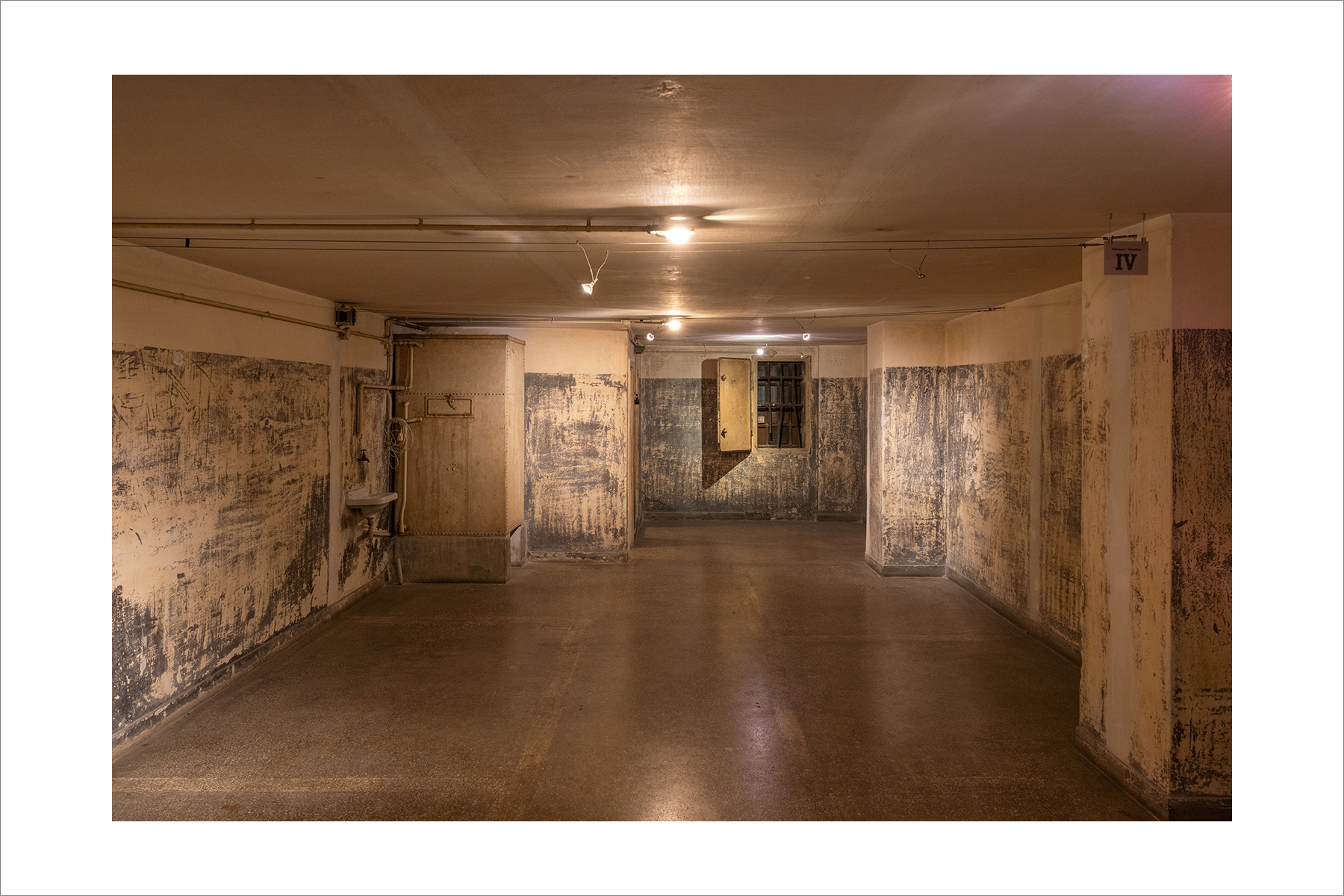
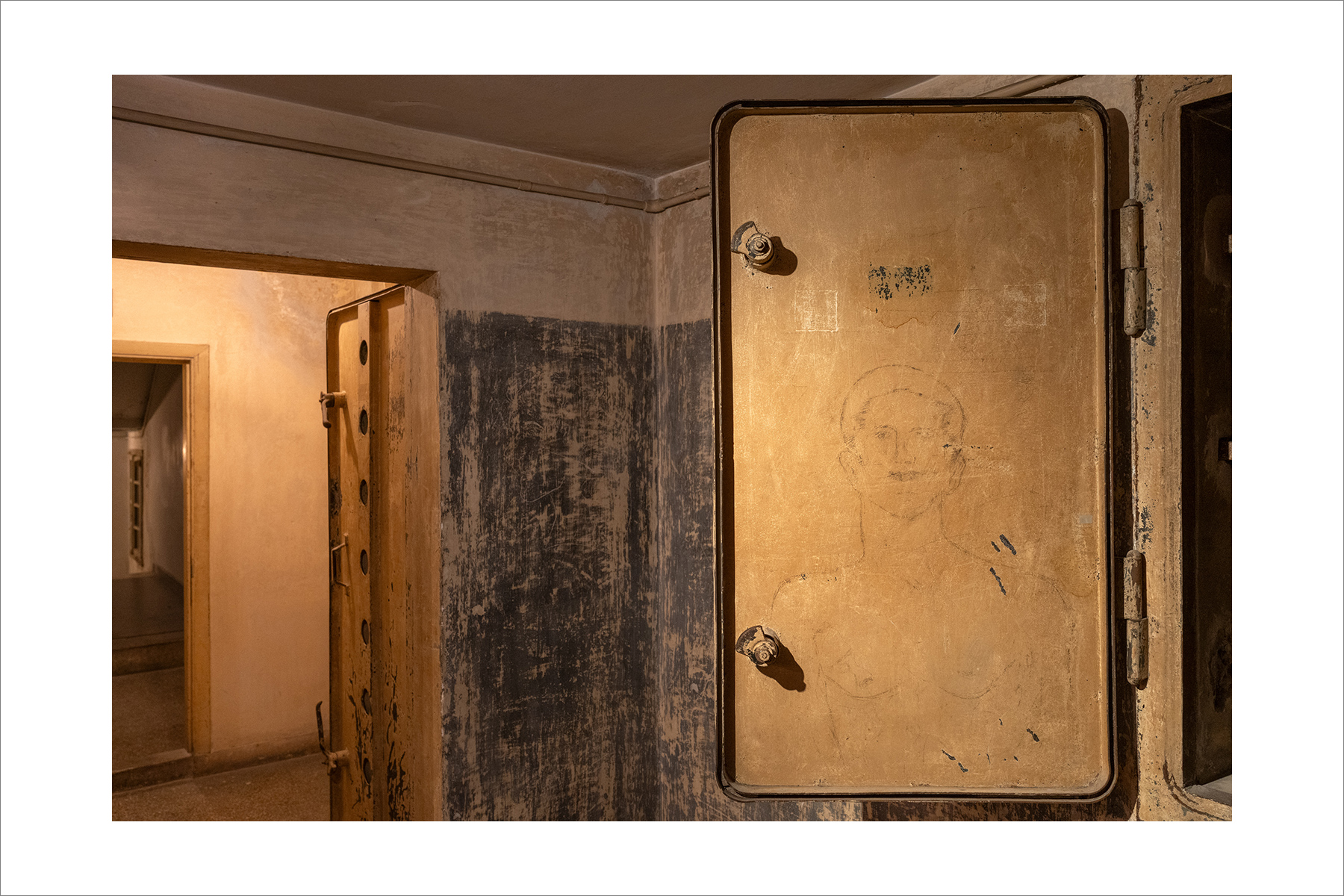
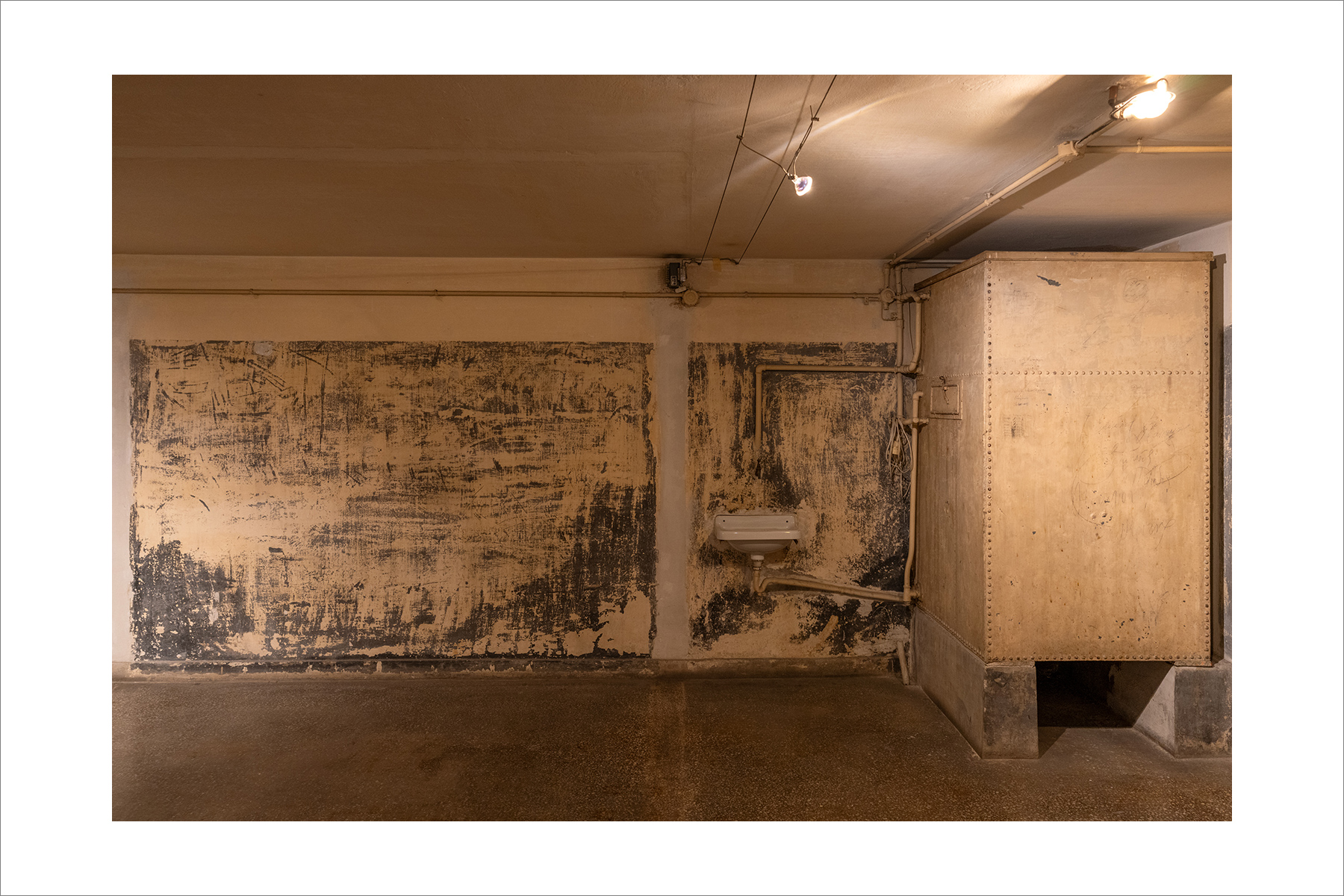
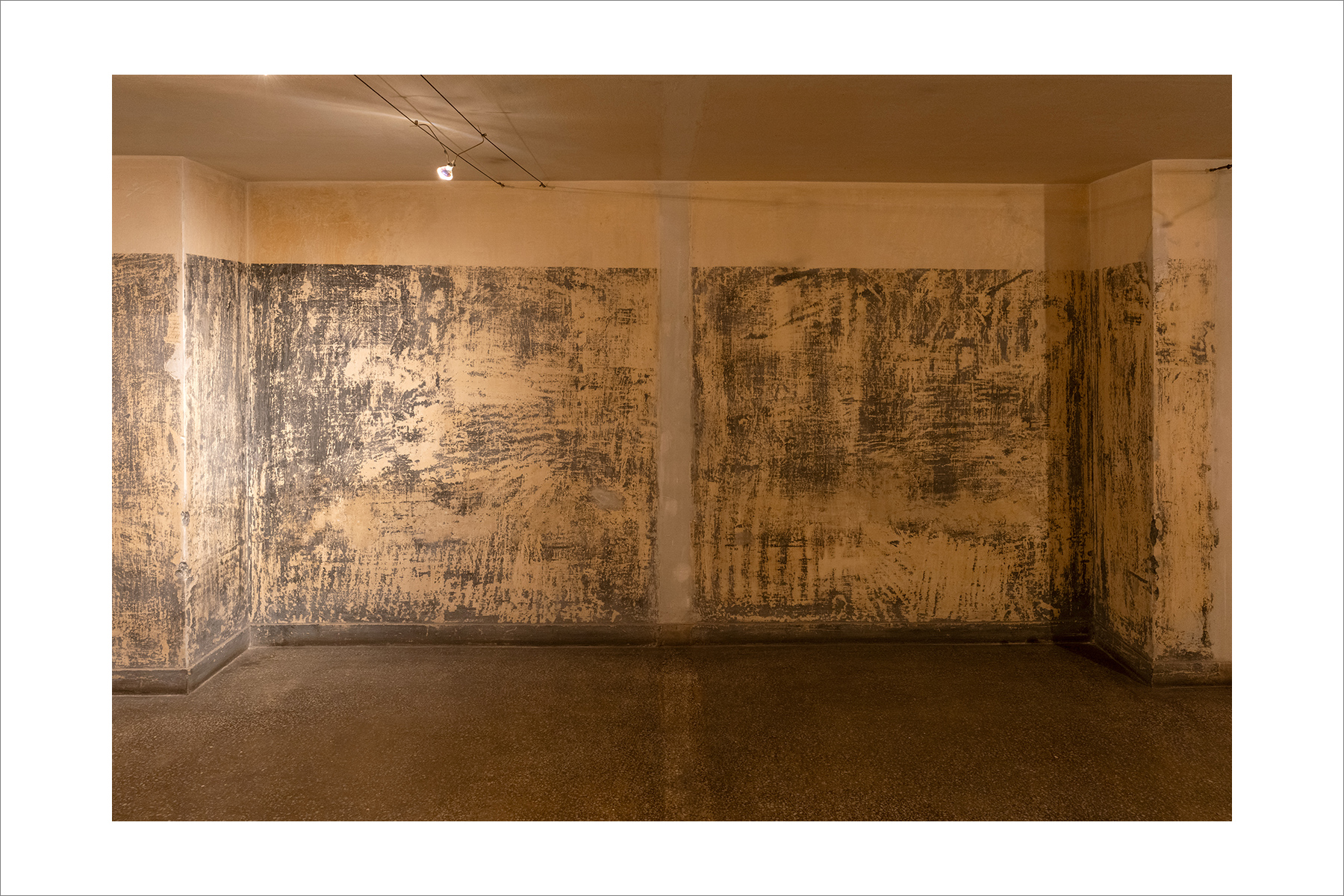
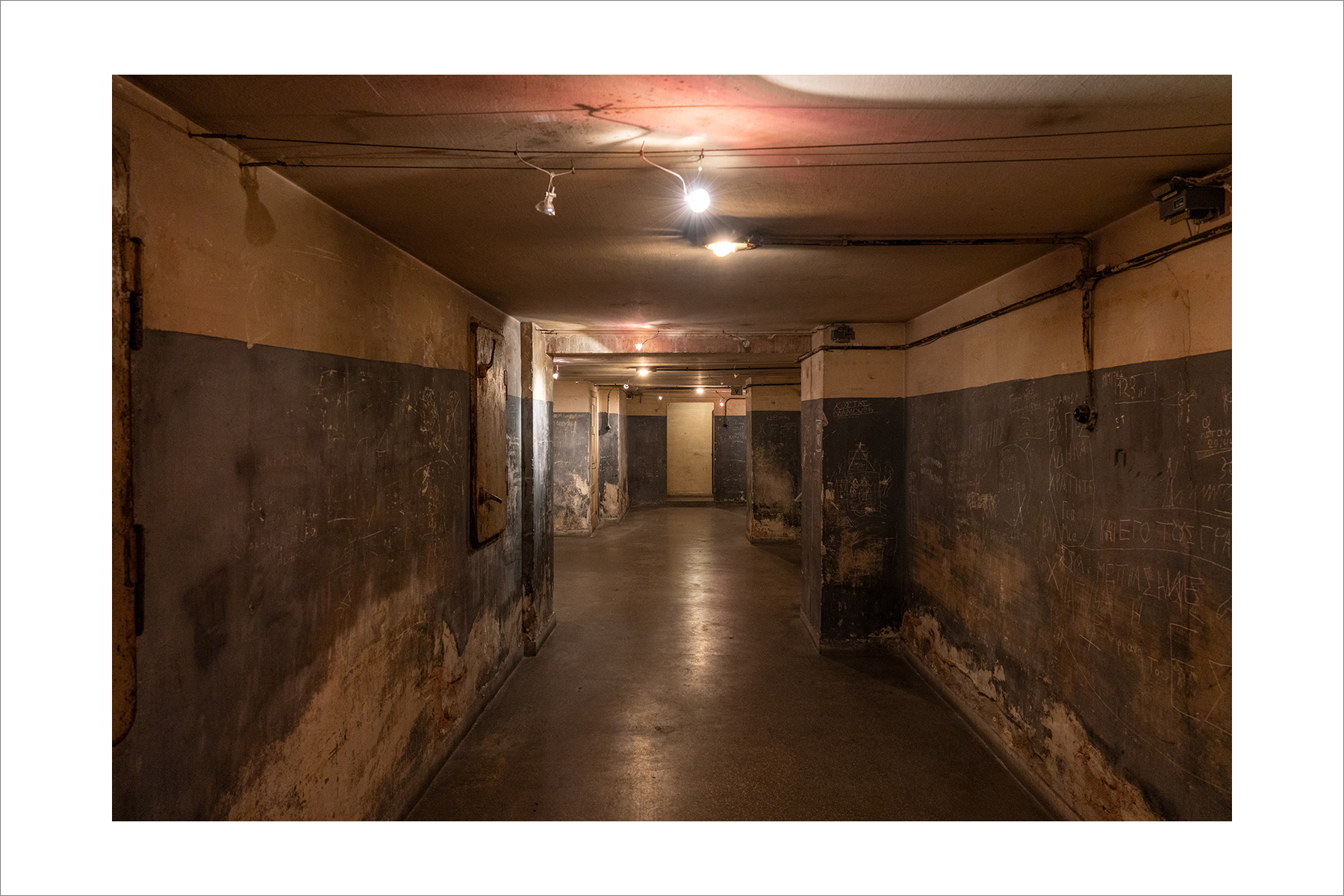
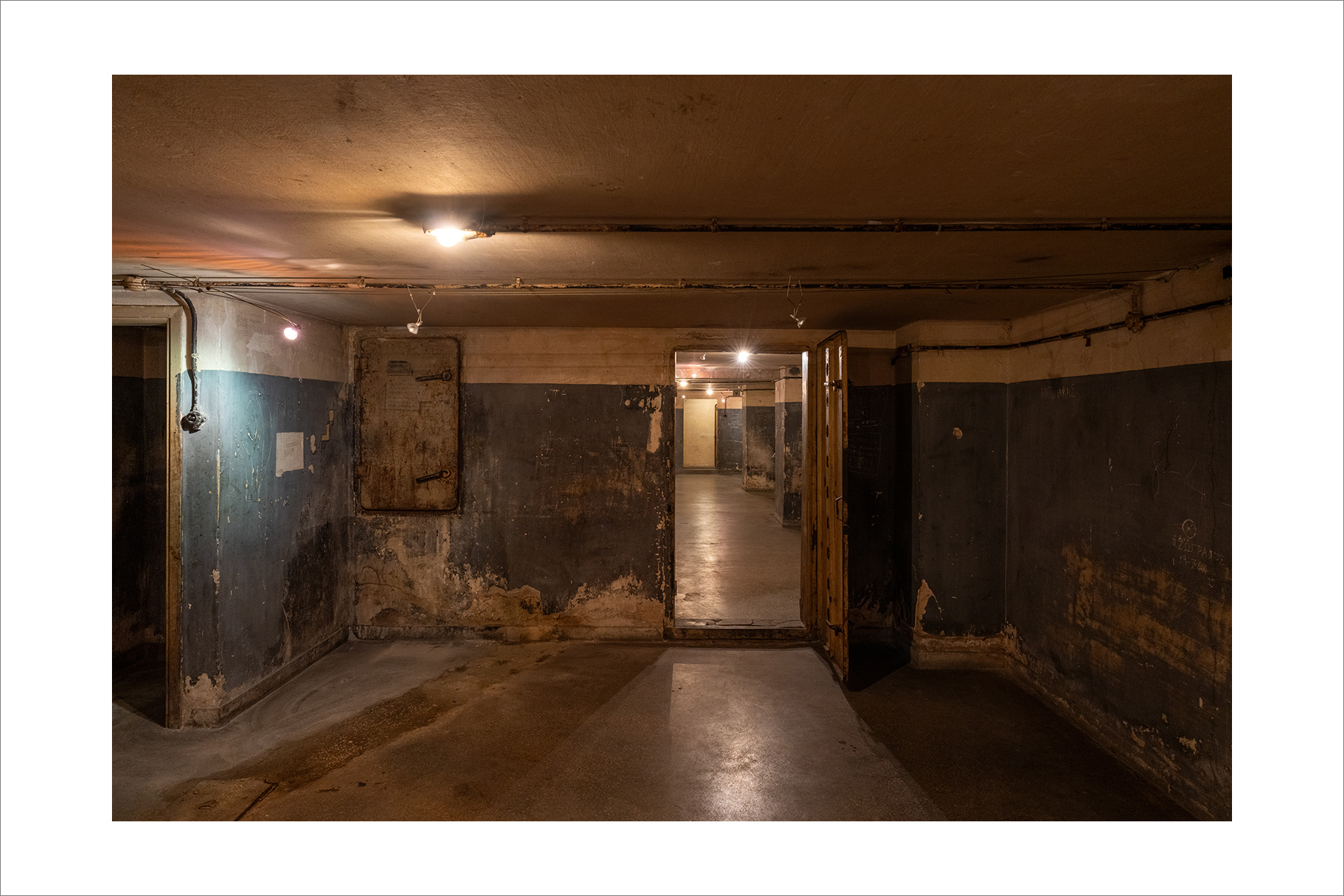
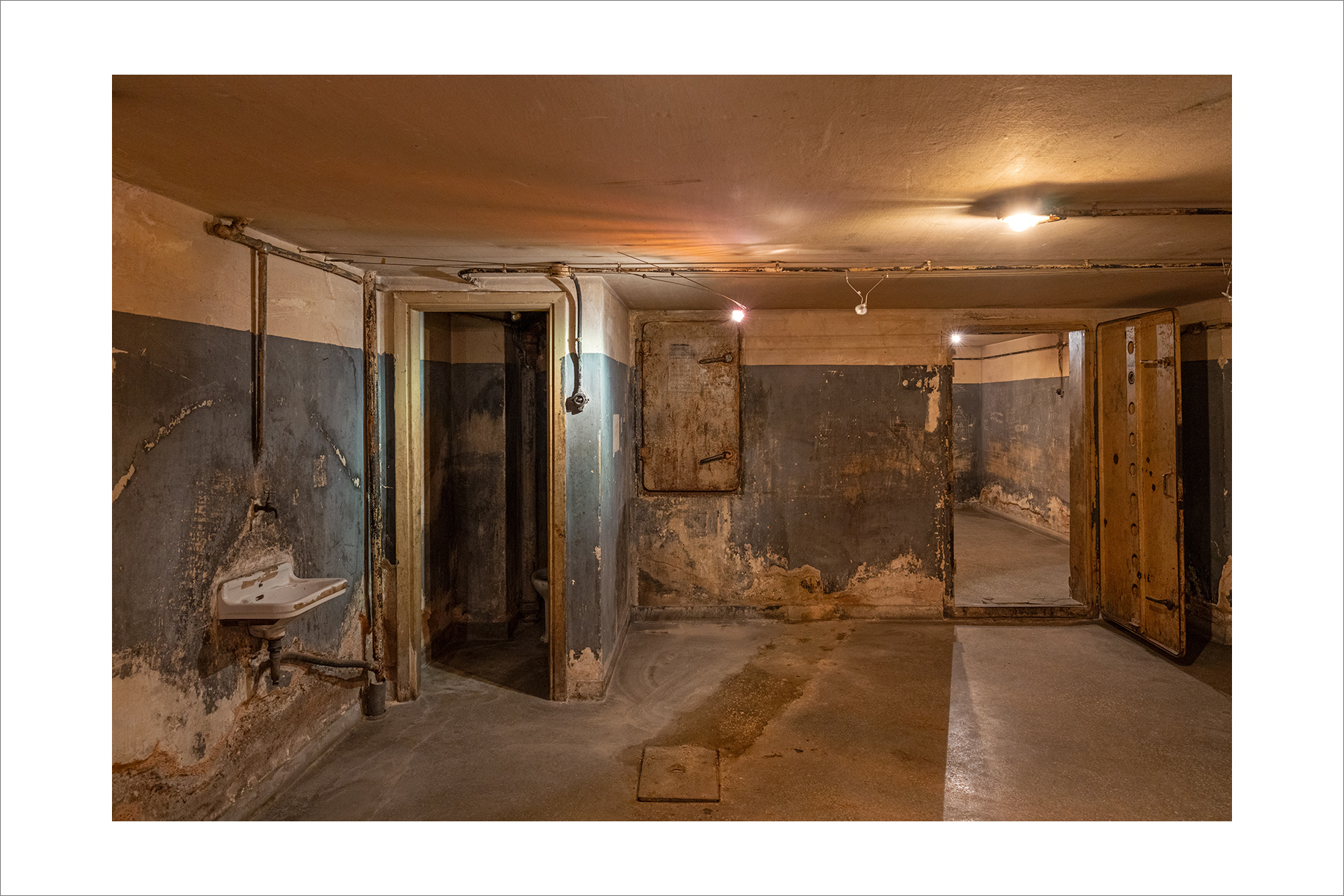
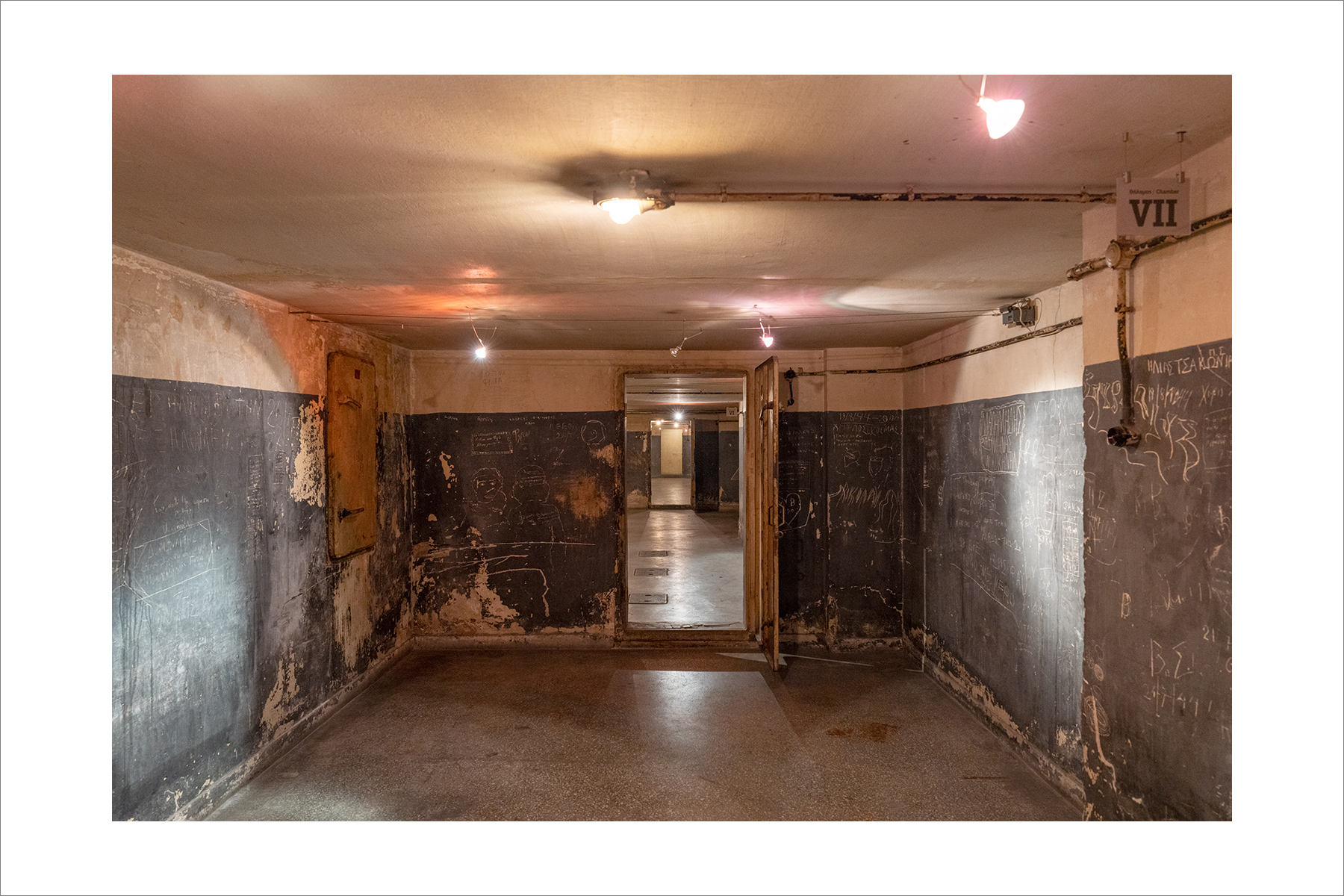
requisitioned by the occupying authorities. The underground air-raid shelter was converted
into a detention facility of the Kommandatur, the German military command.
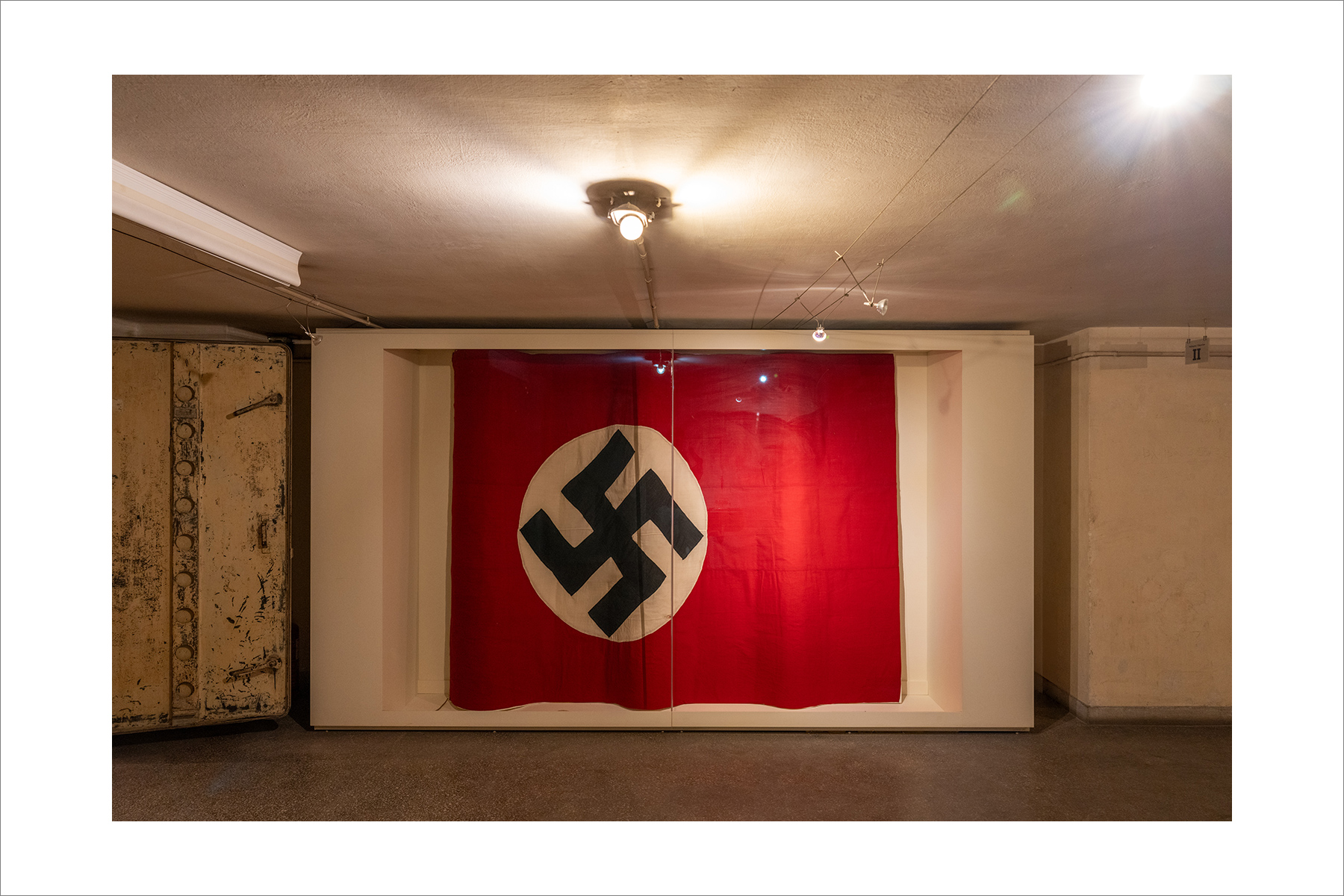
On the fifth floor, the German flag was raised — a symbol of domination and occupation
— and remained there until October 12, 1944.
Today, it is displayed in a glass case in the first basement level, near the entrance:
an emblem of power transformed into an exhibit of memory.
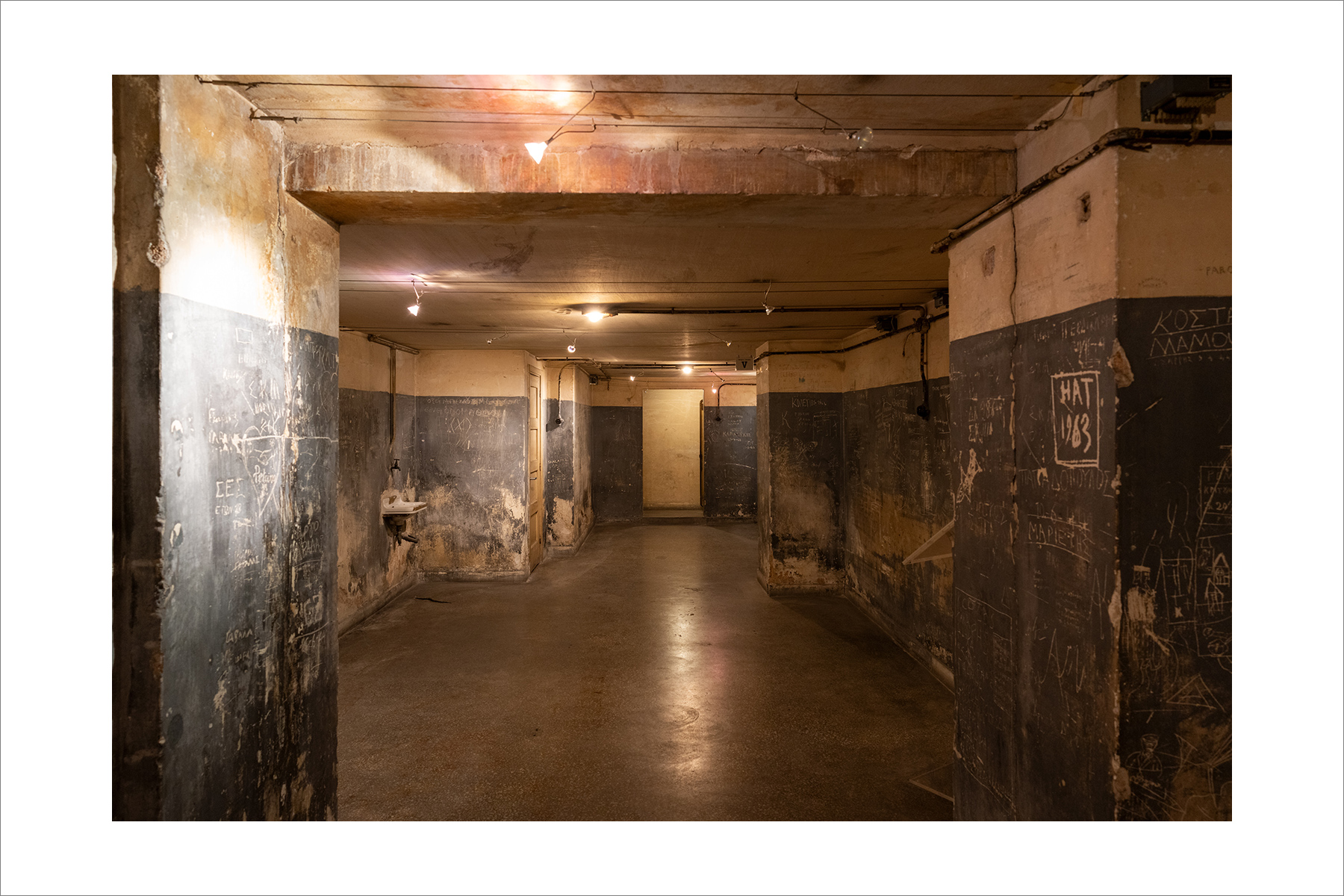
The two-level shelter operated as a center of detention and transfer.
Greeks of all ages were imprisoned there — even adolescents as young as fourteen —
often for minor or pretextual offenses. German and Italian anti-fascists were also held.
Most detainees remained for only a few days before being transferred to Averof Prison,
the Haidari camp, or to German concentration camps.
For many, passing through 4 Korai Street marked the antechamber
to an uncertain — and often tragic — journey.
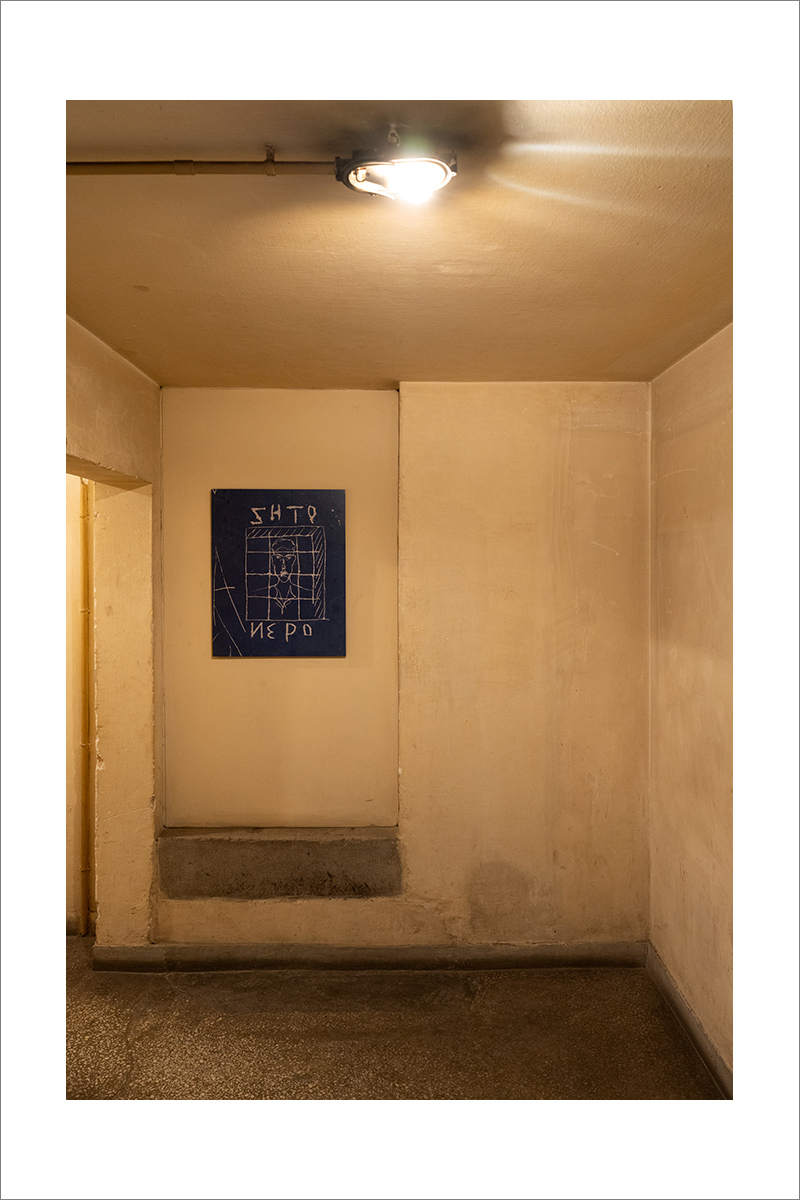
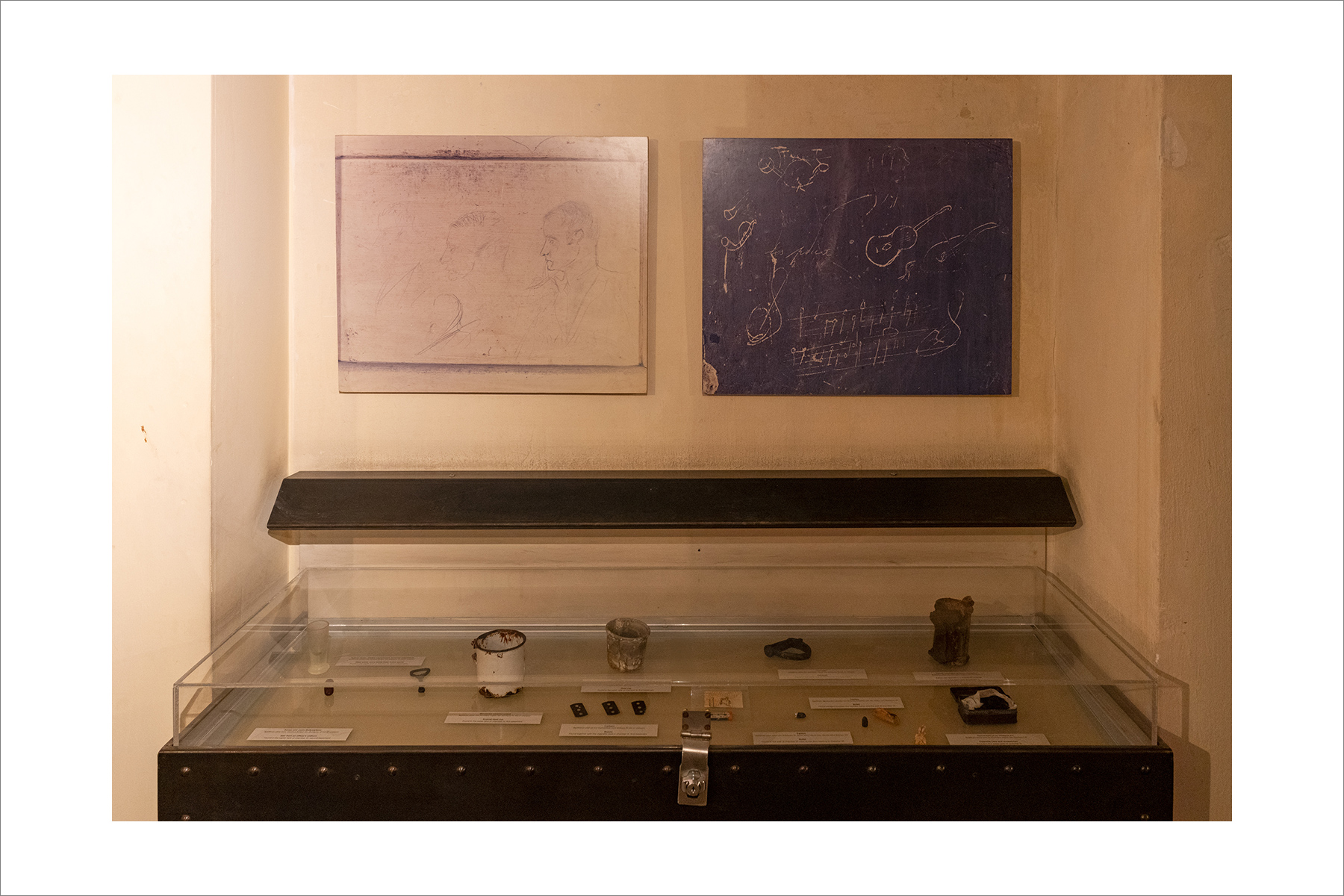
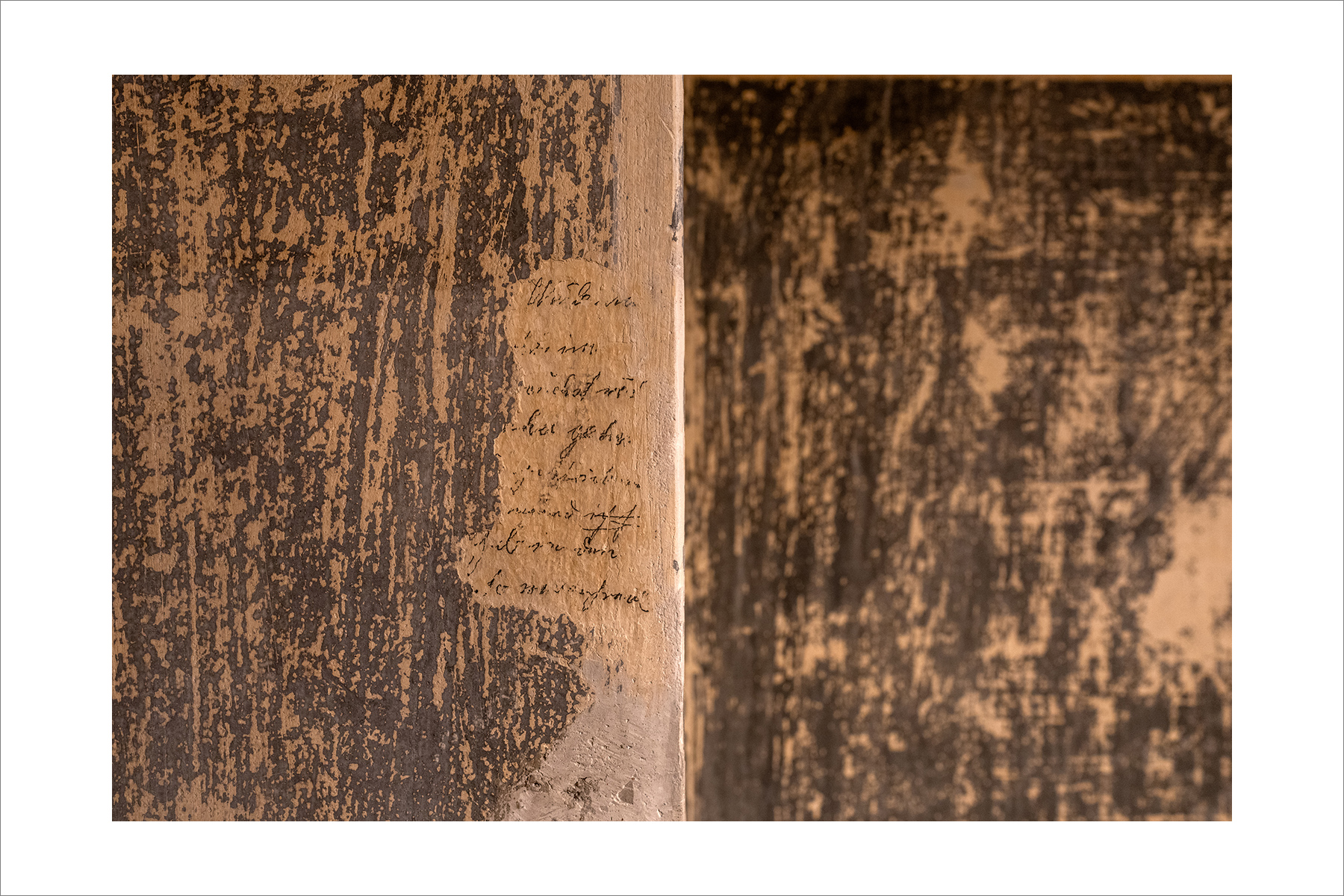
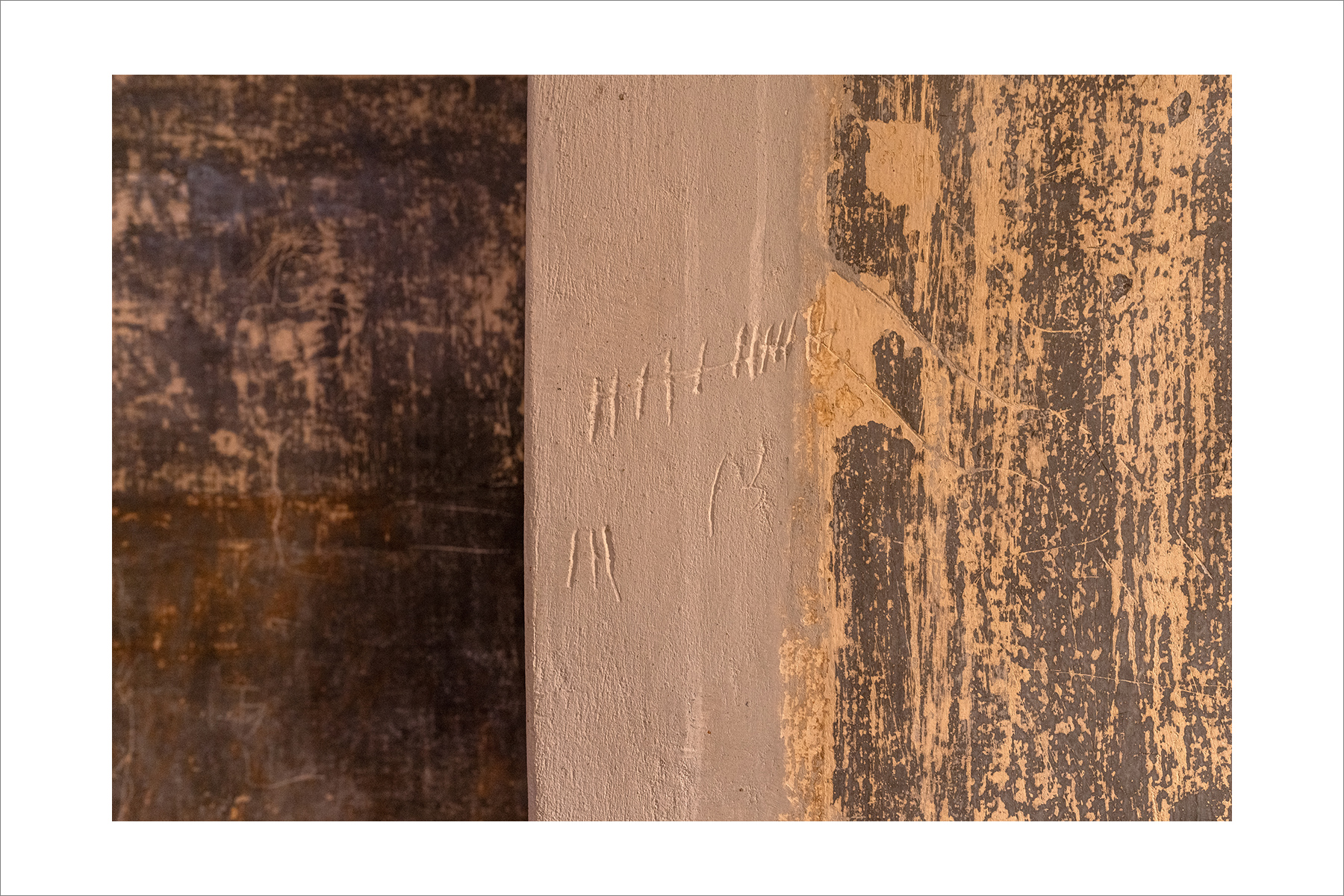
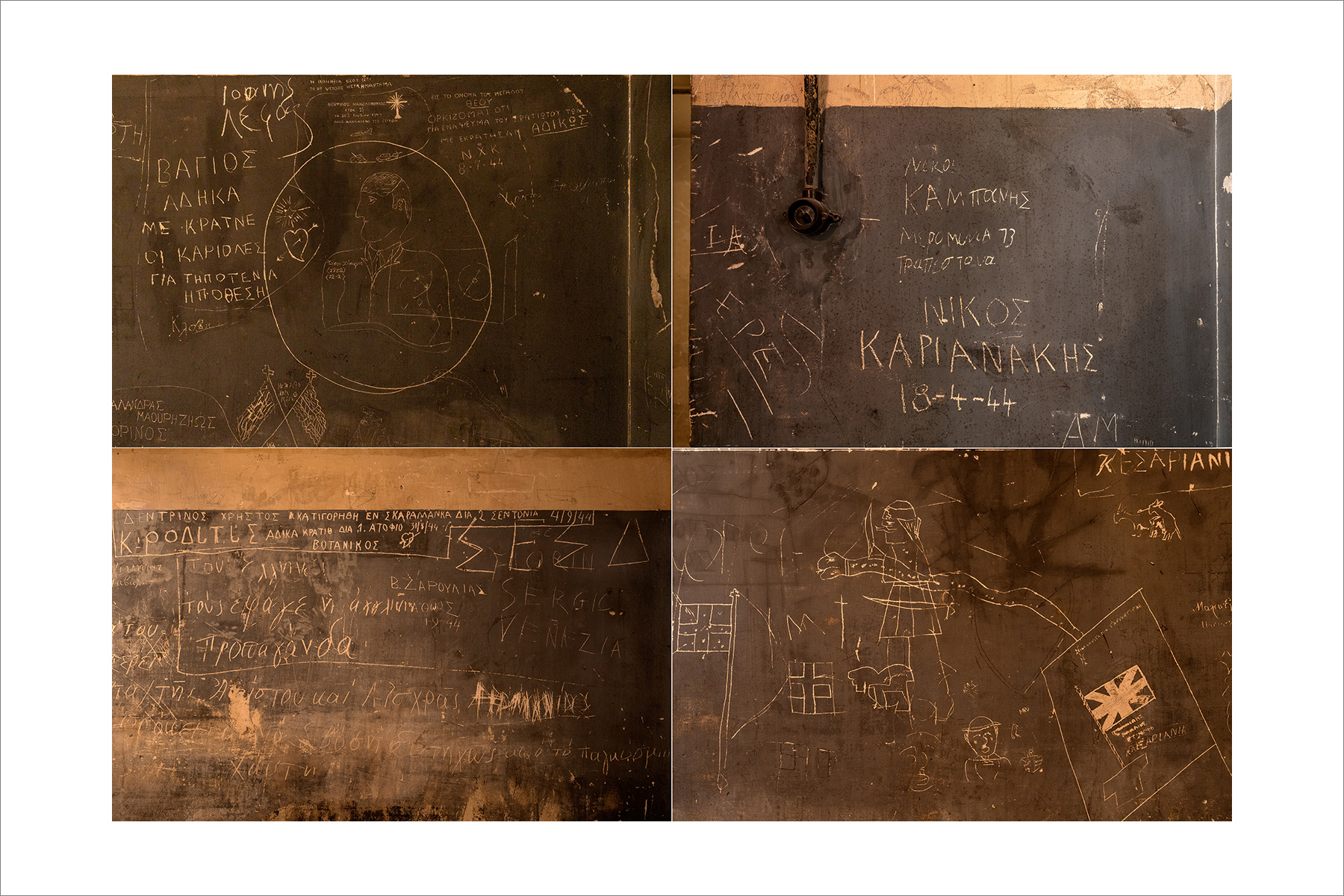
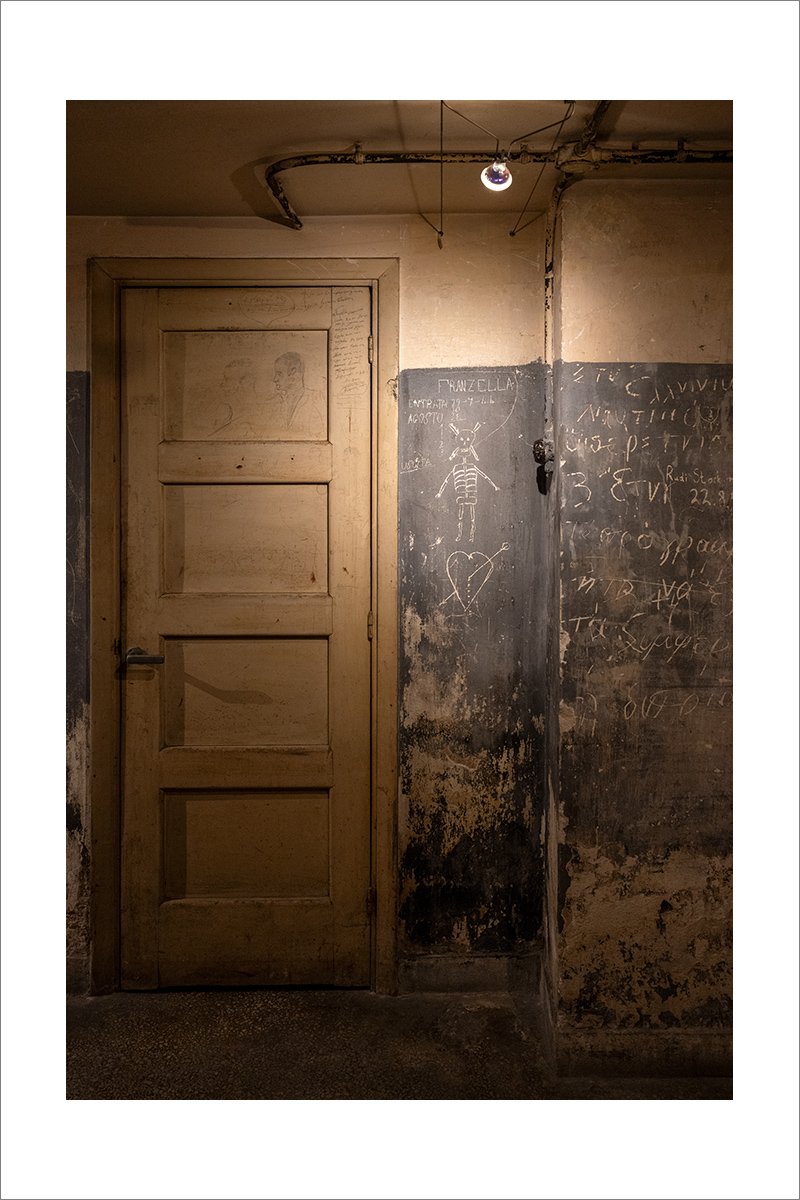
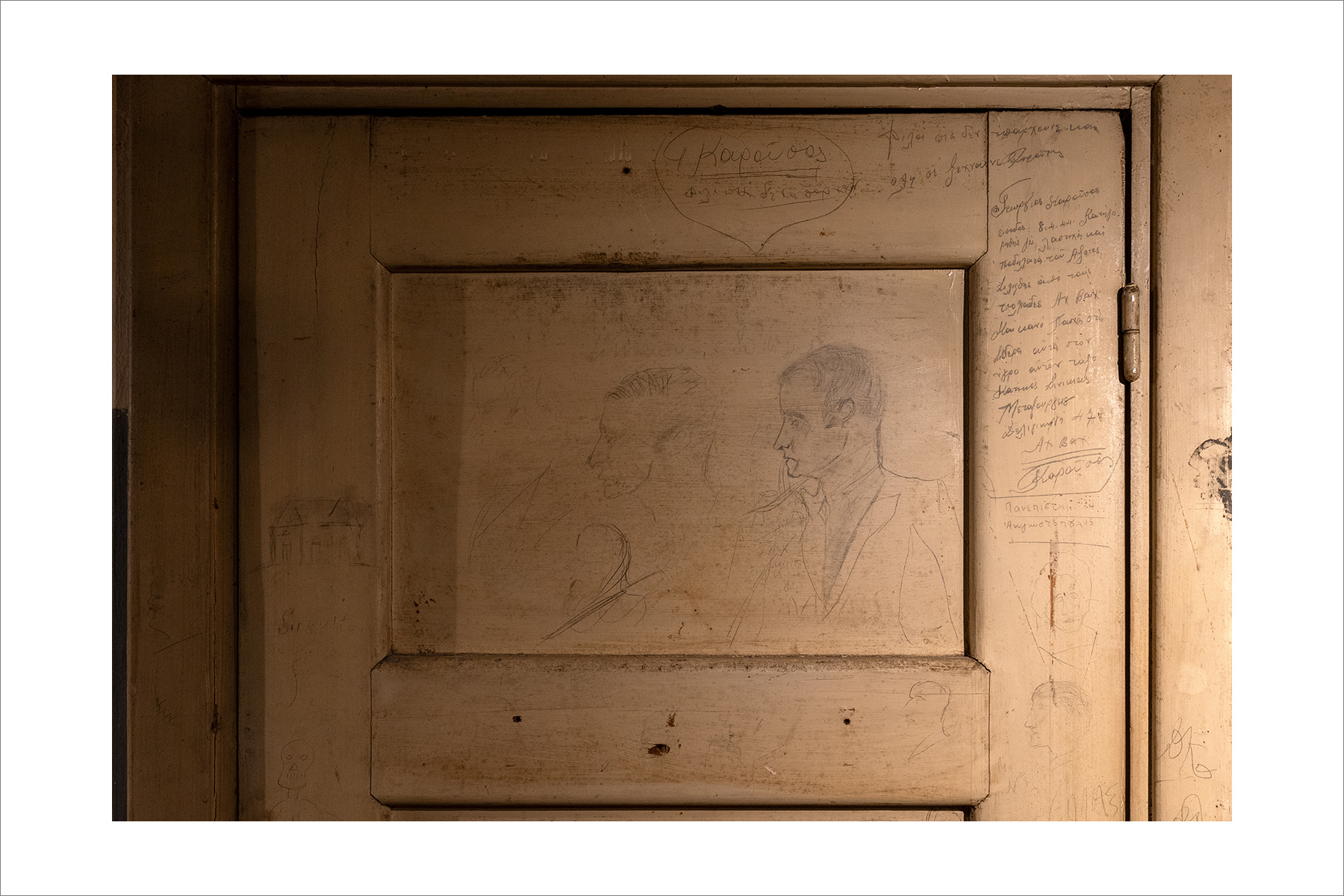
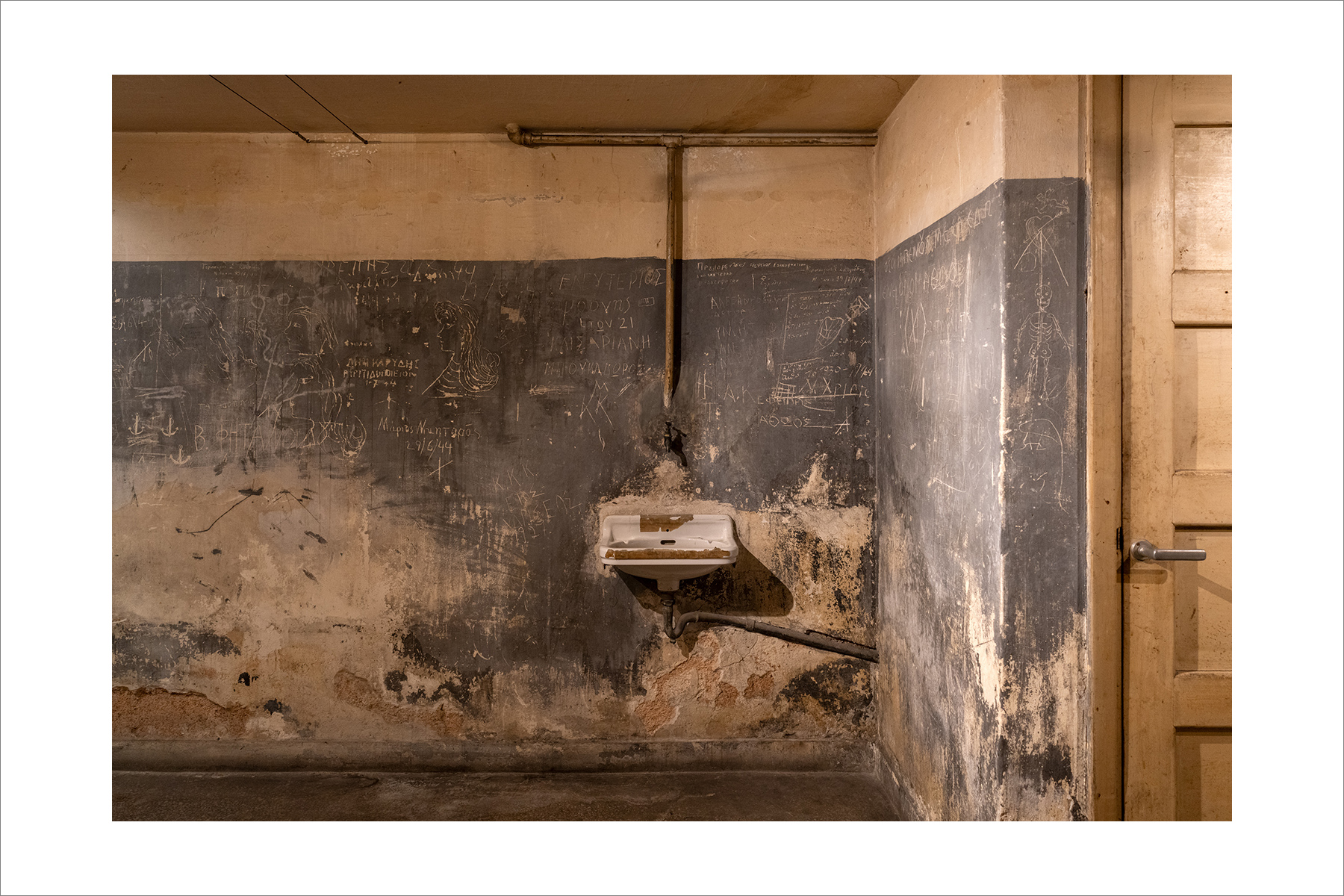
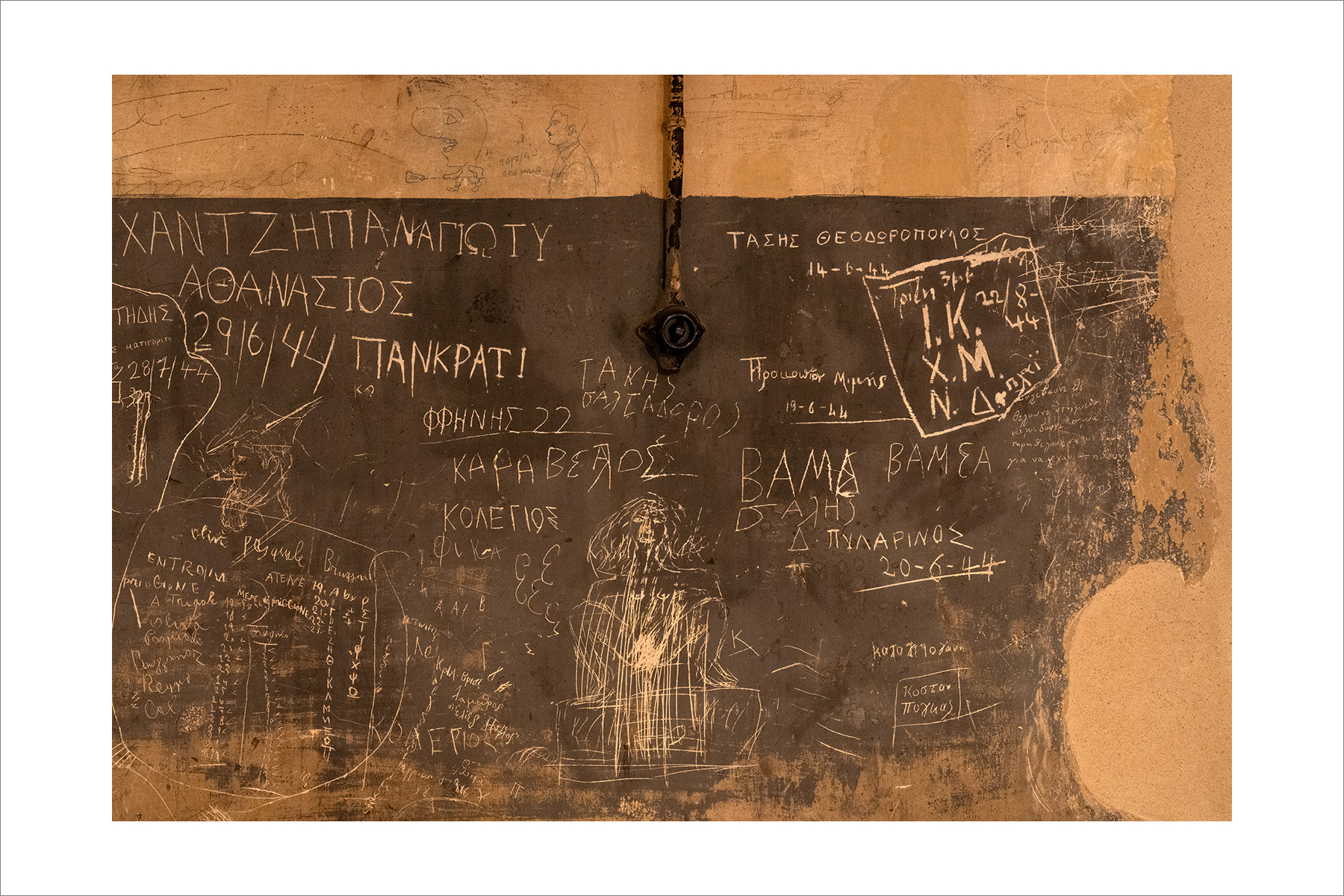
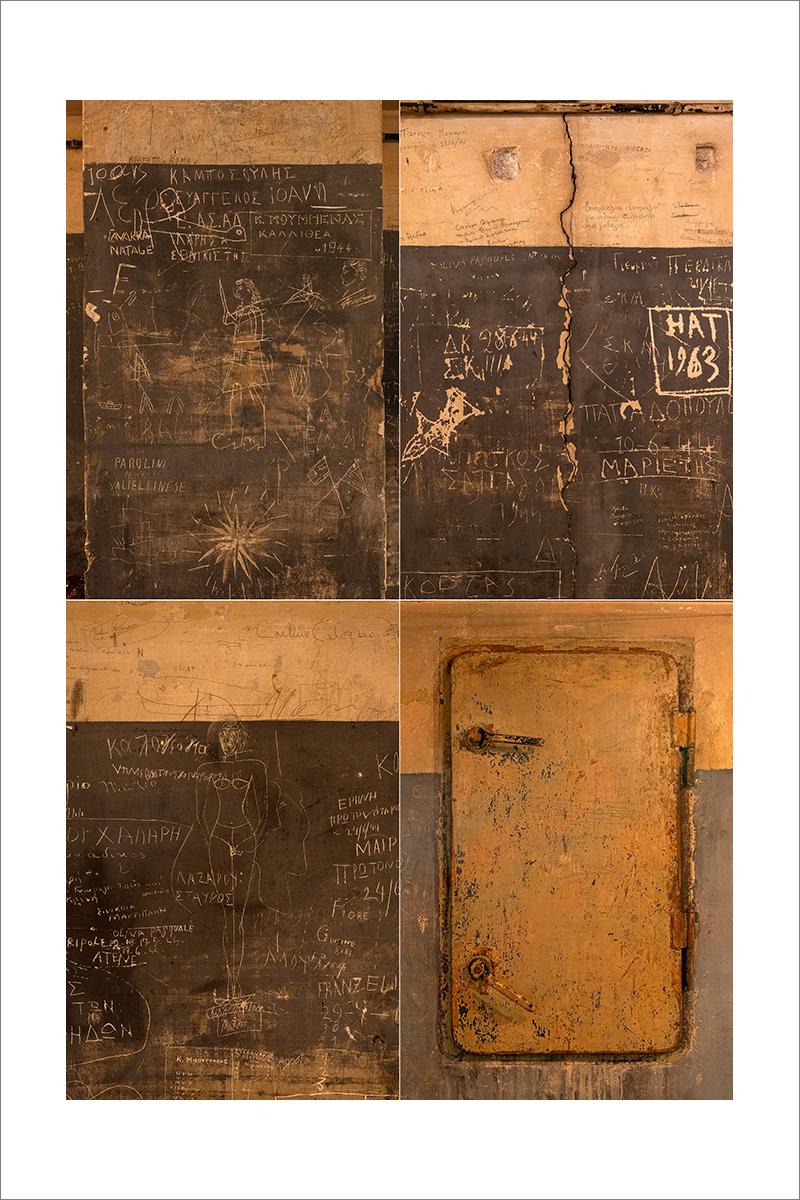
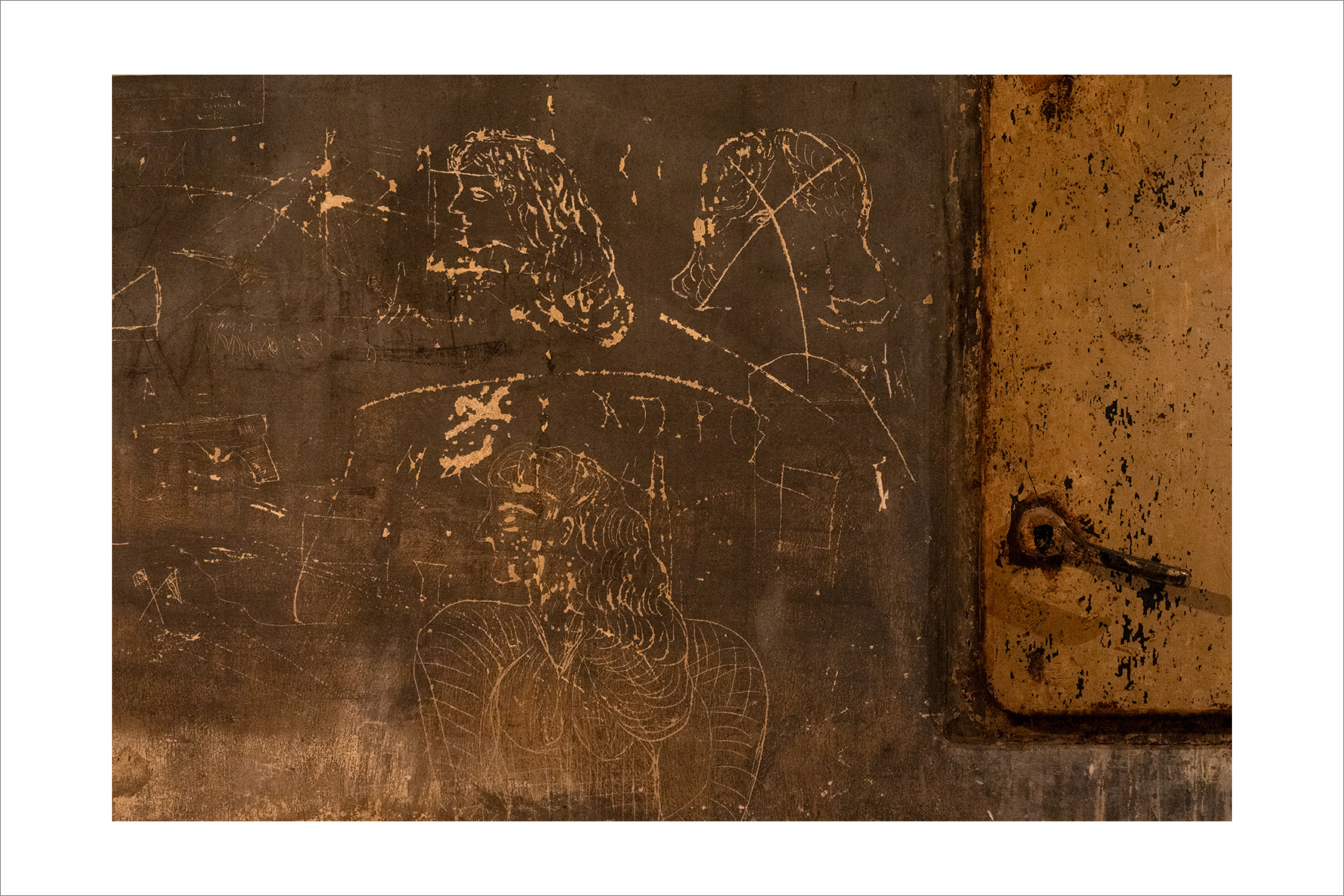
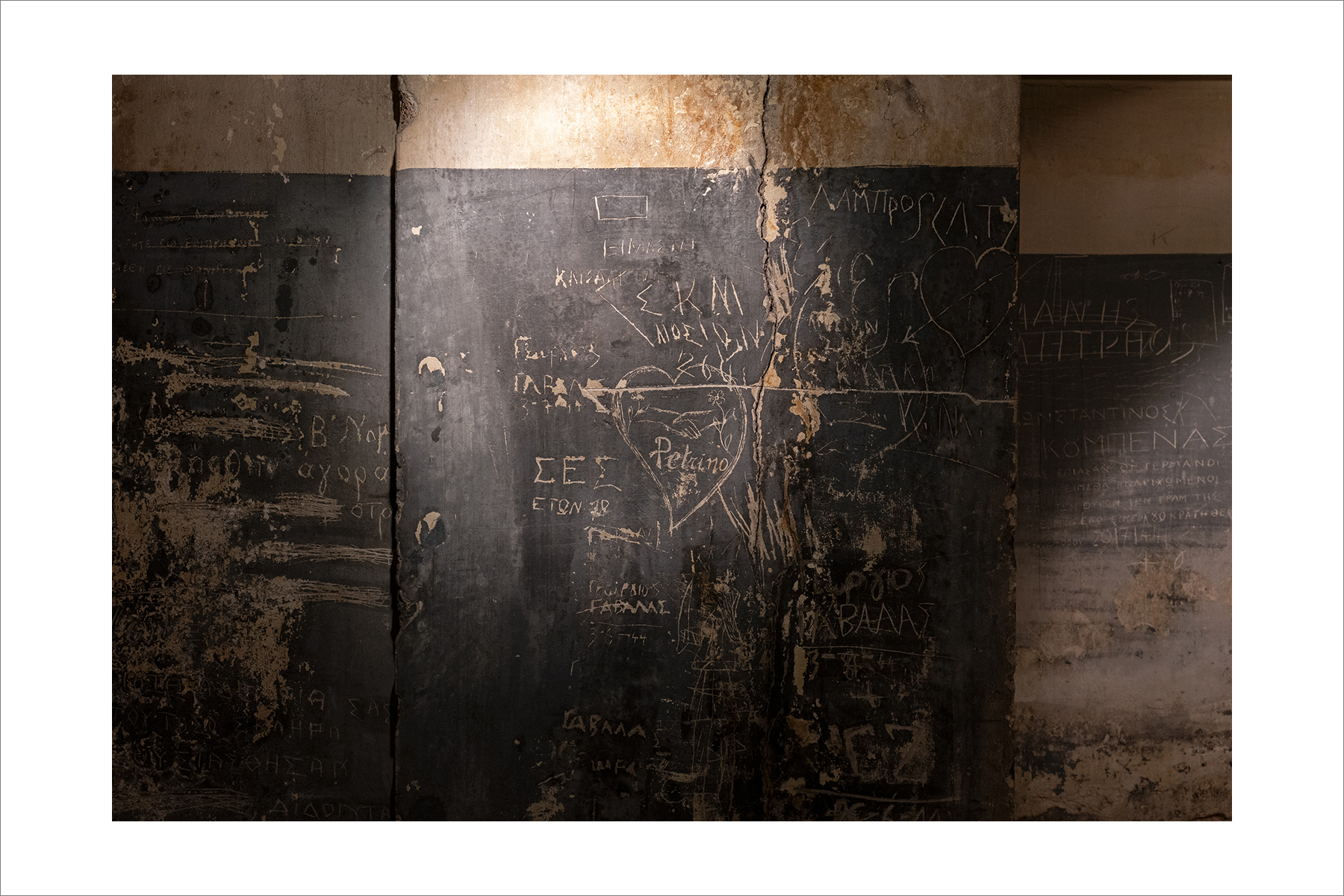
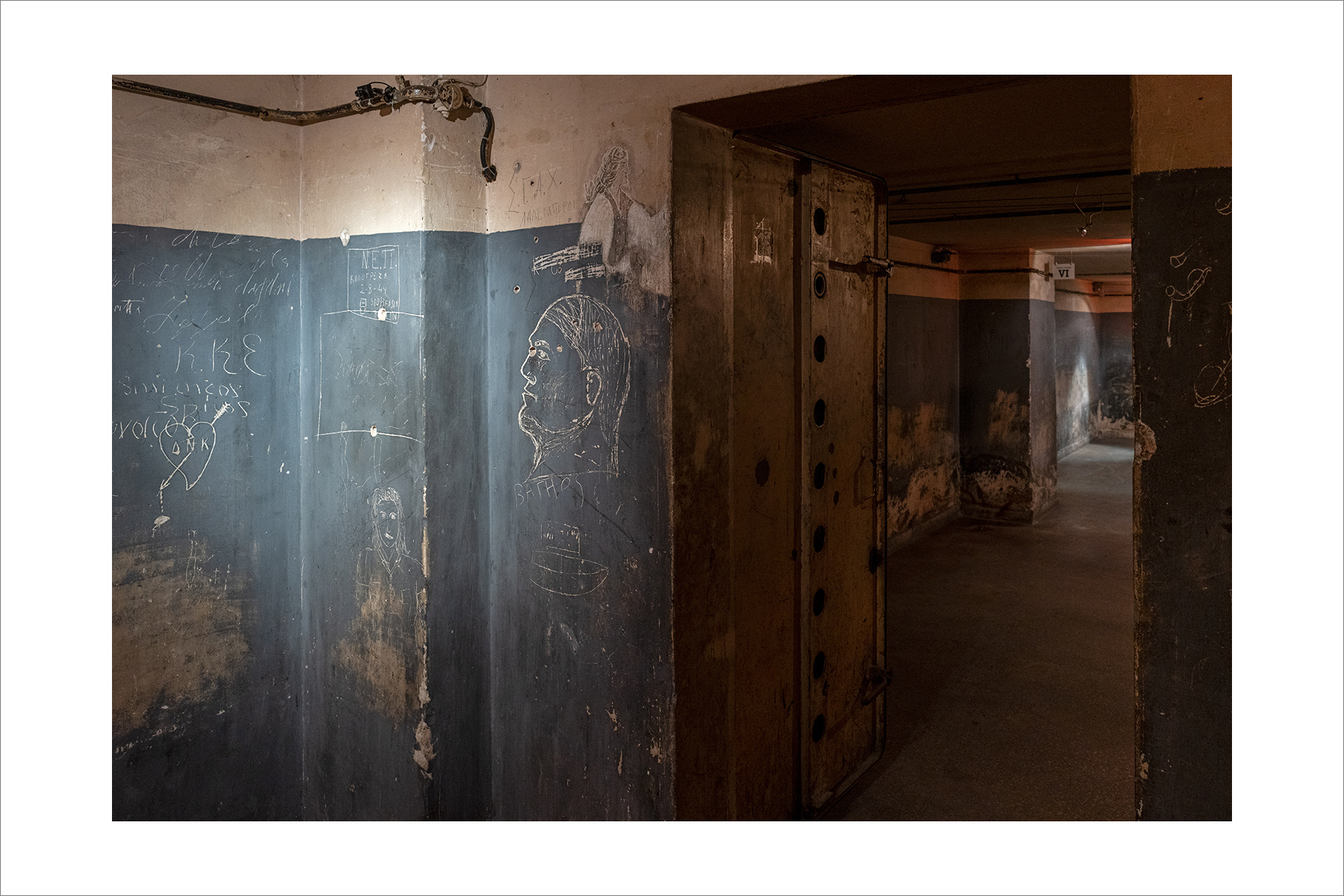
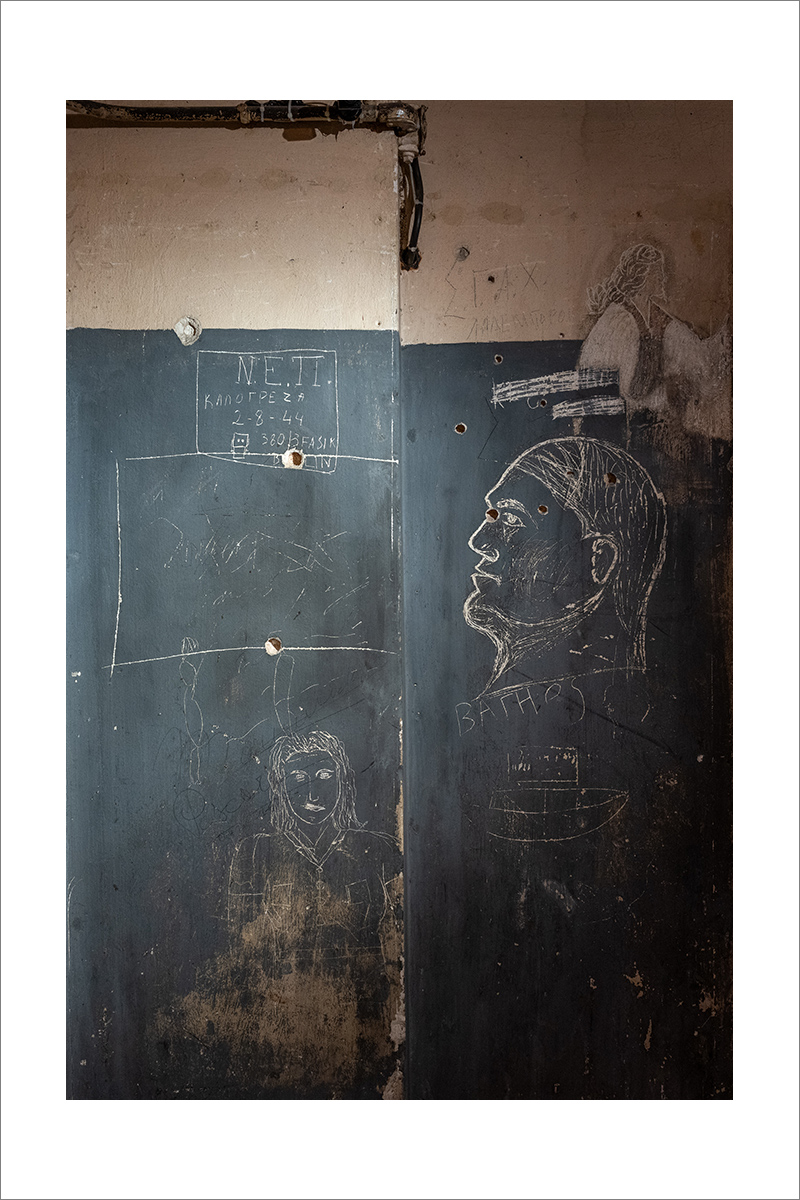
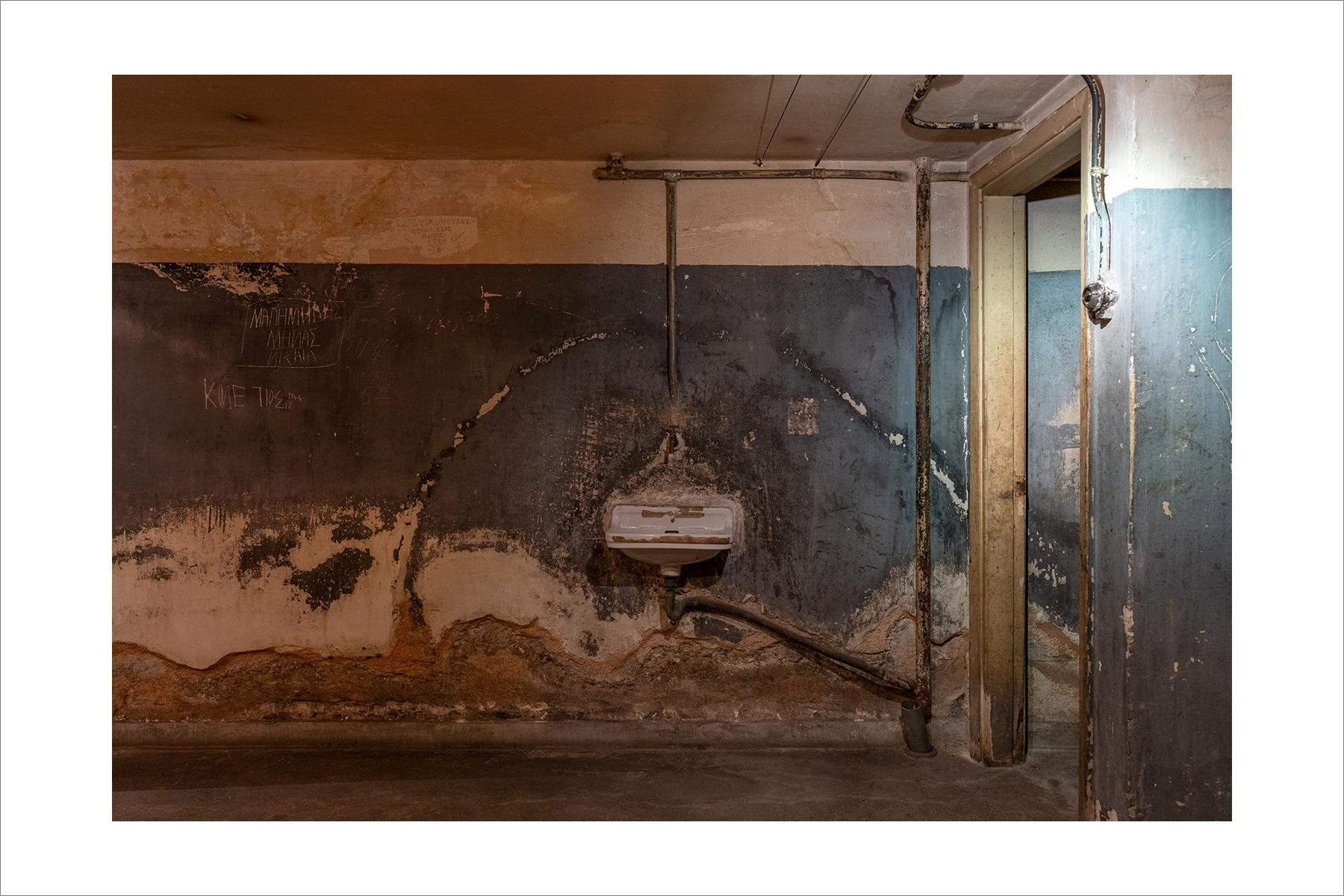
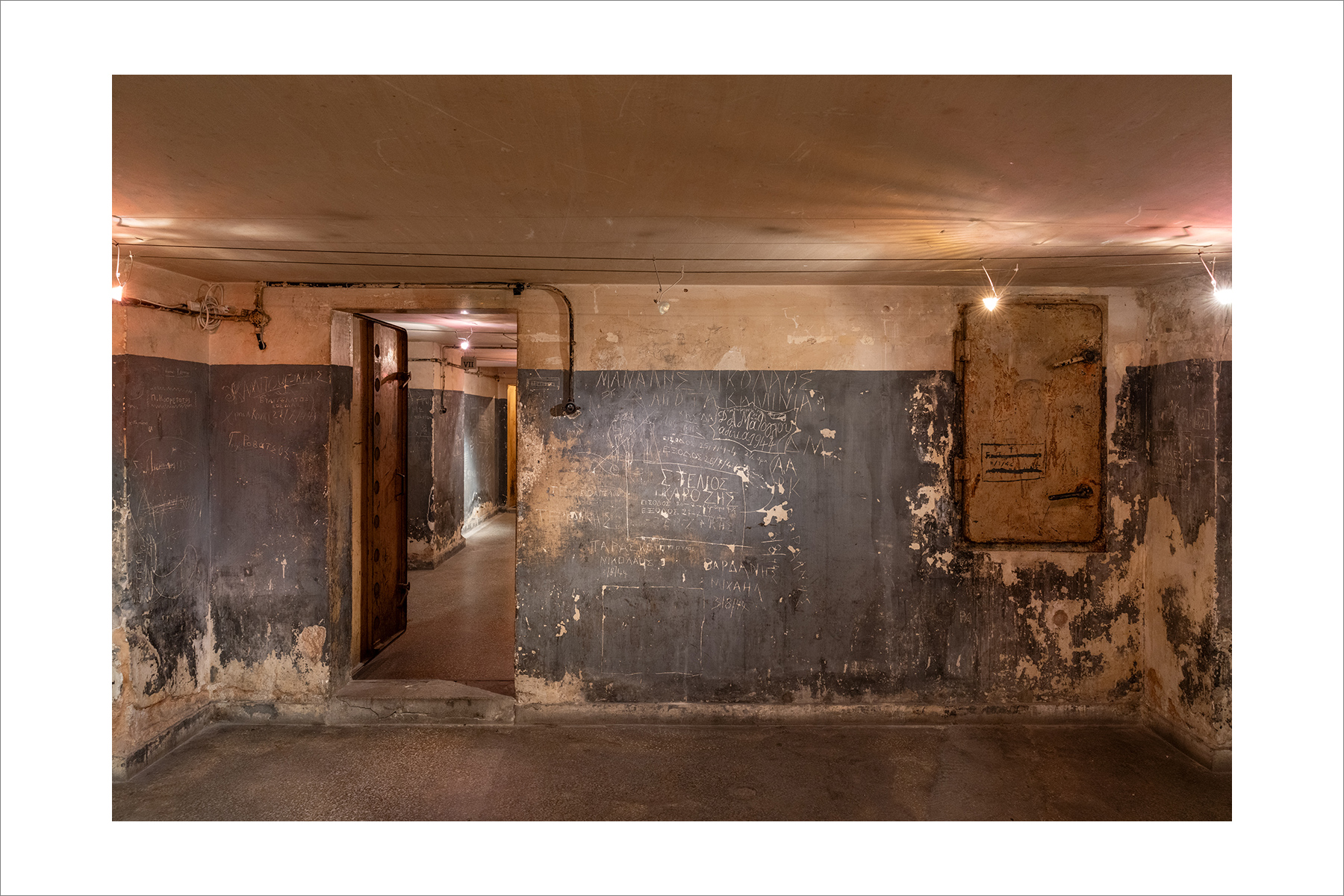
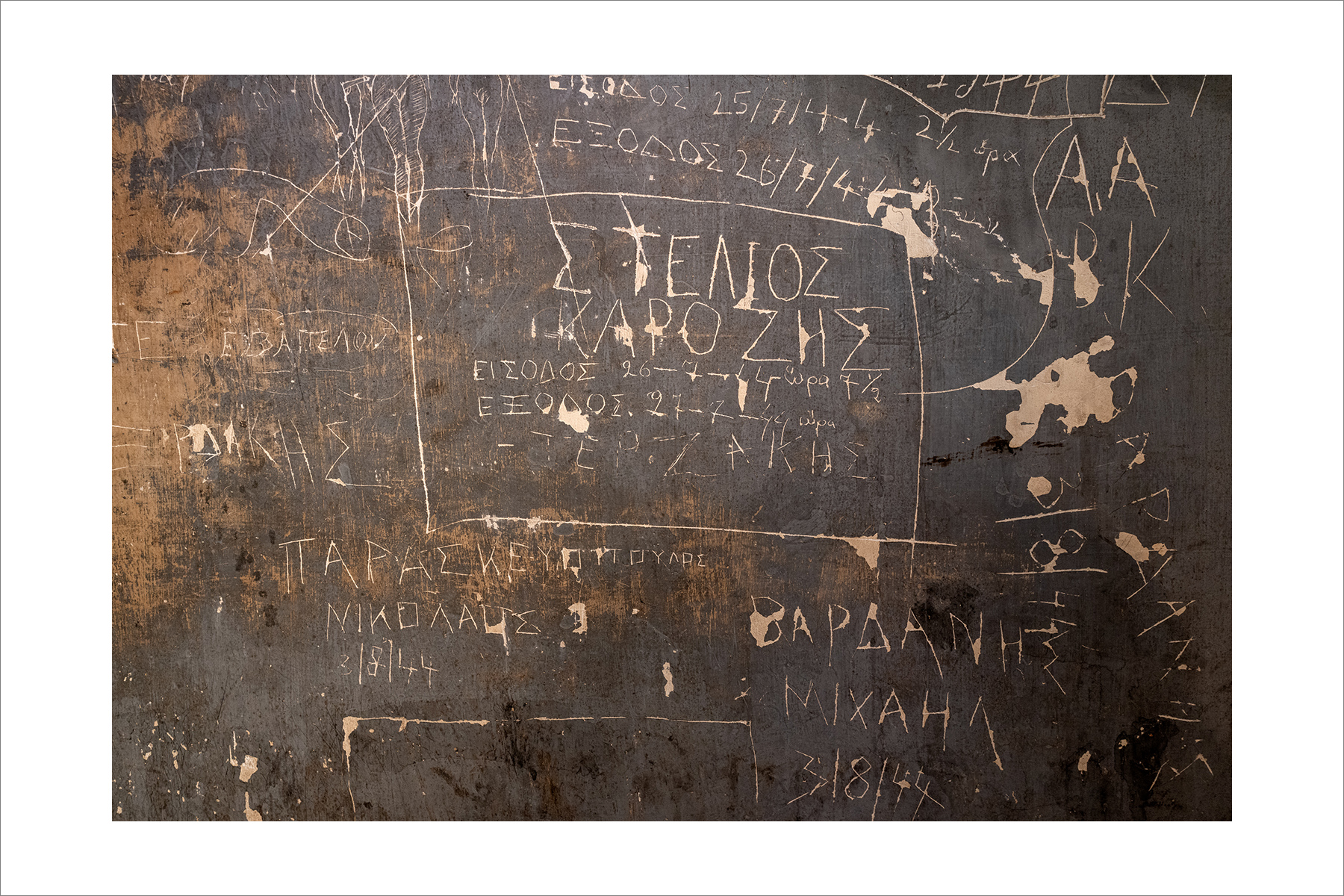
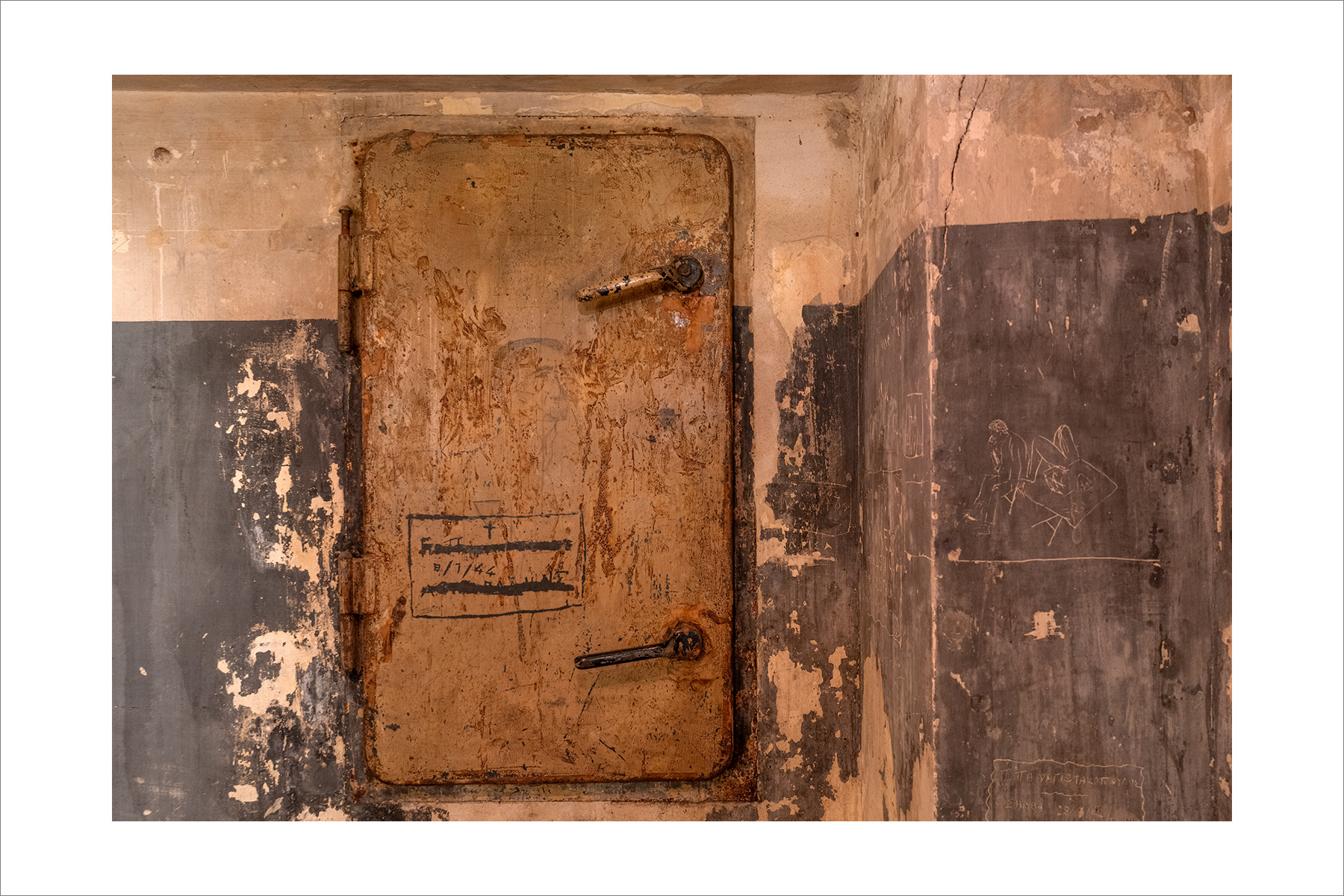
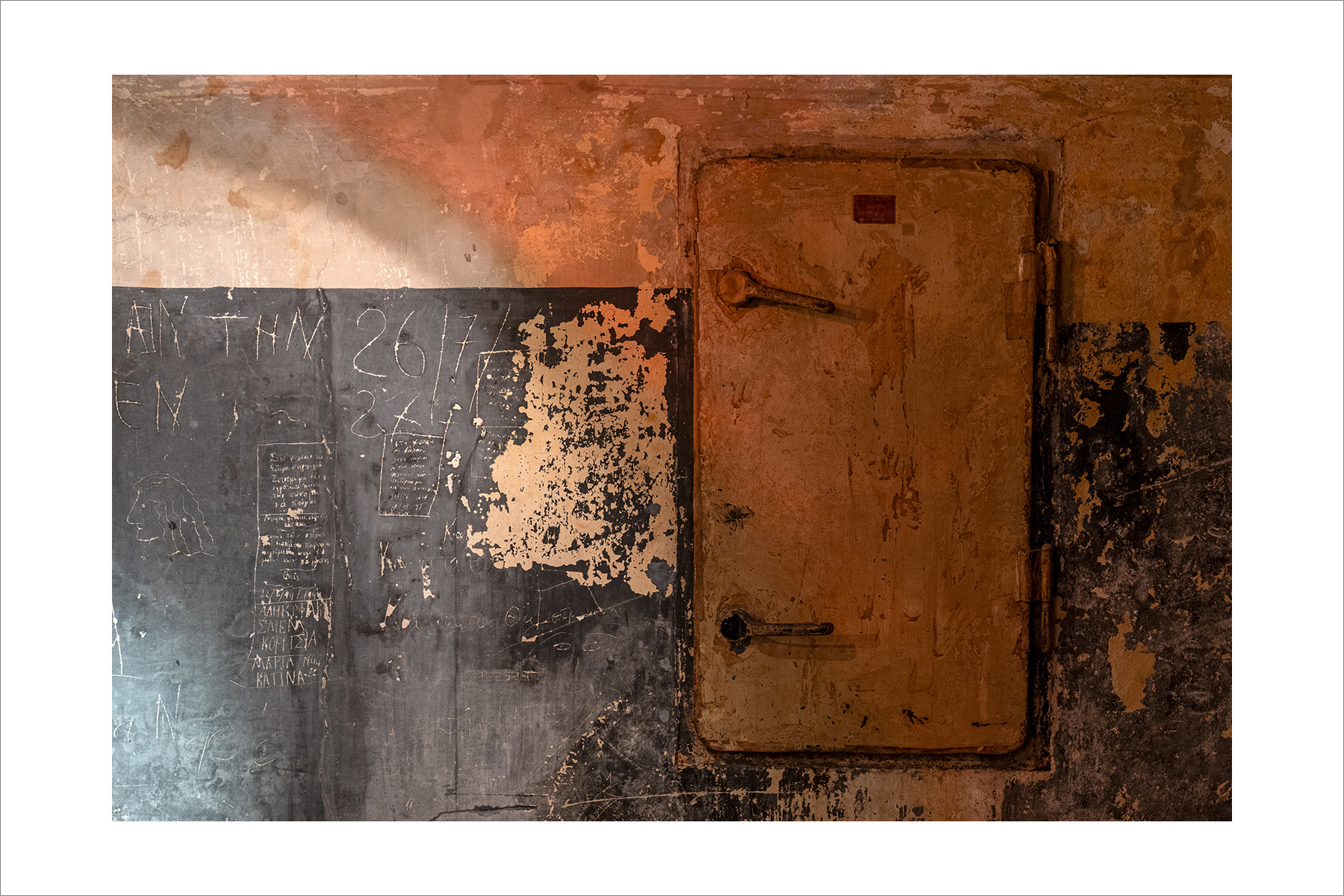
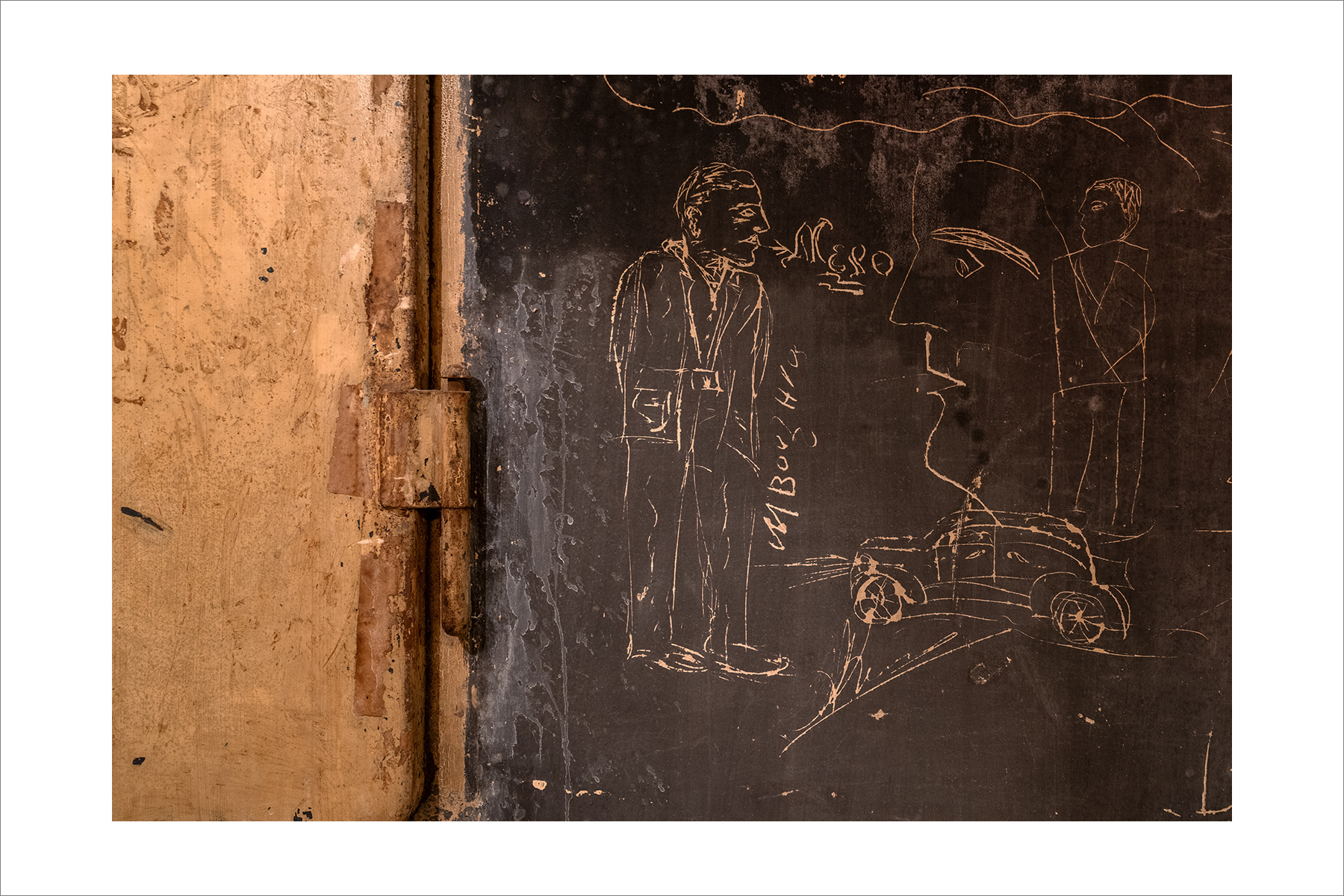
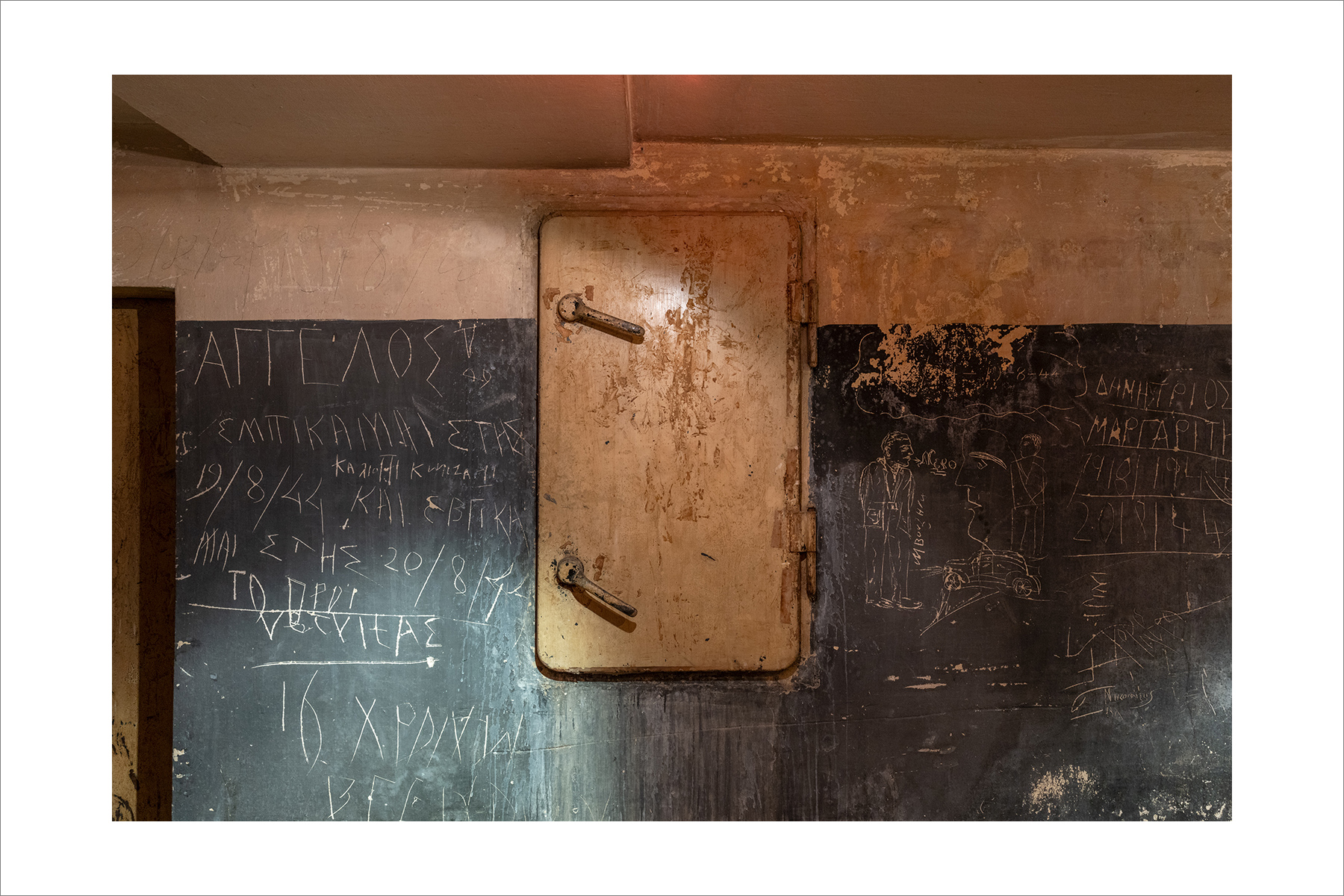
On the walls of the damp basements survives a silent archive: incised drawings
and inscriptions,names, dates, and messages in Greek, English, Italian, and German.
Curses and prayers. Hearts carved beside pleas for freedom. References to informers,
farewells,traces of fear and defiance. These marks, etched into the whitewashed plaster,
constitute an informal testimony — a microhistory of the Occupation inscribed
into the body of the building.
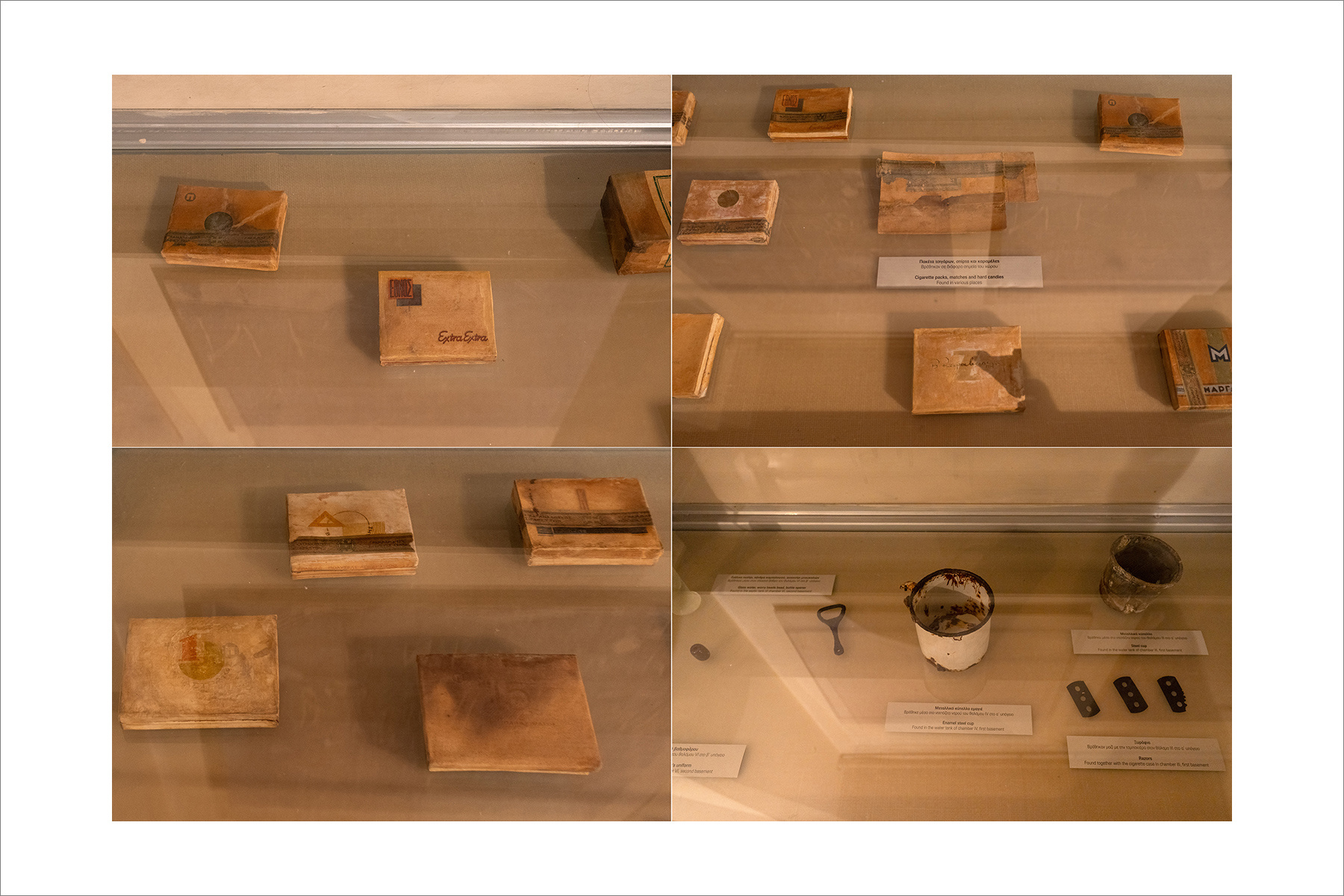
The photographic approach does not merely record surfaces; it seeks to retrieve the depth
of this silence, to transform trace into evidence and evidence into narrative.
After the Liberation, the building housed the central offices of the National Liberation Front
(EAM),thus incorporating yet another layer of historical charge. A period of successive
requisitions followed, until the building returned to the possession of the
National Insurance Company, which undertook extensive restoration works.
On January 31, 1991, at the initiative of the National Insurance Company,
the site was declared a Listed Historic Monument by the Central Council for Modern
Monuments of the Ministry of Culture. The basement detention cells were officially
recognized as the “Site of Historical Memory 1941–1944.” This institutional act did not
merely restore a monument; it acknowledged the city’s right to remember.
In 2023, the National Bank of Greece and the National Insurance Company donated the
“Site of Historical Memory 1941–1944” to the Municipality of Athens and the Ministry
of Culture and Sports.
This act sealed the transition of the site from private property to collective heritage.
The building at 4 Korai Street is not simply an architectural example of the interwar period,
nor solely a site of detention during the Occupation.
It is a place where the material substance of the city meets the memory of its people.
This photographic essay seeks to explore that encounter: to reveal how space becomes
a bearer of trauma, how architecture transforms into archive, and how the image can
function as an act of inquiry — penetrating, reflective, and profoundly human.
 Korai 4, 2026 | 1/44
  Korai 4, 2026 | 2/44
  Korai 4, 2026 | 3/44
  Korai 4, 2026 | 4/44
  Korai 4, 2026 | 5/44
  Korai 4, 2026 | 6/44
  Korai 4, 2026 | 7/44
  Korai 4, 2026 | 8/44
  Korai 4, 2026 | 9/44
  Korai 4, 2026 | 10/44
  Korai 4, 2026 | 11/44
  Korai 4, 2026 | 12/44
  Korai 4, 2026 | 13/44
  Korai 4, 2026 | 14/44
  Korai 4, 2026 | 15/44
  Korai 4, 2026 | 16/44
  Korai 4, 2026 | 17/44
  Korai 4, 2026 | 18/44
  Korai 4, 2026 | 19/44
  Korai 4, 2026 | 20/44
  Korai 4, 2026 | 21/44
  Korai 4, 2026 | 22/44
  Korai 4, 2026 | 23/44
  Korai 4, 2026 | 24/44
  Korai 4, 2026 | 25/44
  Korai 4, 2026 | 26/44
  Korai 4, 2026 | 27/44
  Korai 4, 2026 | 28/44
  Korai 4, 2026 | 29/44
  Korai 4, 2026 | 30/44
  Korai 4, 2026 | 31/44
  Korai 4, 2026 | 32/44
  Korai 4, 2026 | 33/44
  Korai 4, 2026 | 34/44
  Korai 4, 2026 | 35/44
  Korai 4, 2026 | 36/44
  Korai 4, 2026 | 37/44
  Korai 4, 2026 | 38/44
  Korai 4, 2026 | 39/44
  Korai 4, 2026 | 40/44
  Korai 4, 2026 | 41/44
  Korai 4, 2026 | 42/44
  Korai 4, 2026 | 43/44
  Korai 4, 2026 | 44/44