
Illustrating «The Miracle of Kaisariani»
Photographic Essay
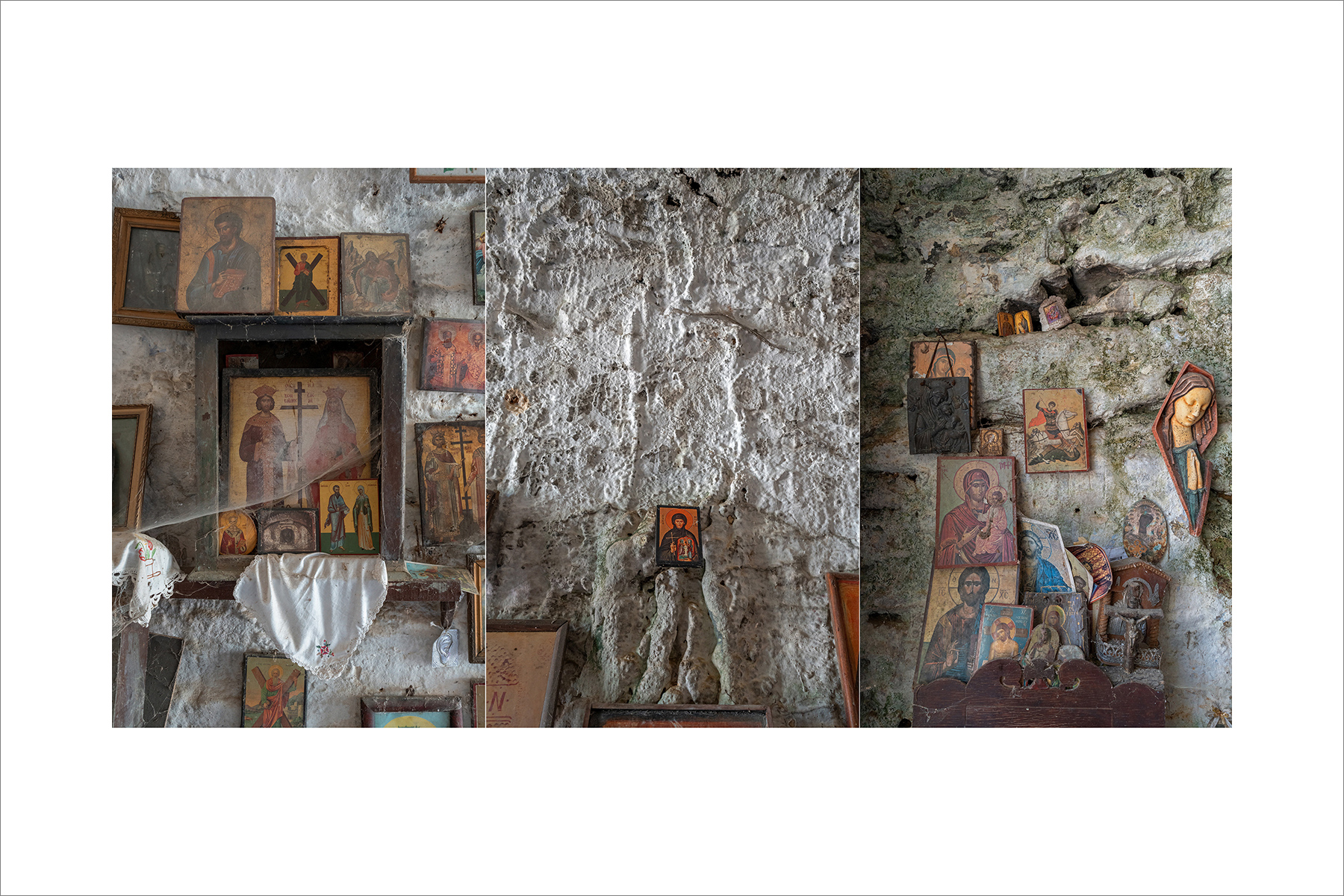
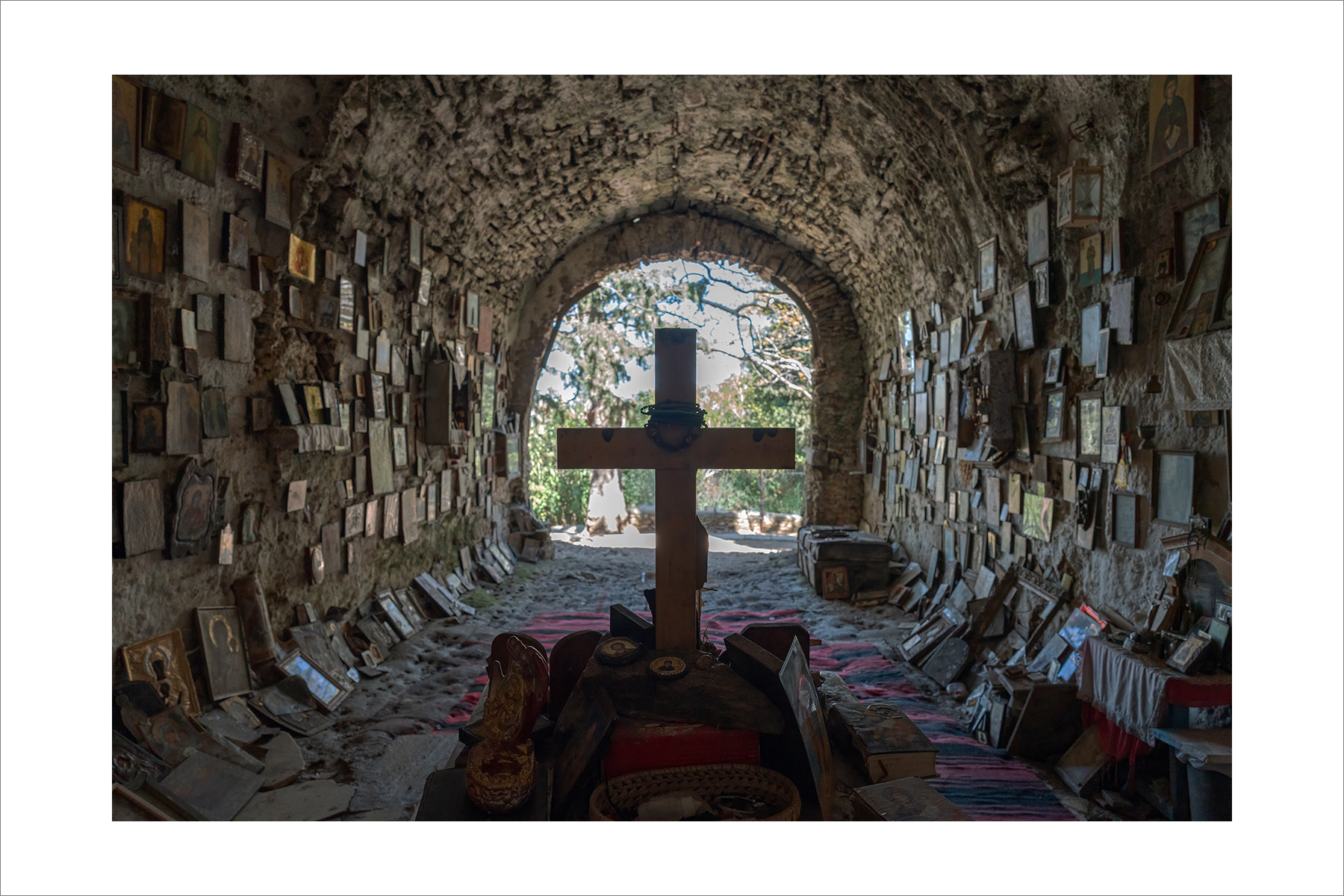
At the Ascension site on Mount Hymettus, a natural cavity in the rock functions
as an informal place of worship. The so-called “Hole Church” remains open—without
boundaries, without a clear distinction between the natural and the humanly shaped.
In the past, water from a higher aqueduct would flow into its interior, quietly
emerging within the sanctuary. The locals considered it holy—not by proof,
but by necessity.
In his short story “The Miracle of Kaisariani,” Alexandros Papadiamantis refers
to the small chapel of the Ascension and to the folk belief in the miraculous waters
of Hymettus’ springs:
“It was a beautiful cave, in the towering rock, ash-colored, dripping coolness all around.
The place was fragrant with thyme, mastic shrubs, and wild mint. A crowd of
people—many women, many men, and children like a swarm of bees—some standing,
some sitting, a few sick with various ailments, wretched and crippled, were there
making the sign of the cross. The water was cool, sweet water, holy water.
It had a fragrance unlike any other…”
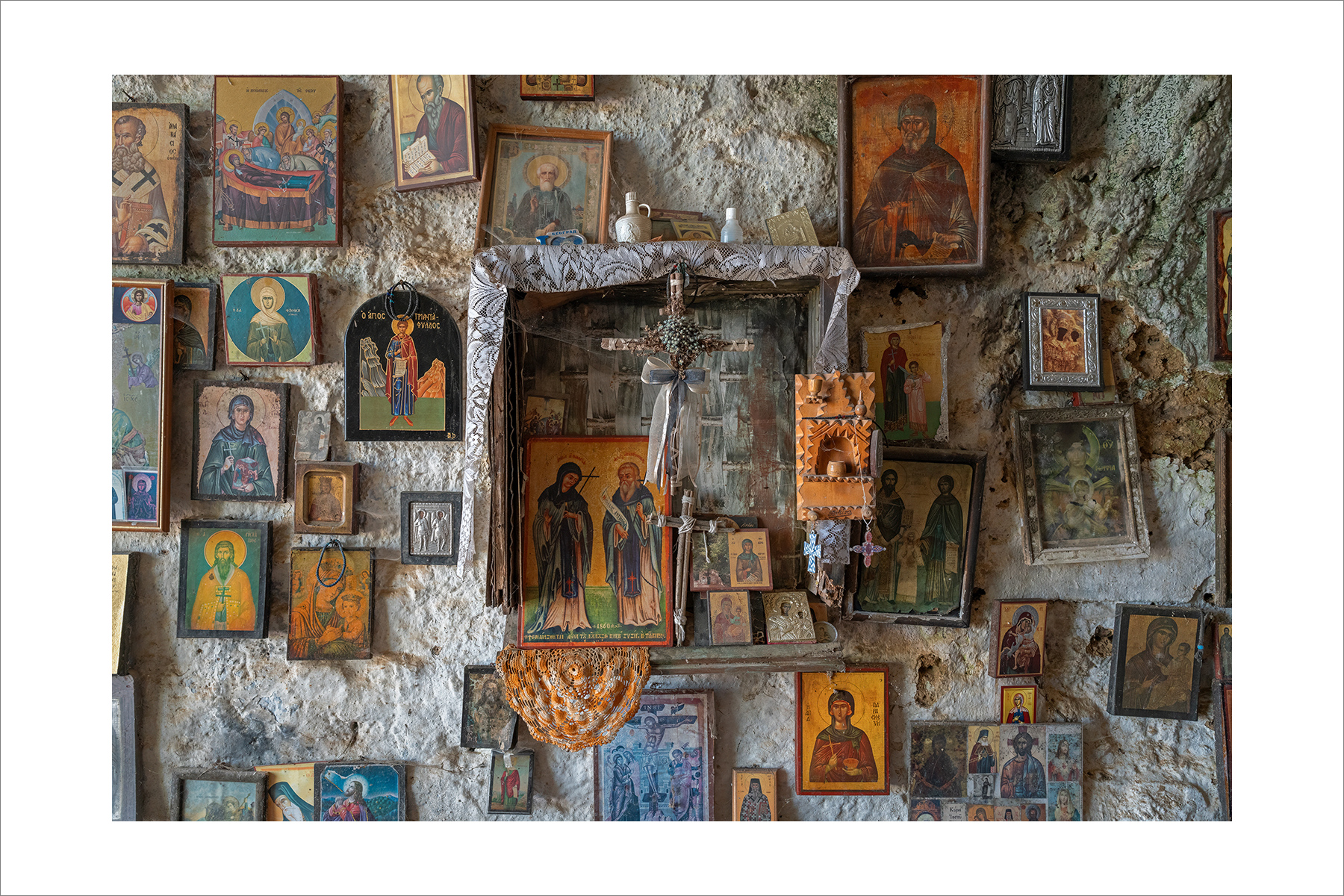
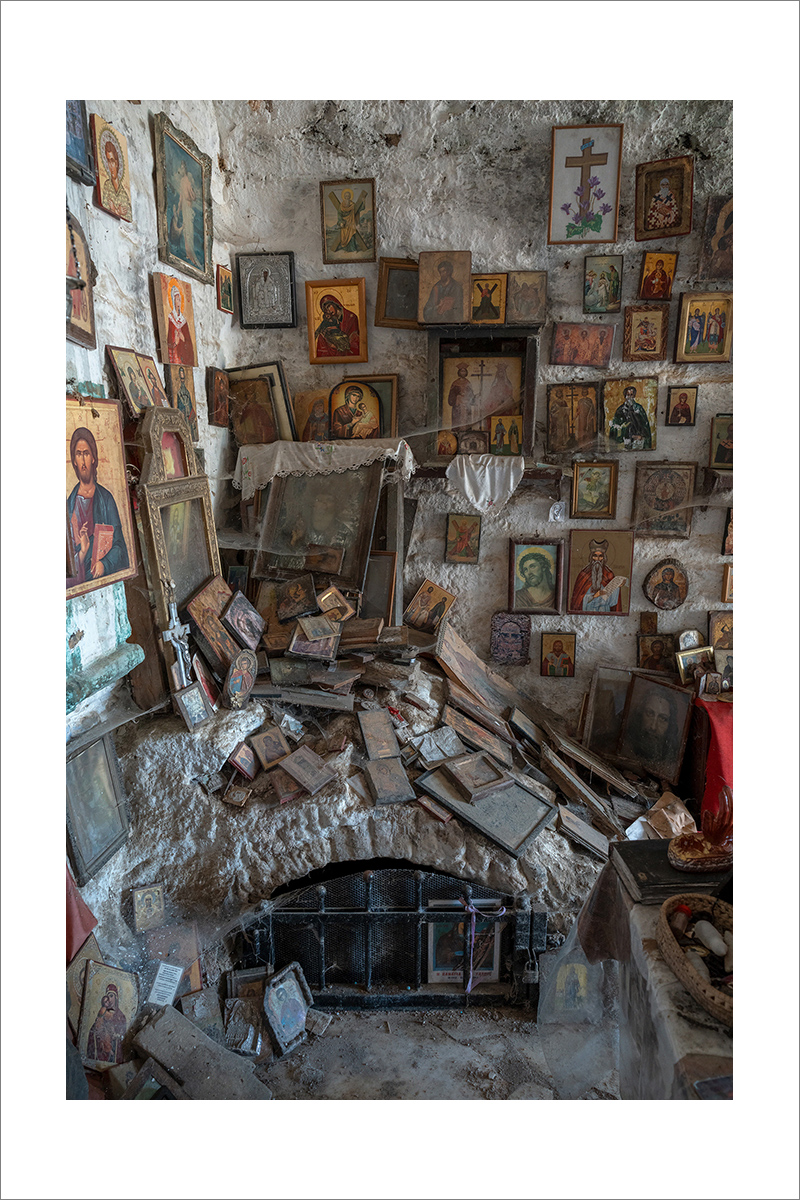
Today, the flow has almost disappeared. Behind the Holy Table, a small cavity remains,
bearing traces of moisture—a remnant of its former function.
The space remains entirely open, accessible at all hours and in all seasons—not only
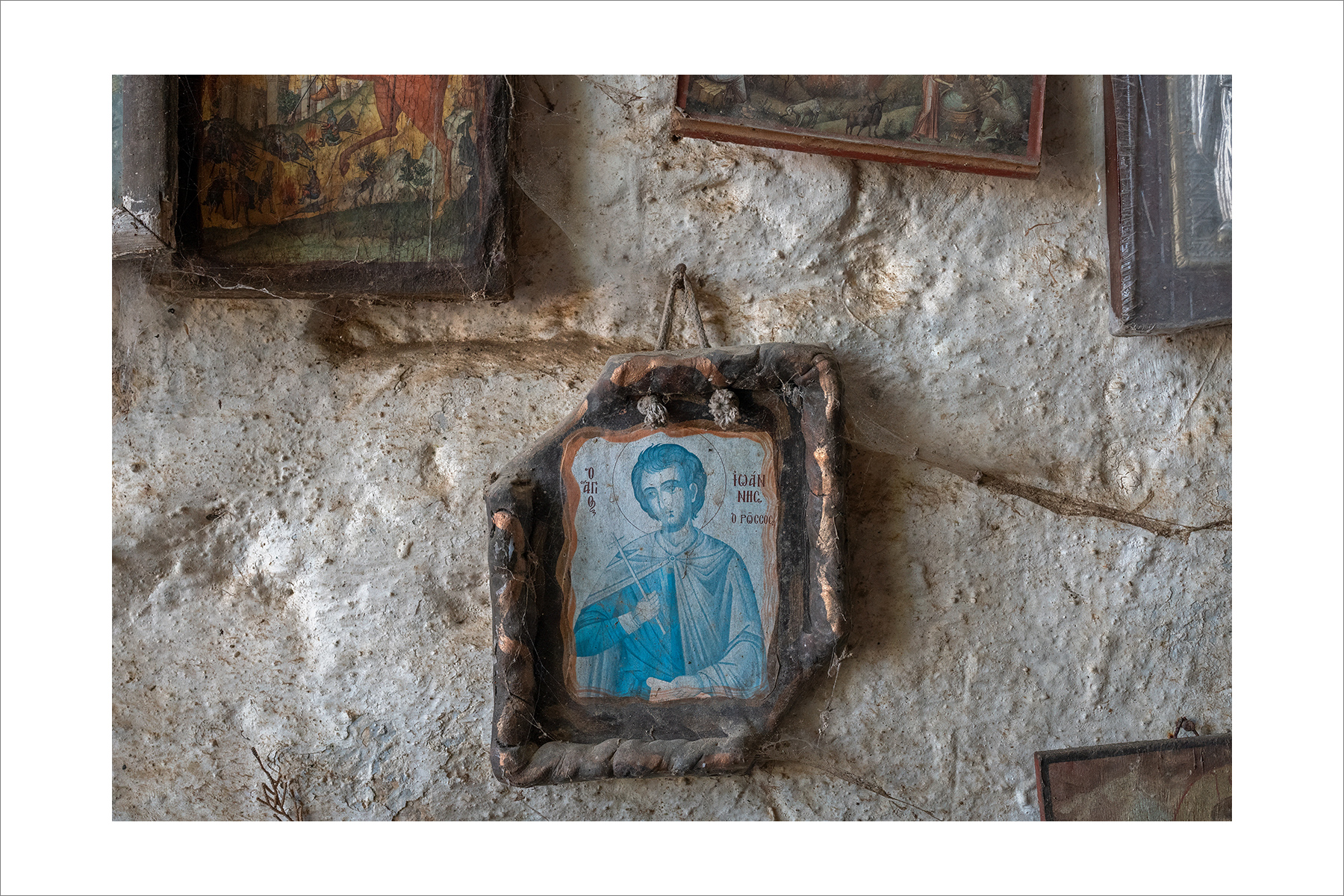
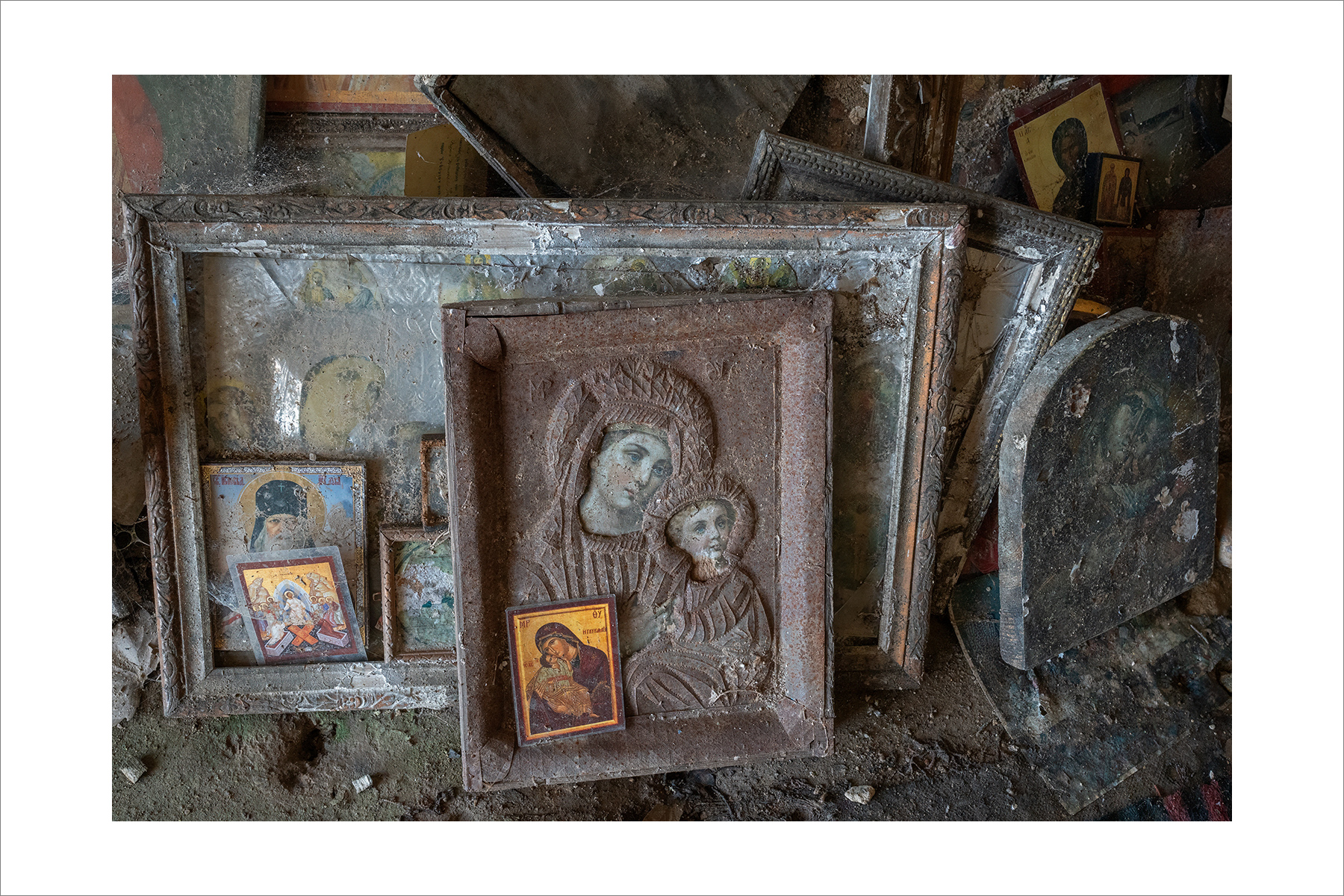
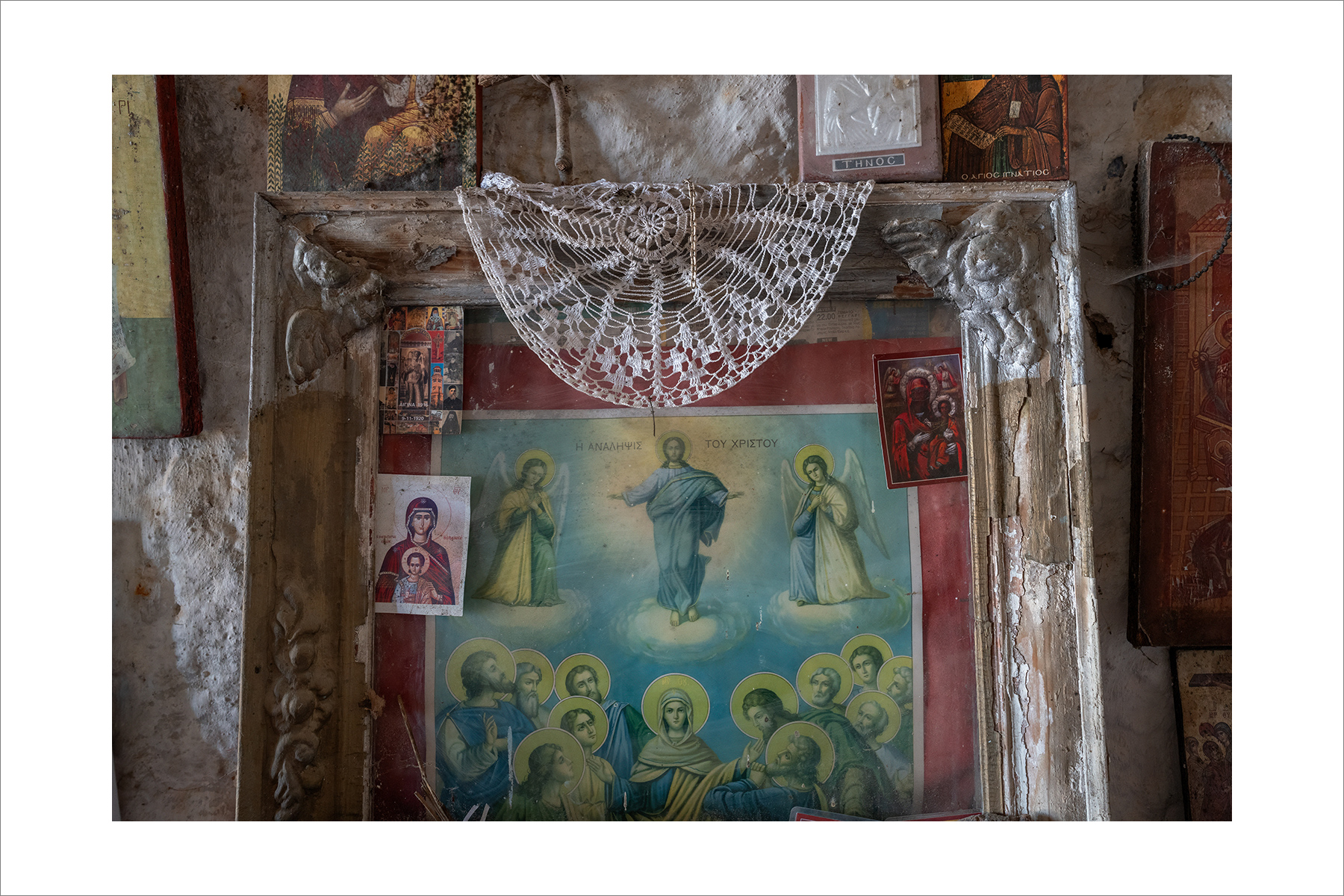
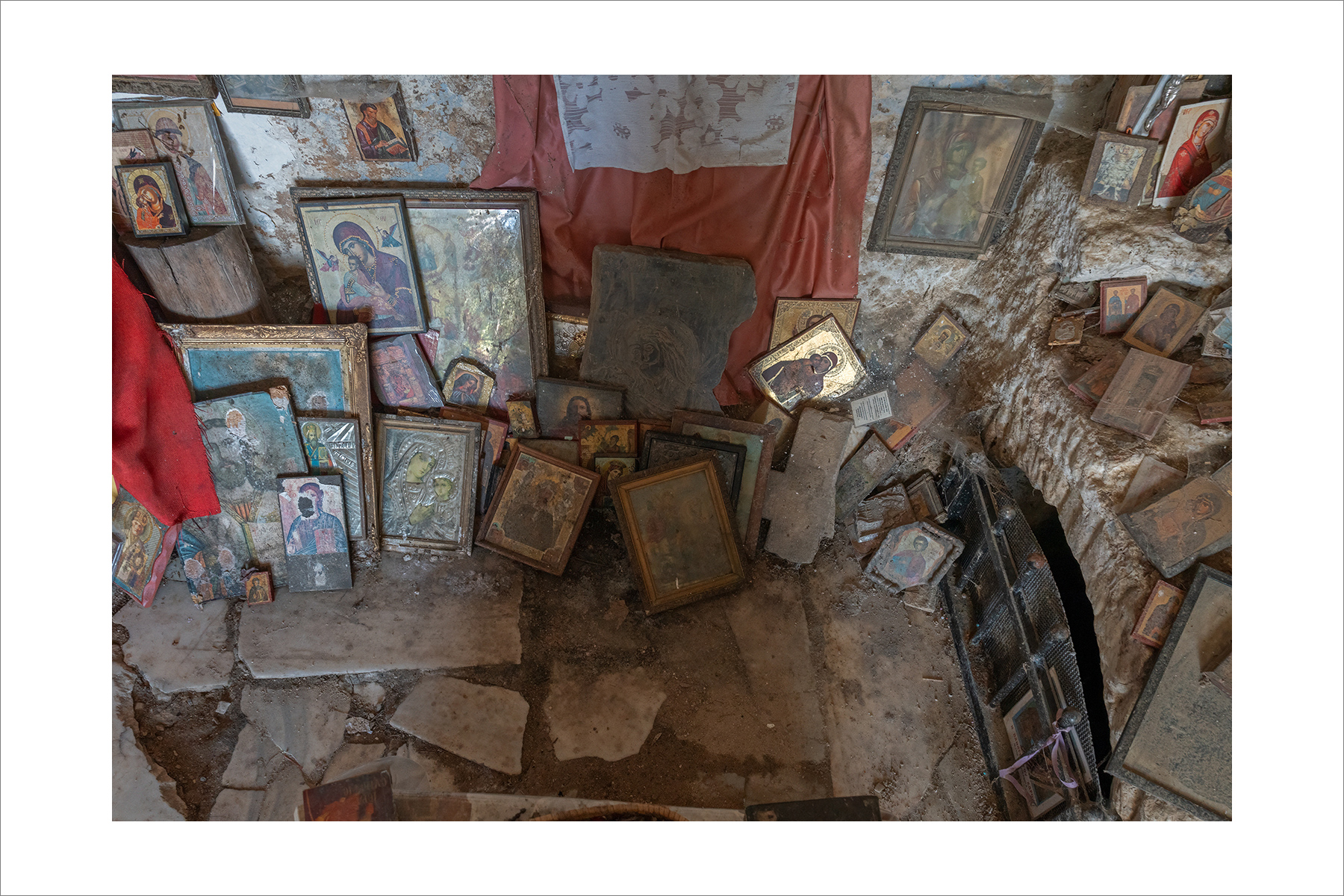
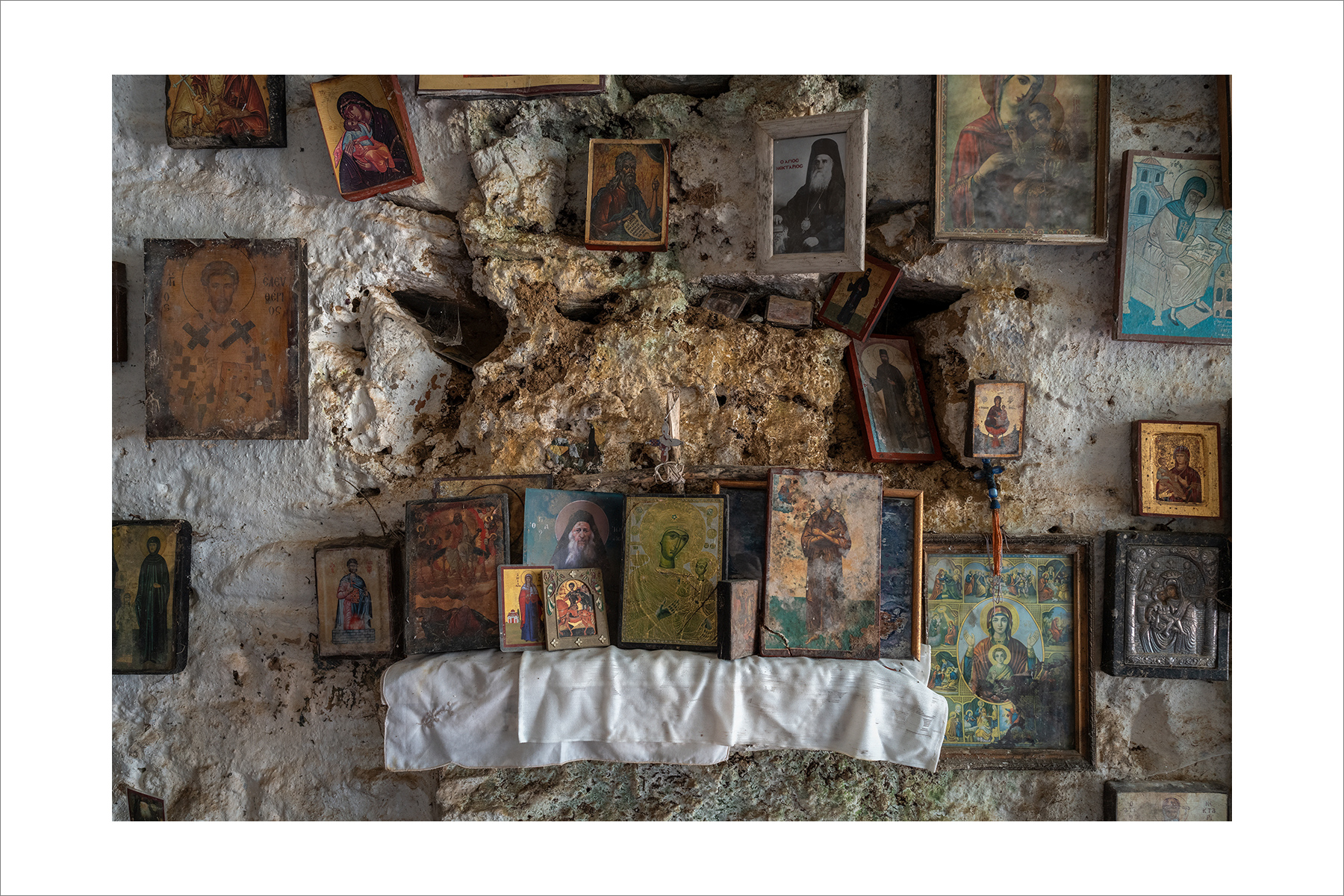
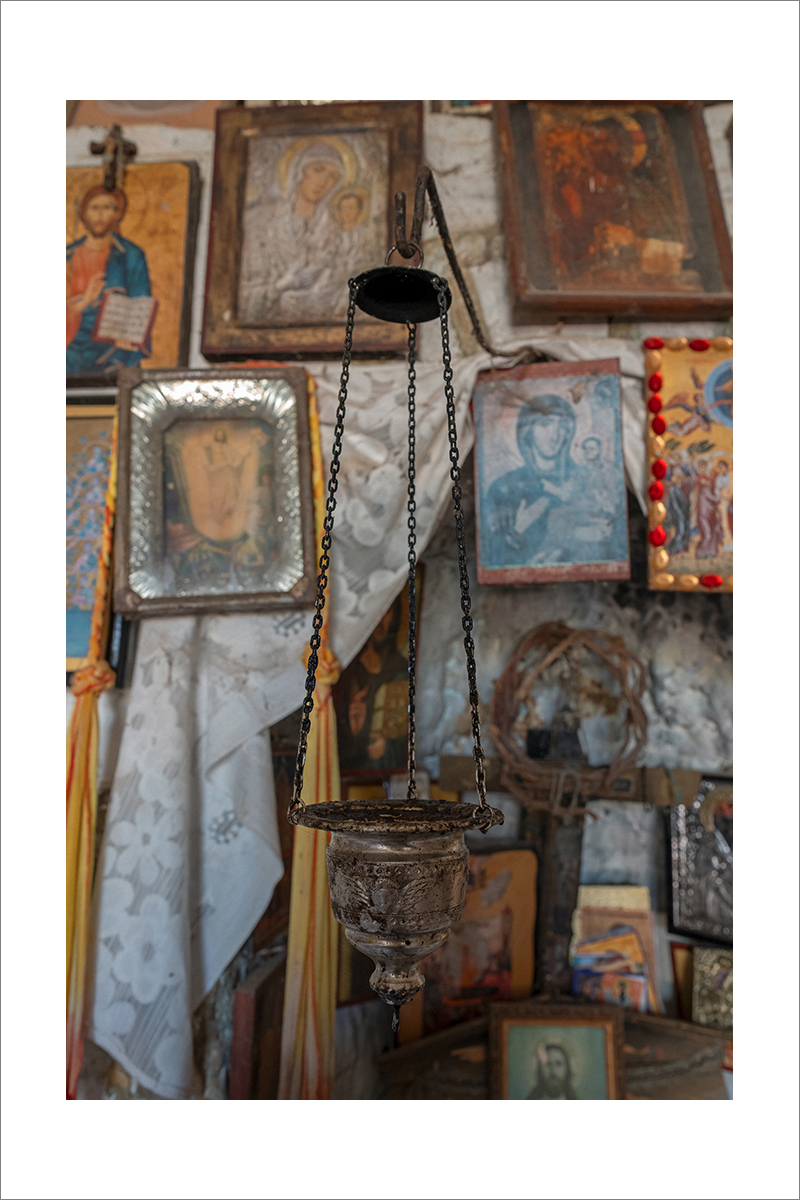
to people, but also to small animals that find shelter there. Traces of presence—candles,
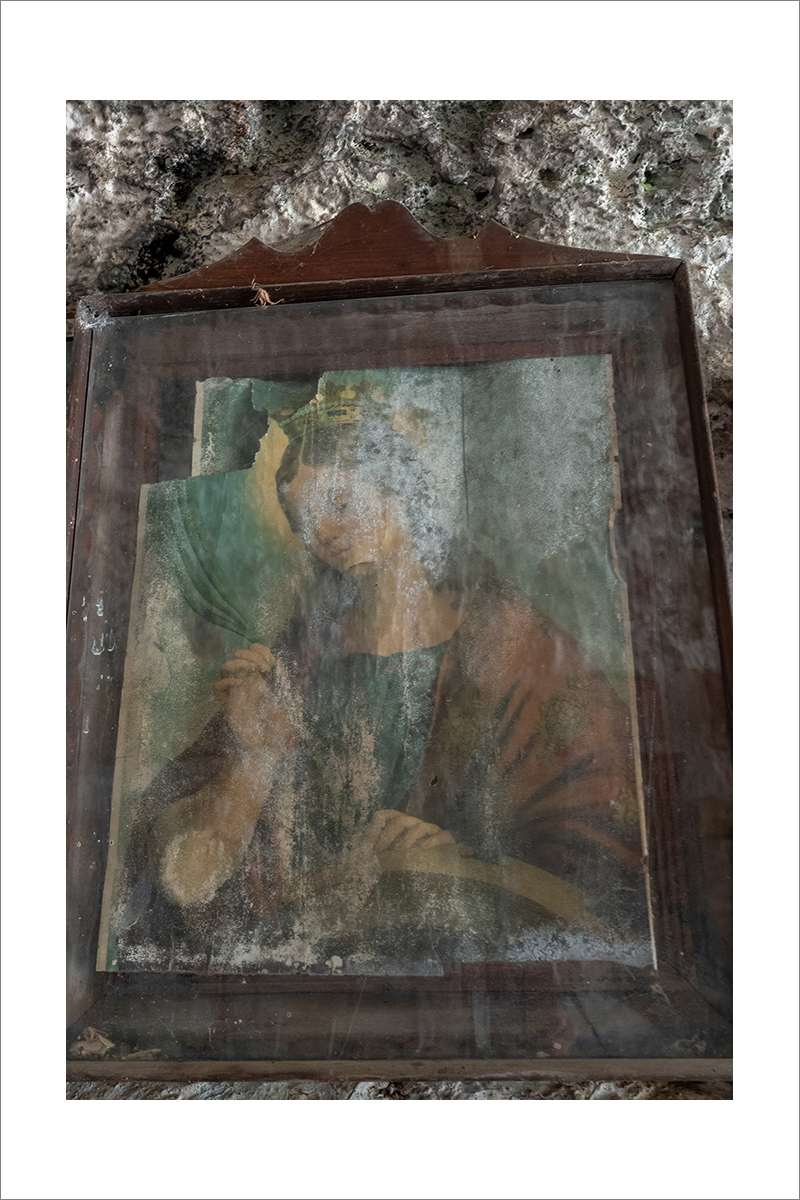
oil lamps, offerings—remain without systematic care, accumulating time.
At the “Hole Church,” you enter without permission, you pray without witnesses,
you leave without blessing—and the hierarchy of the gaze is reversed: you do not
observe the icons. The icons observe you. Not with eyes, but with presence.
In this “encounter,” the oil lamps do not illuminate—they burn.
The photographic essay approaches the site as a field of coexistence between natural
formation, religious expression, and decay. It focuses on the material and immaterial
traces of a faith that has shifted, without having fully disappeared.
It does not attempt to confirm or refute the site’s miraculous dimension;
it records the transition from expectation to presence.
The “Hole Church” is neither beautiful nor impressive. It is simply open.
That is all.
And, in the world we live in, perhaps that is the only true miracle.
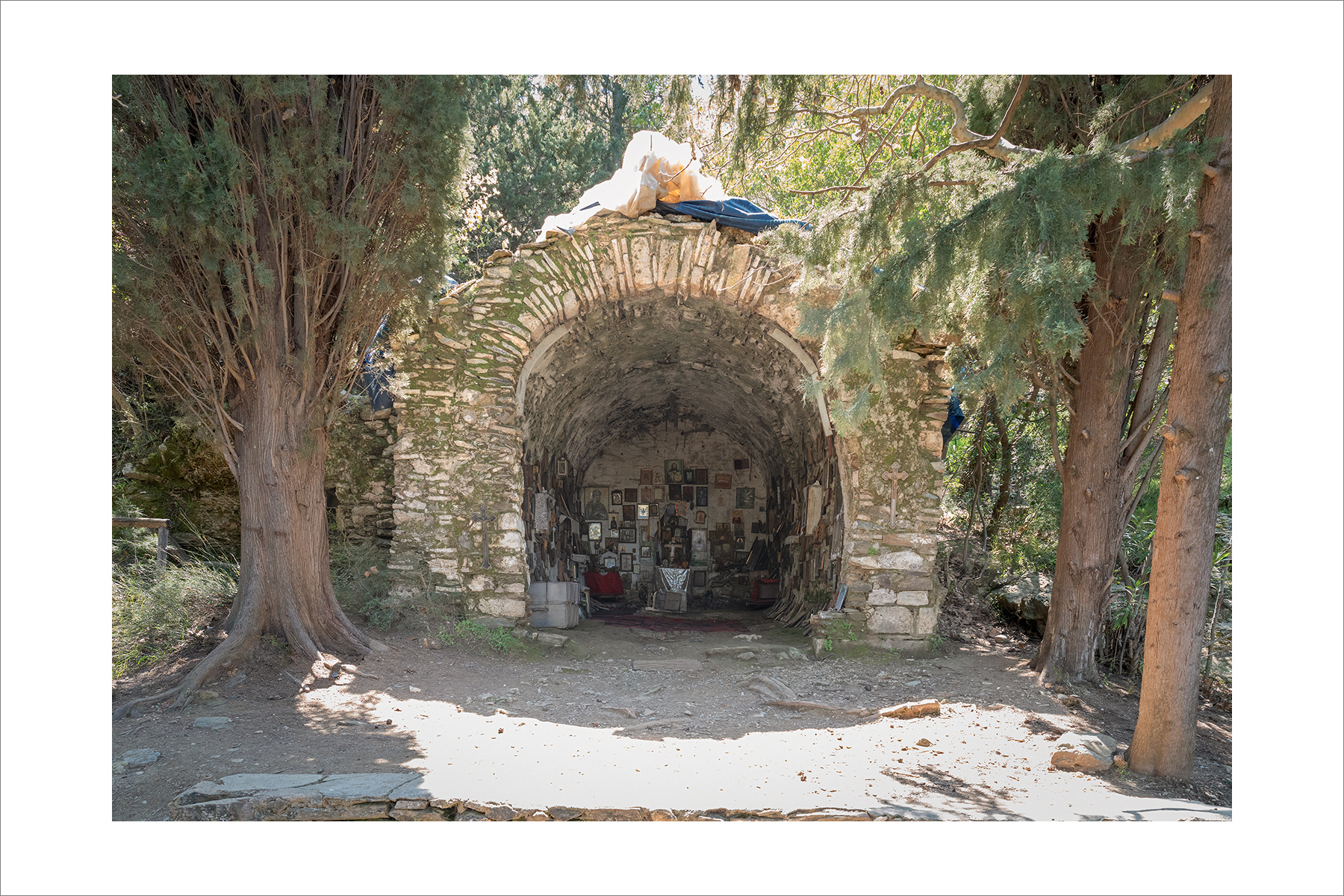 «The Miracle of Kaisariani» 2026 | 1/27
 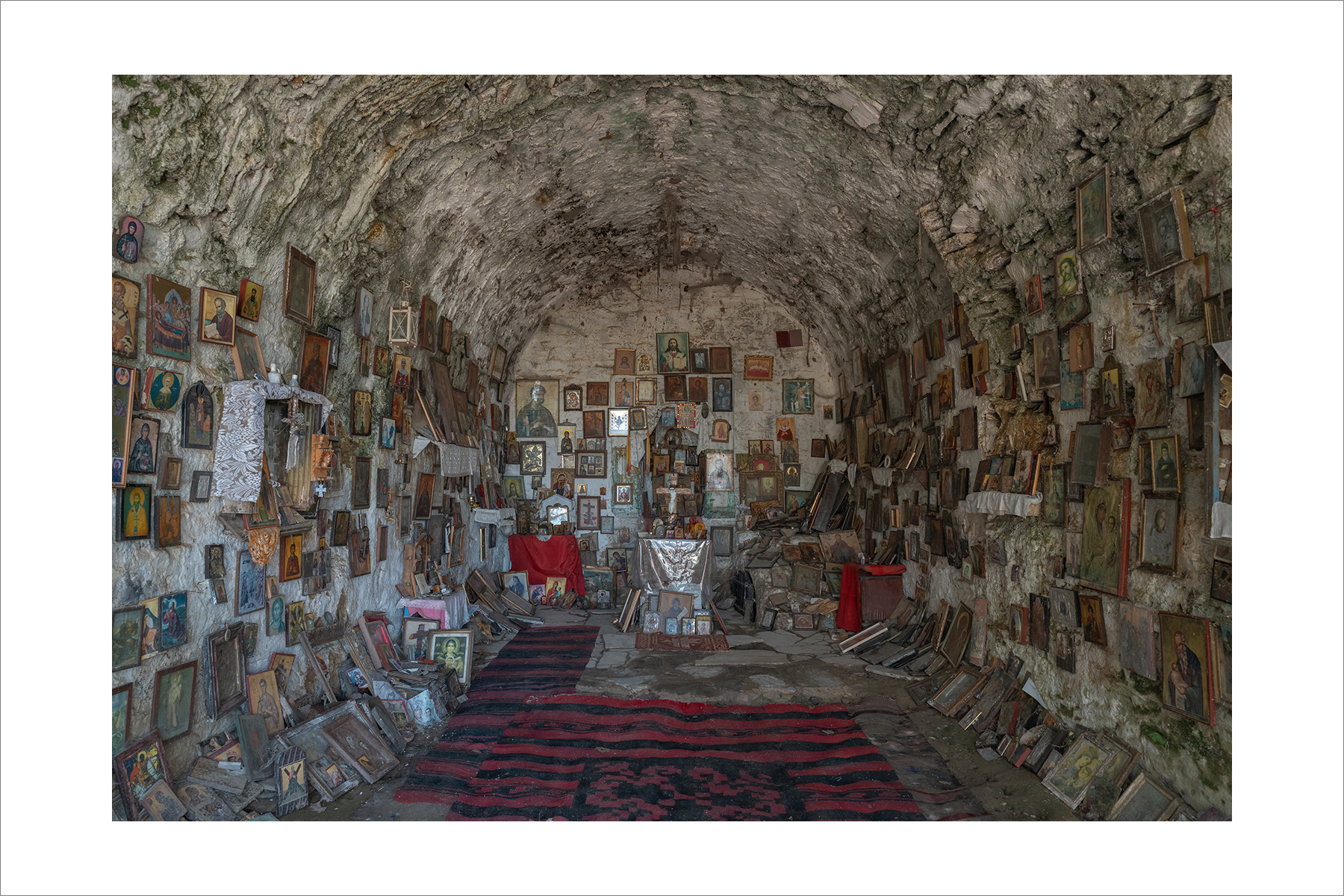 «The Miracle of Kaisariani» 2026 | 2/27
 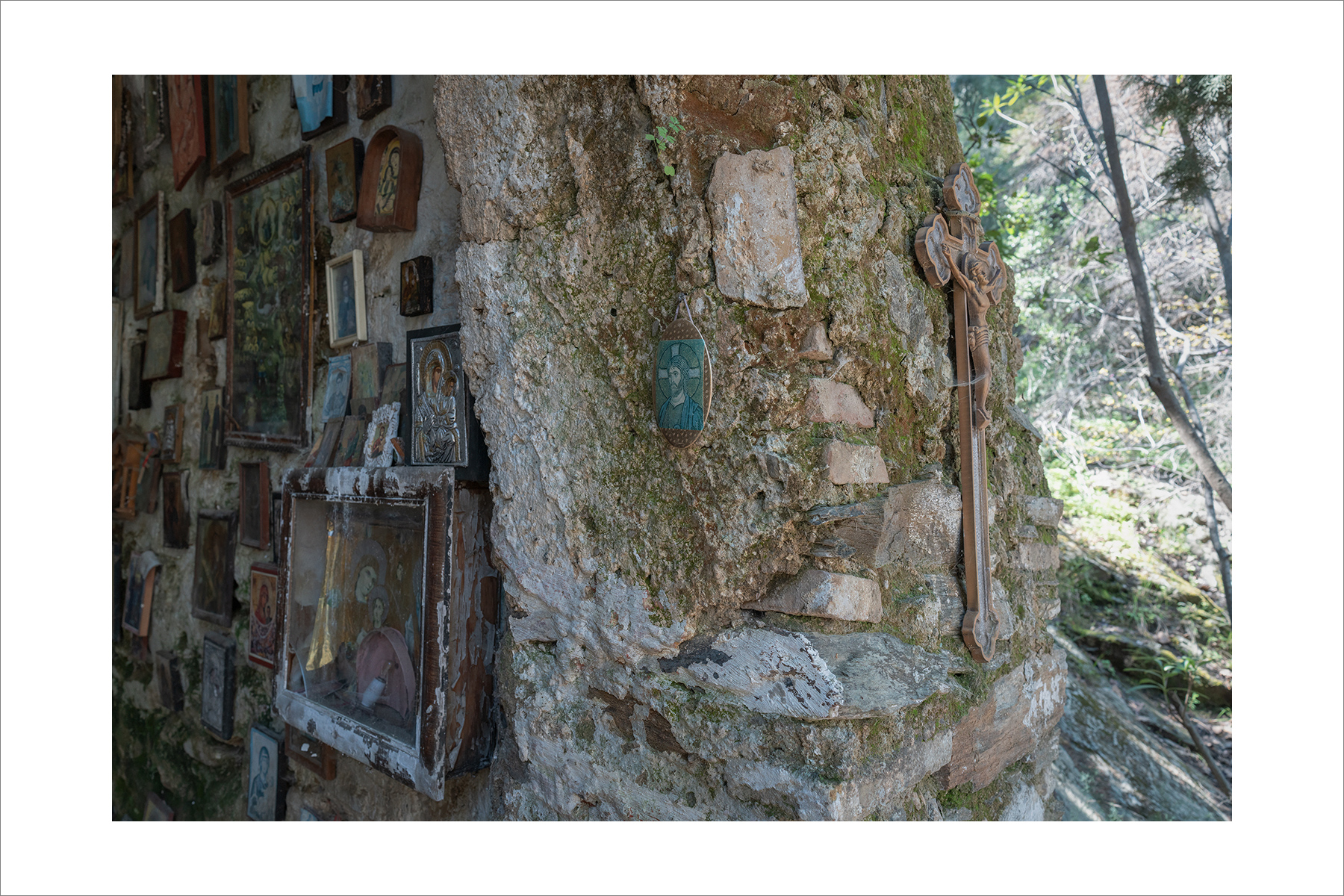 «The Miracle of Kaisariani» 2026 | 3/27
 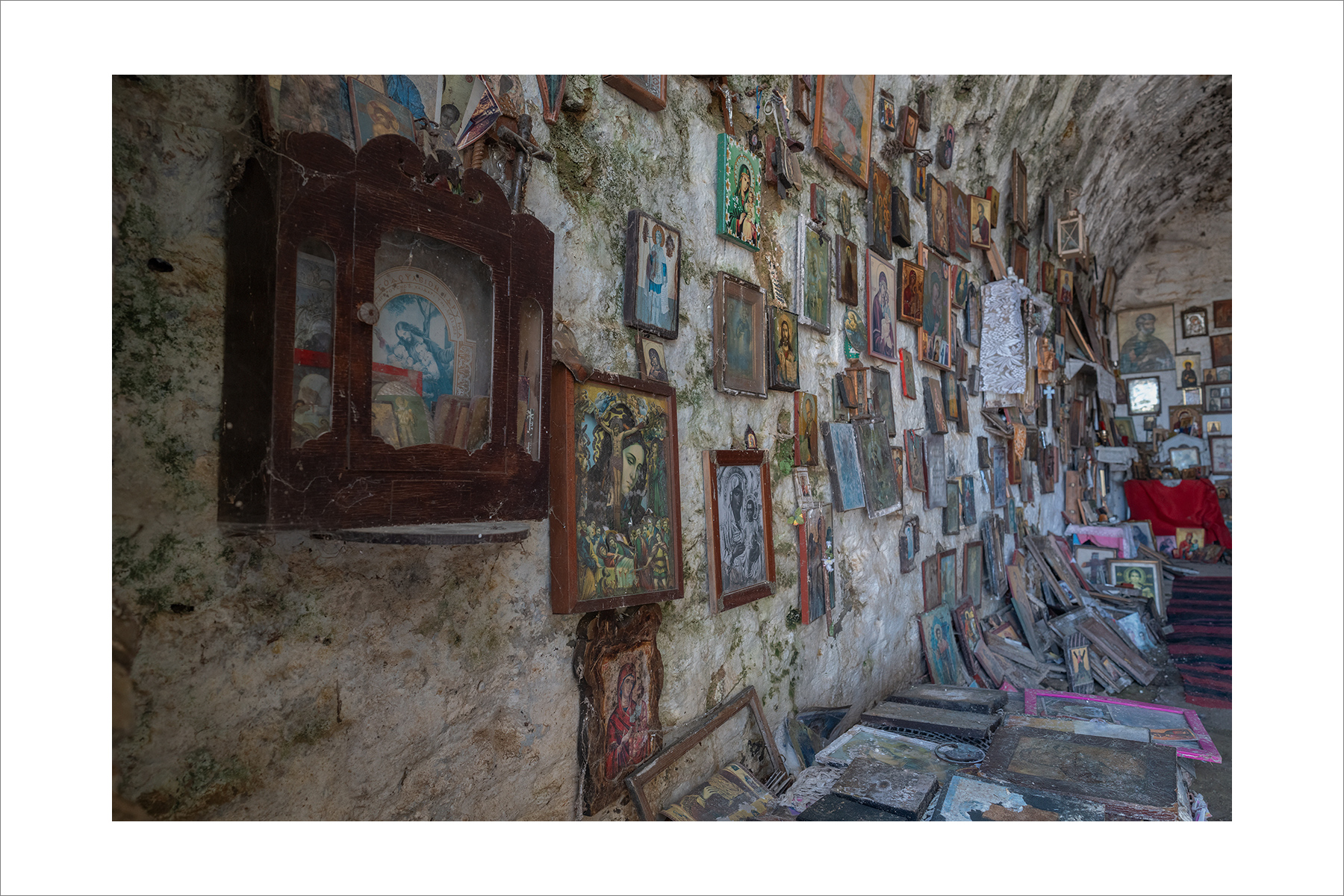 «The Miracle of Kaisariani» 2026 | 4/27
 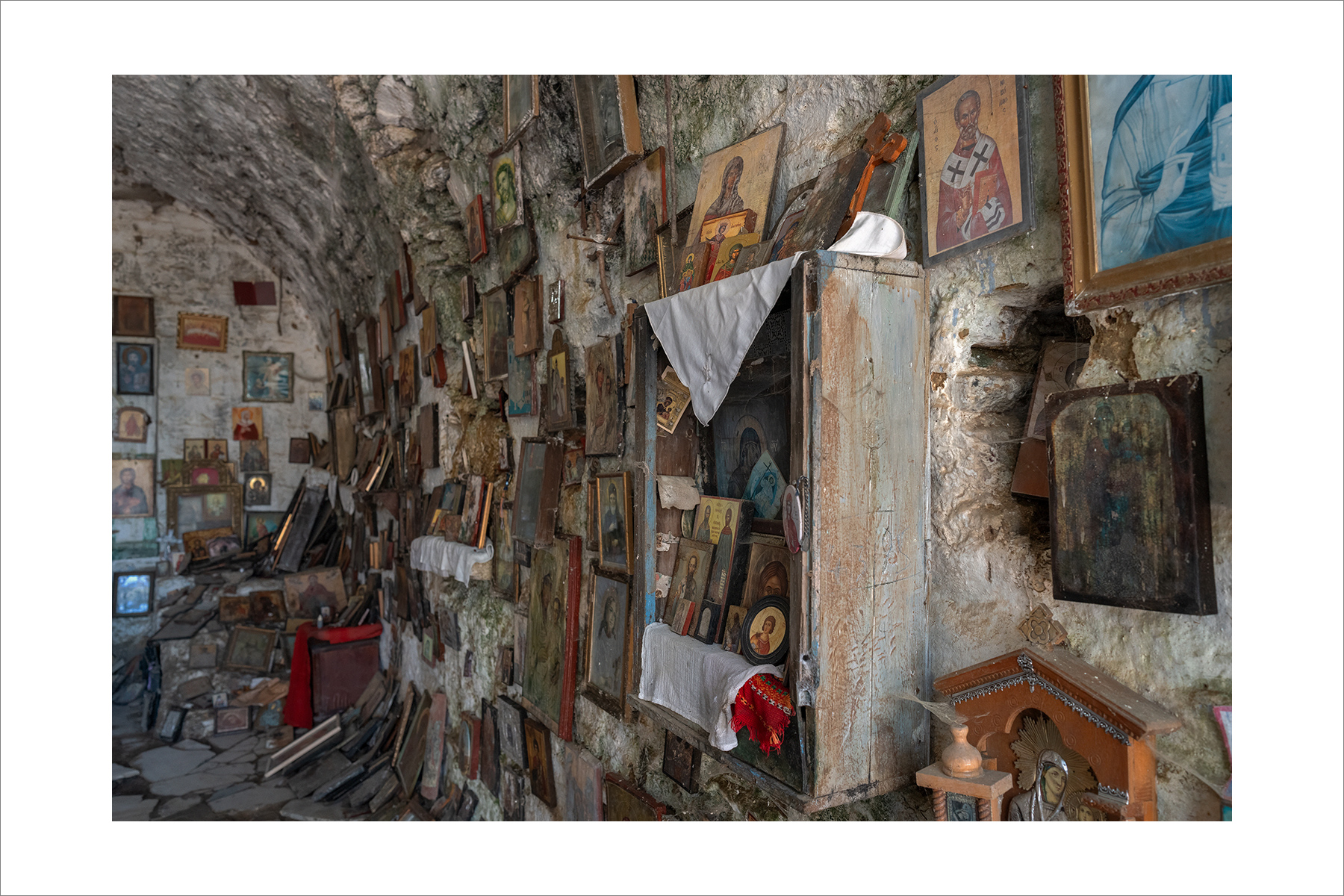 «The Miracle of Kaisariani» 2026 | 5/27
 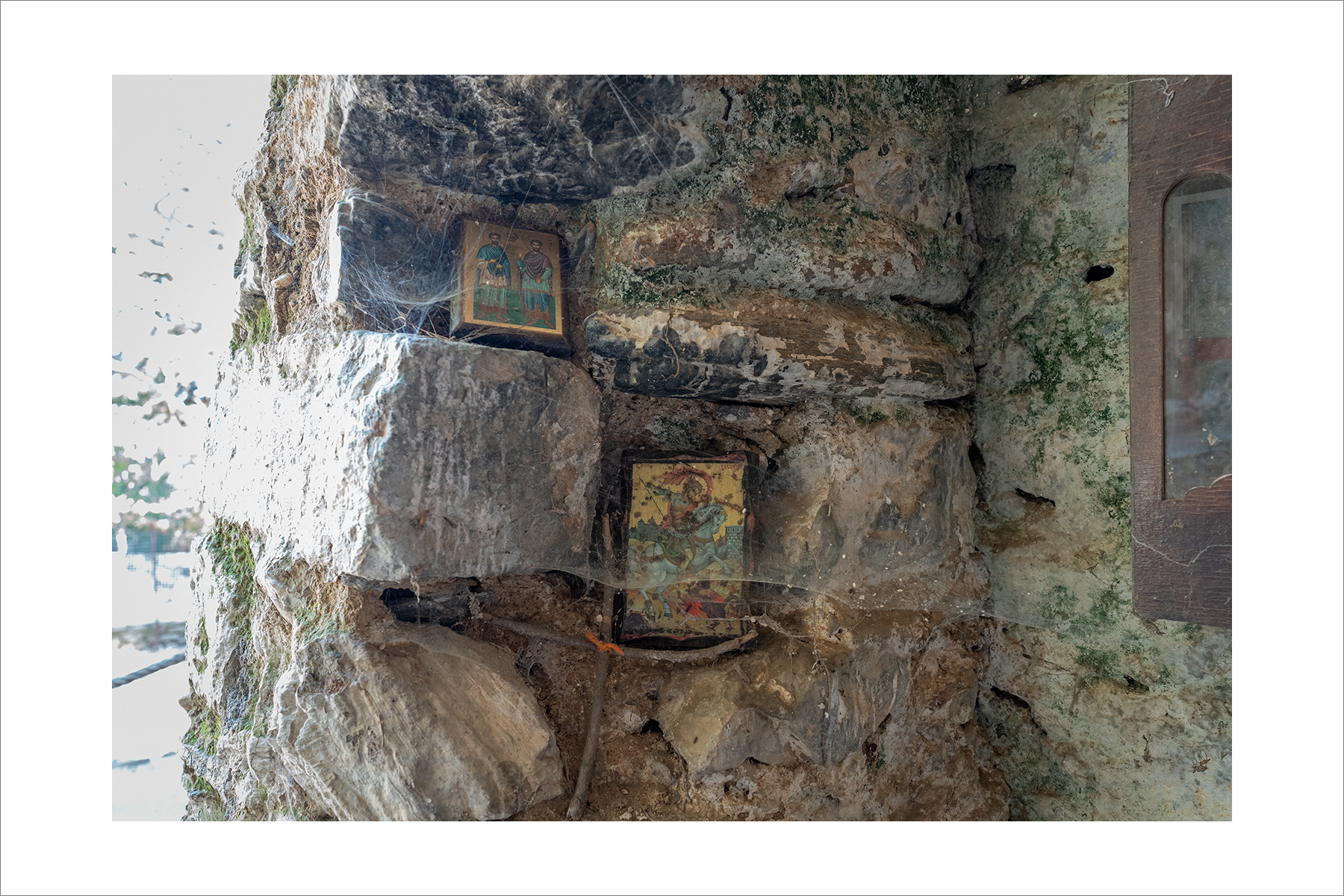 «The Miracle of Kaisariani» 2026 | 6/27
 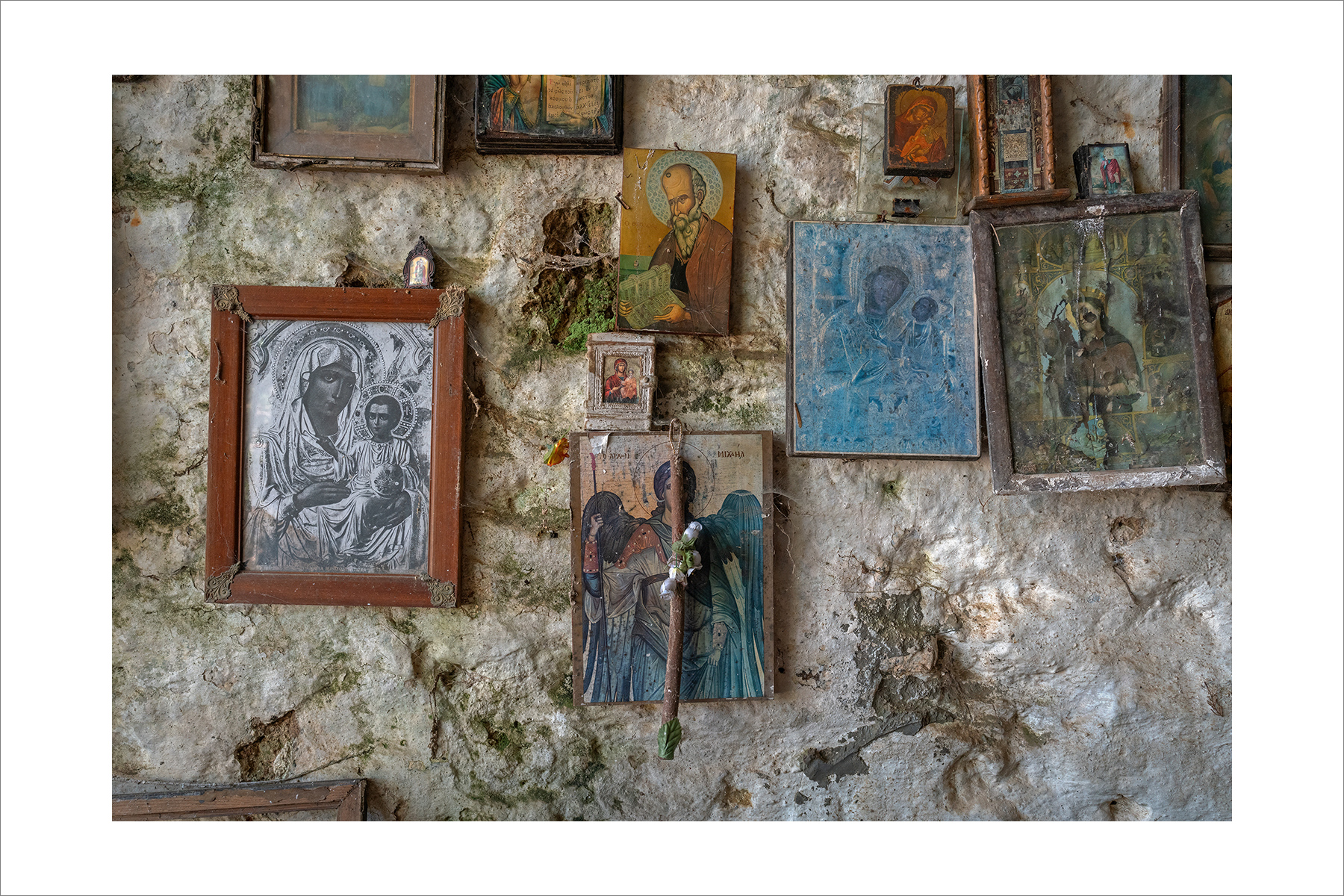 «The Miracle of Kaisariani» 2026 | 7/27
 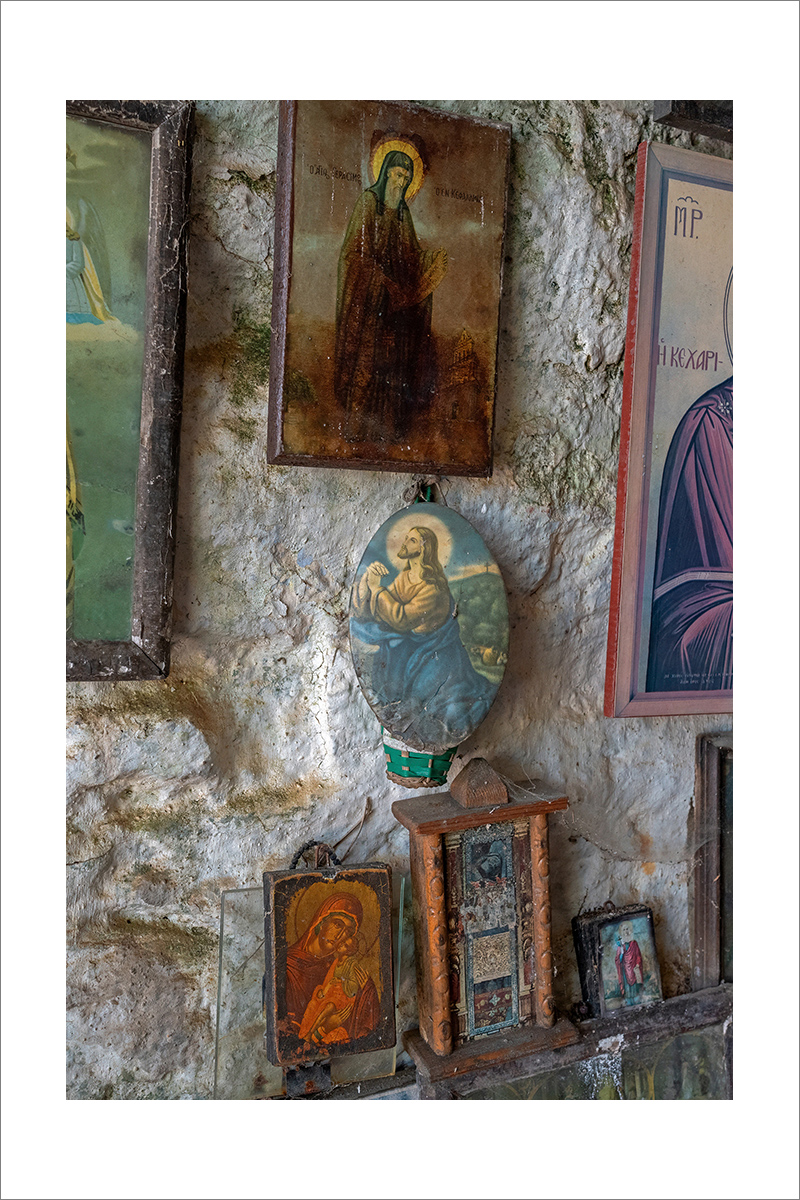 «The Miracle of Kaisariani» 2026 | 8/27
  «The Miracle of Kaisariani» 2026 | 9/27
  «The Miracle of Kaisariani» 2026 | 10/27
  «The Miracle of Kaisariani» 2026 | 11/27
  «The Miracle of Kaisariani» 2026 | 12/27
 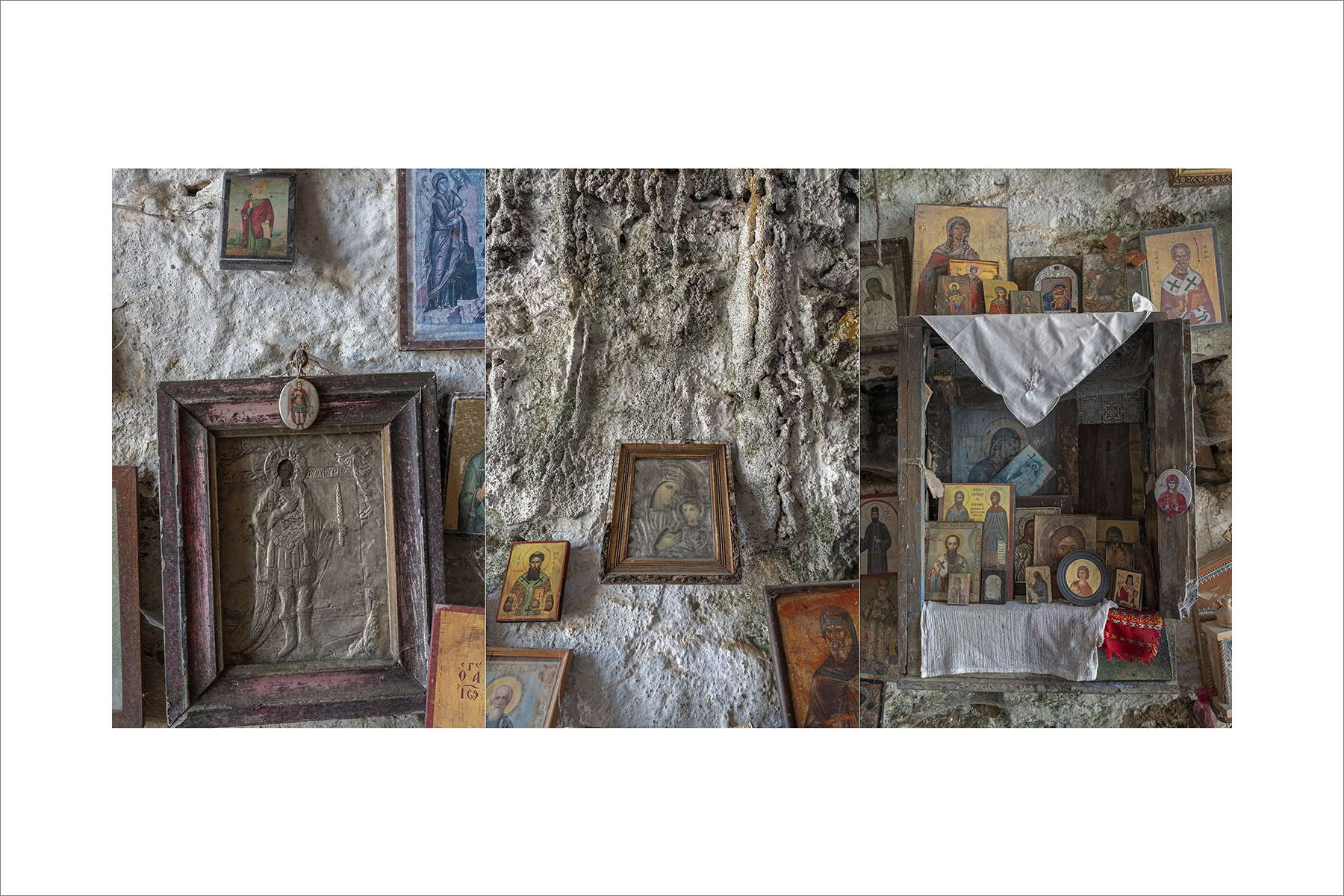 «The Miracle of Kaisariani» 2026 | 13/27
 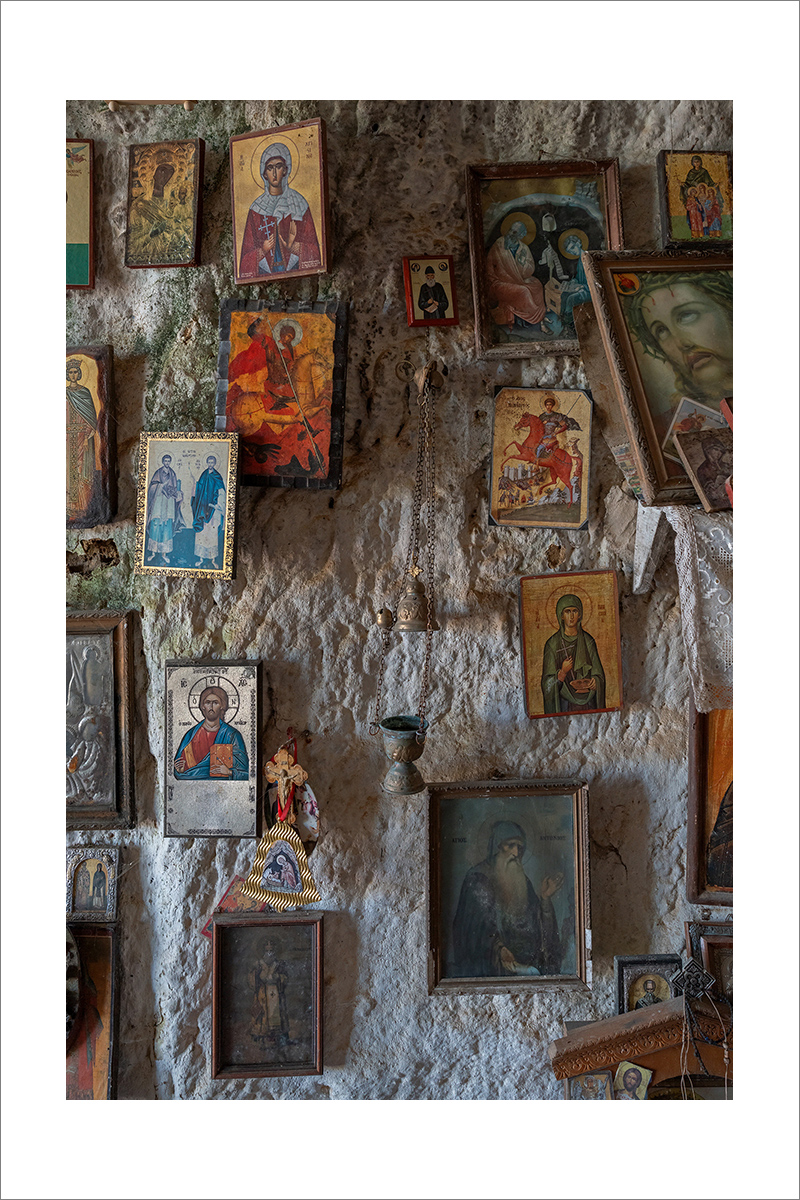 «The Miracle of Kaisariani» 2026 | 14/27
 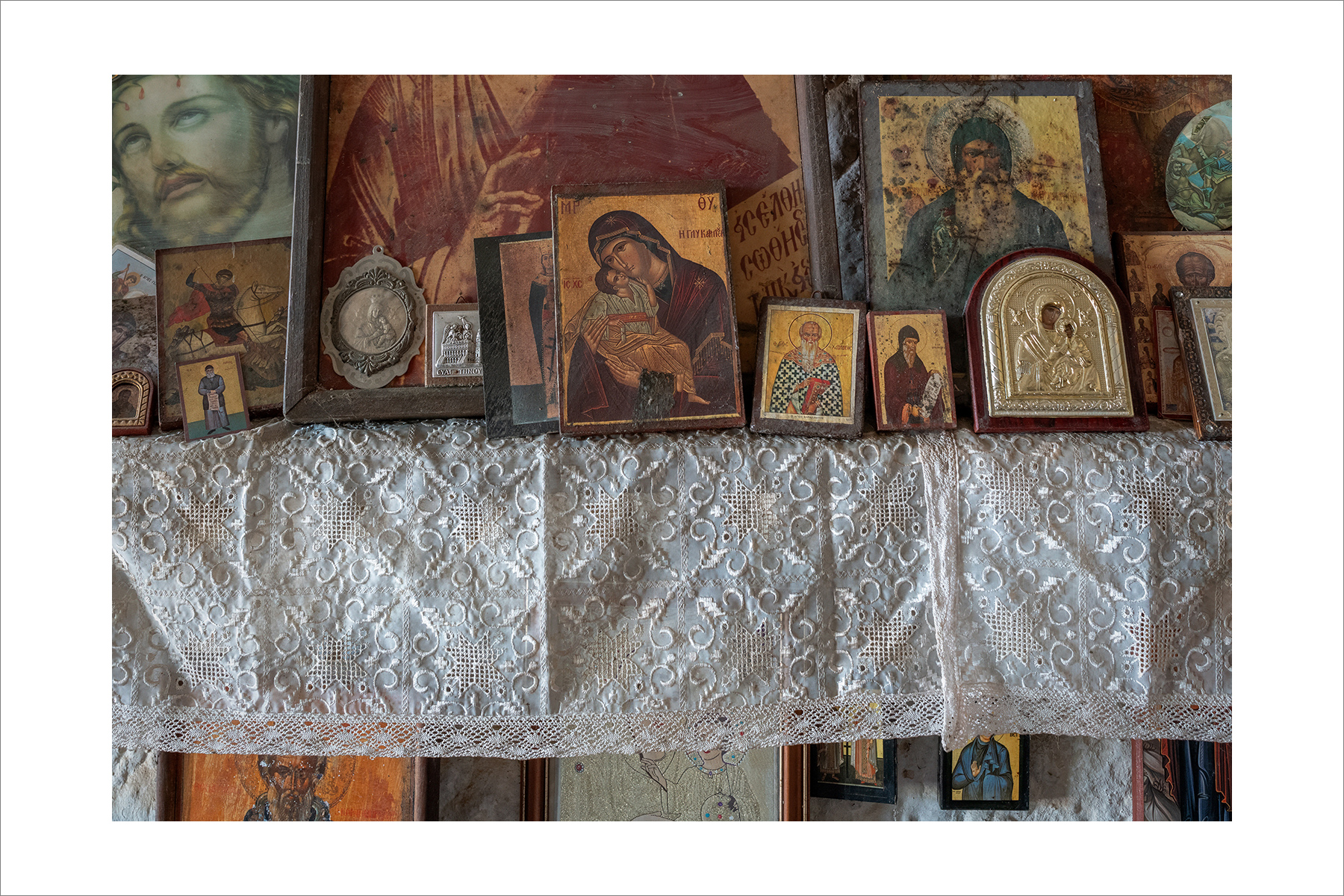 «The Miracle of Kaisariani» 2026 | 15/27
 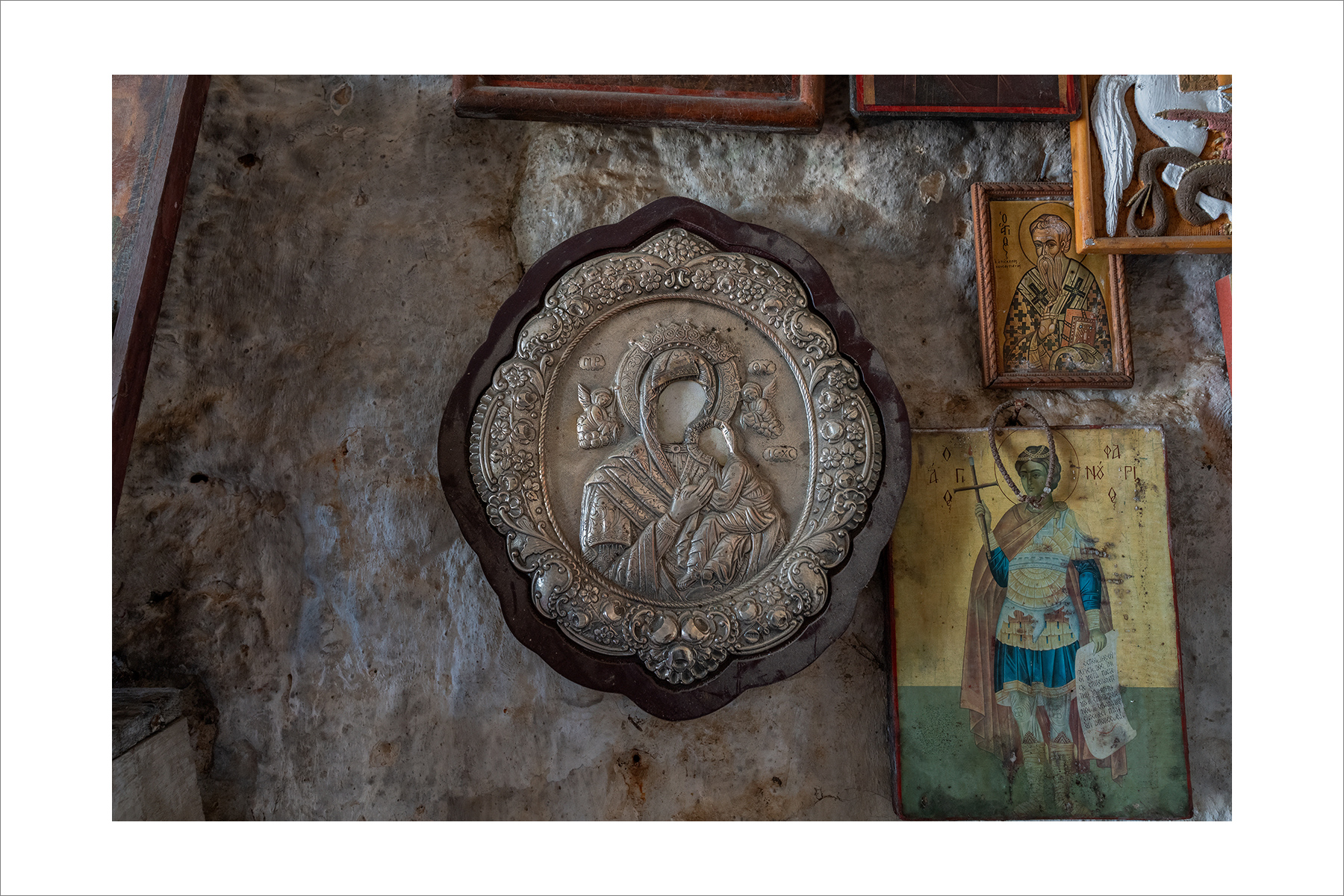 «The Miracle of Kaisariani» 2026 | 16/27
  «The Miracle of Kaisariani» 2026 | 17/27
  «The Miracle of Kaisariani» 2026 | 18/27
  «The Miracle of Kaisariani» 2026 | 19/27
  «The Miracle of Kaisariani» 2026 | 20/27
 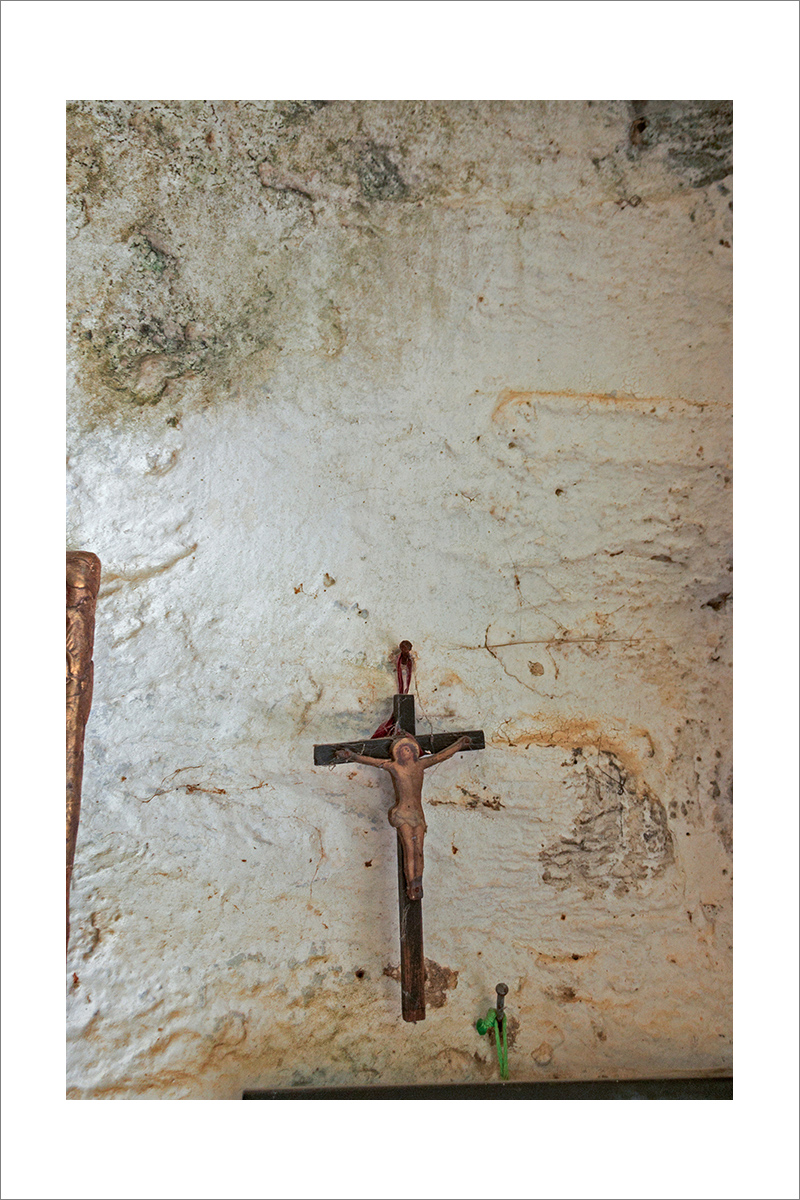 «The Miracle of Kaisariani» 2026 | 21/27
 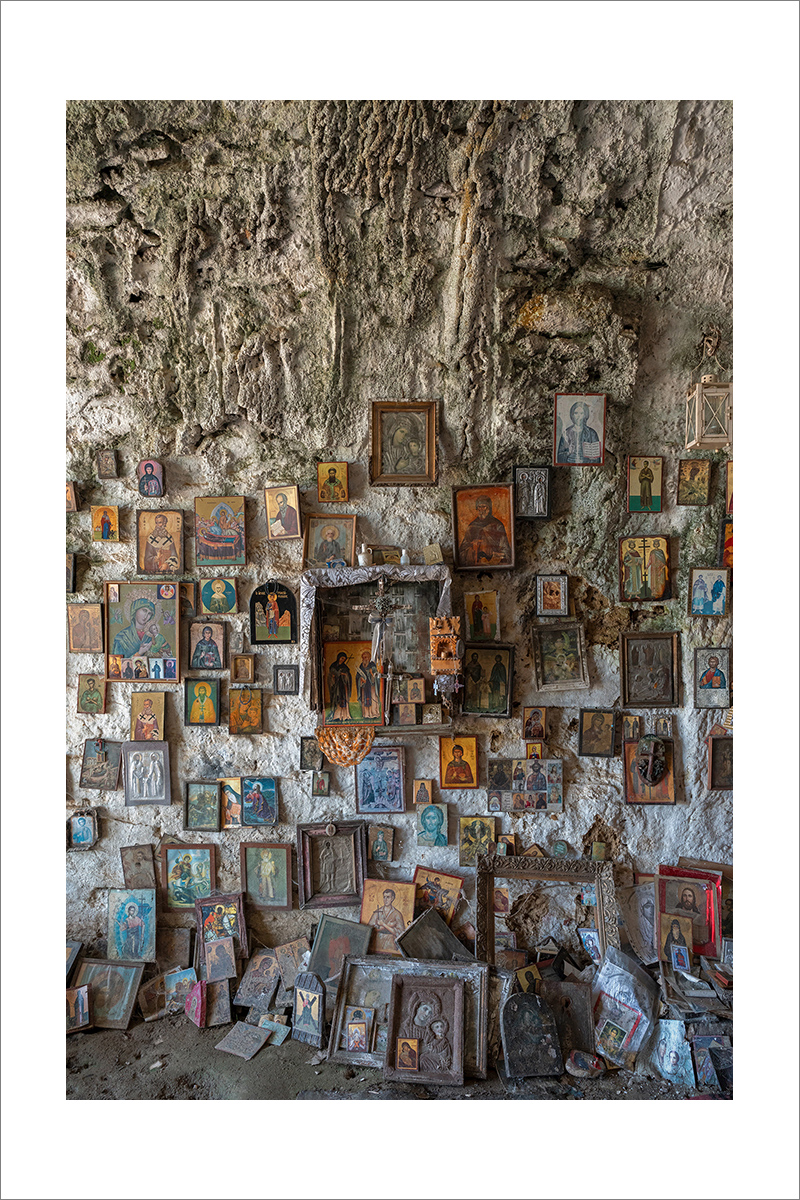 «The Miracle of Kaisariani» 2026 | 22/27
 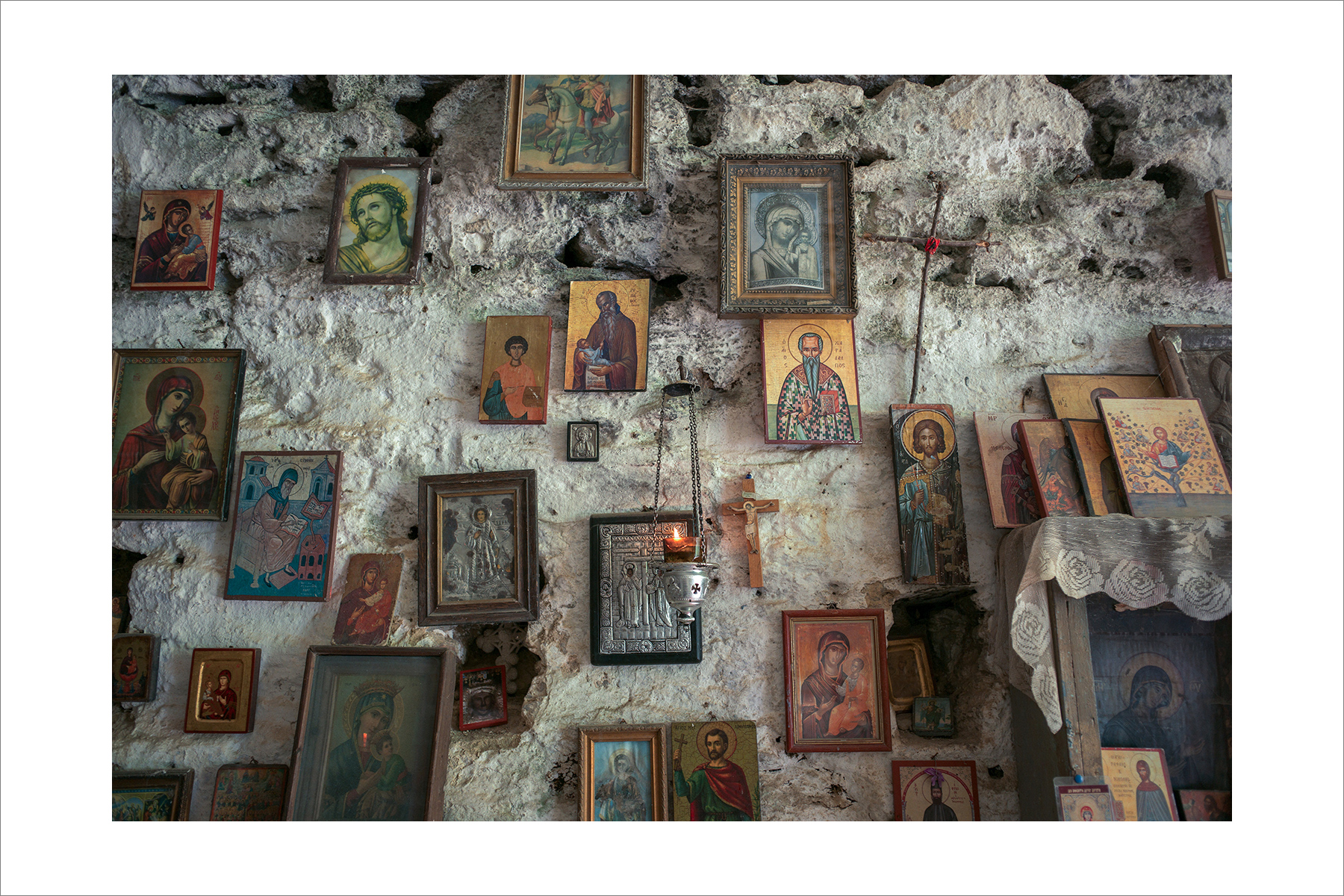 «The Miracle of Kaisariani» 2026 | 23/27
 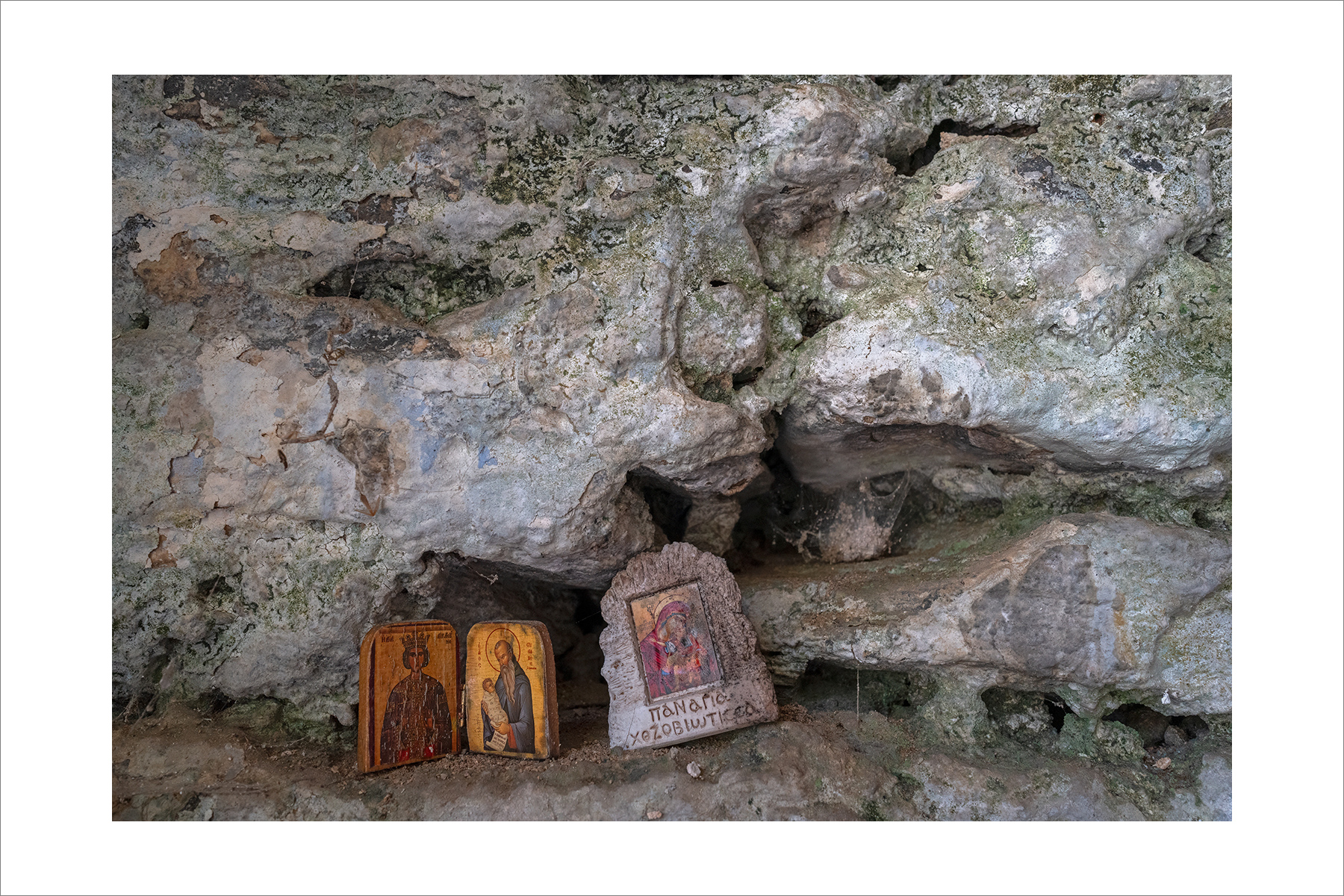 «The Miracle of Kaisariani» 2026 | 24/27
  «The Miracle of Kaisariani» 2026 | 25/27
  «The Miracle of Kaisariani» 2026 | 26/27
  «The Miracle of Kaisariani» 2026 | 27/27